
It started somewhere between the last stretch of Spanish highway and that quiet mental shift where you realize the language on the road signs has changed.
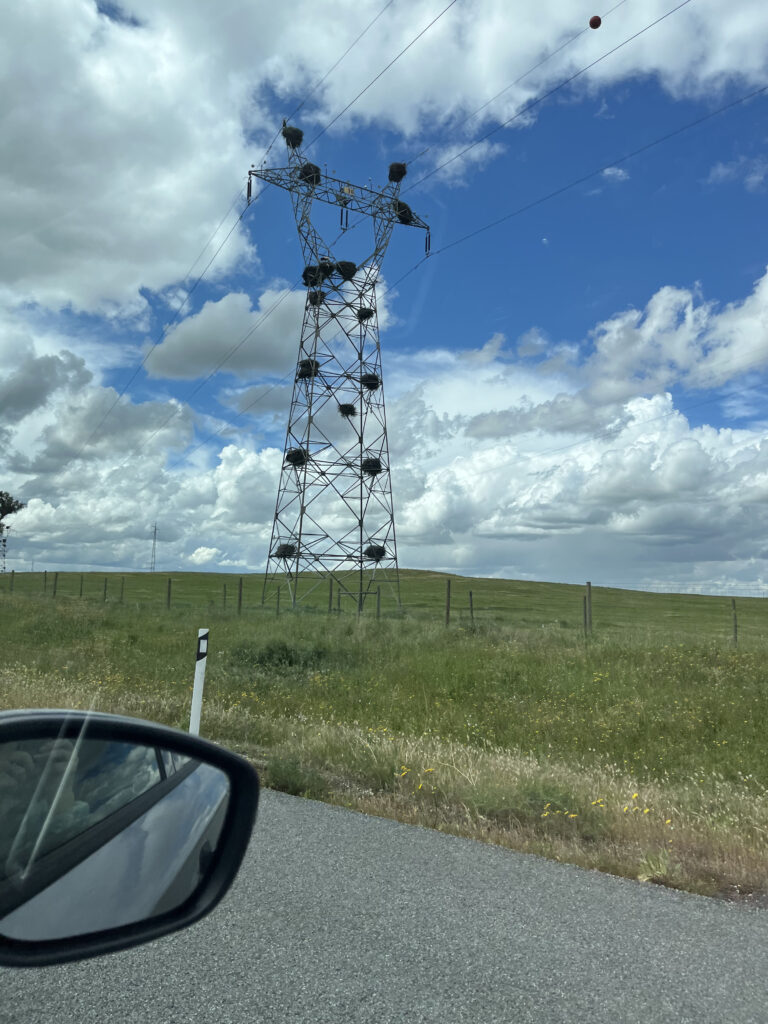
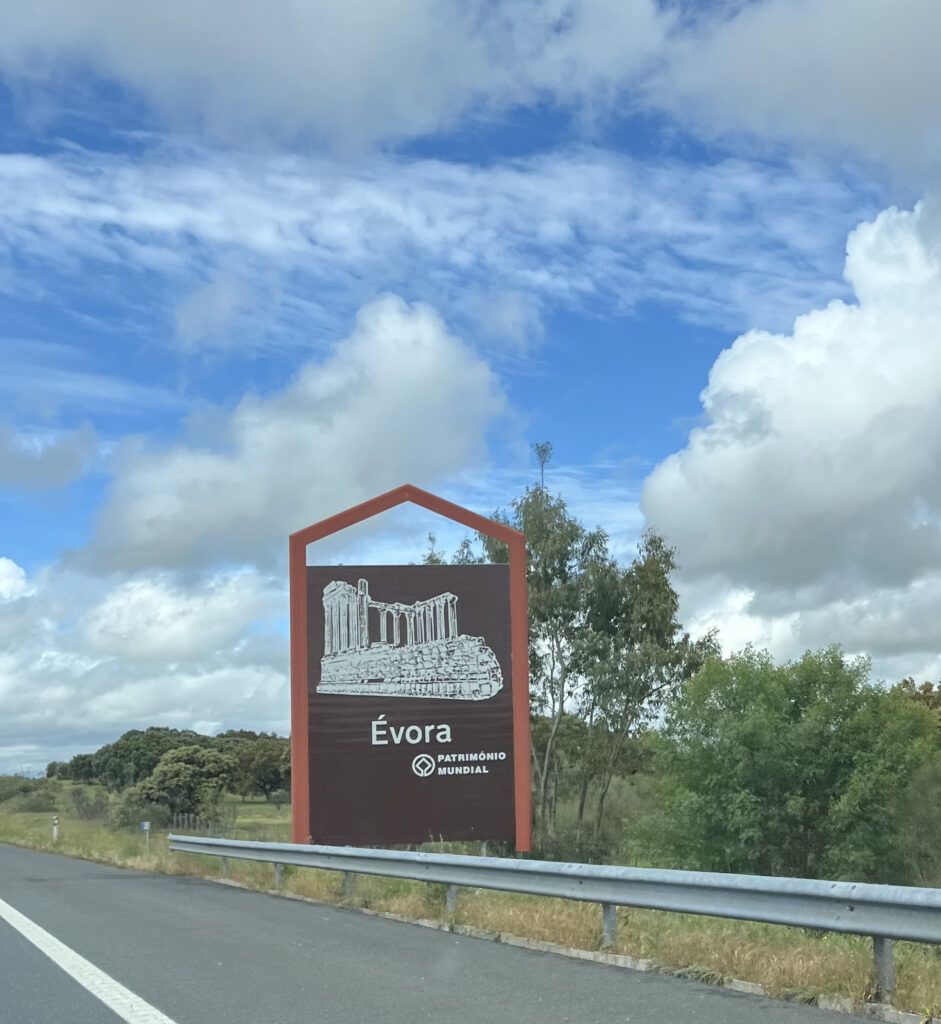
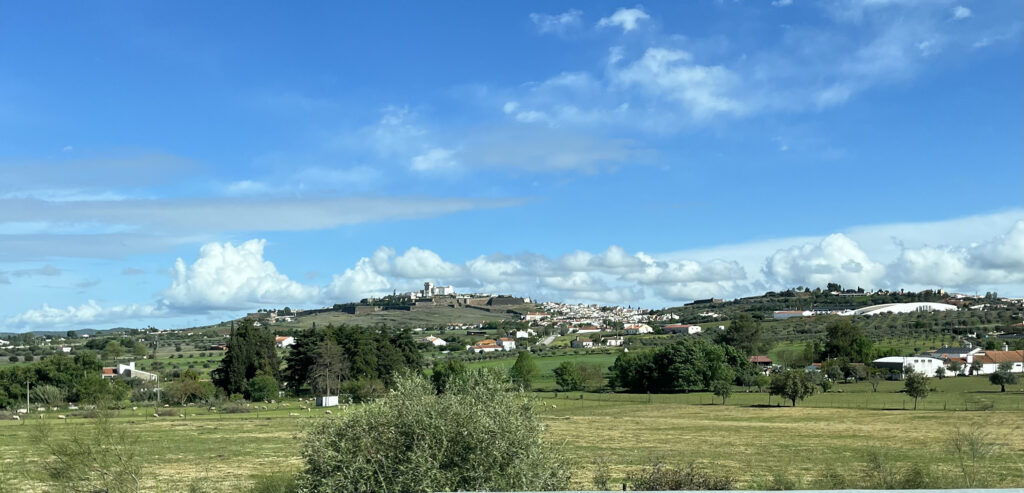
We left Seville early—still carrying that warm, slightly dusty Andalusian morning with us, traveling through NW fog—and by the time the landscape softened into cork trees and open plains, we were already in Portugal without really noticing the exact moment it happened. The light felt different though. Softer. Less golden, more silver.
By the time we rolled into Évora, it felt like stepping into a place that had been minding its own business for a few thousand years. The Chapel of Bones is exactly what it sounds like—walls lined with actual human bones, arranged neatly by monks who clearly had a very specific interior design vision. There’s a sign at the entrance that basically says, “Hey, you’re next.”Subtle, welcoming, really sets the tone. We left quickly:)
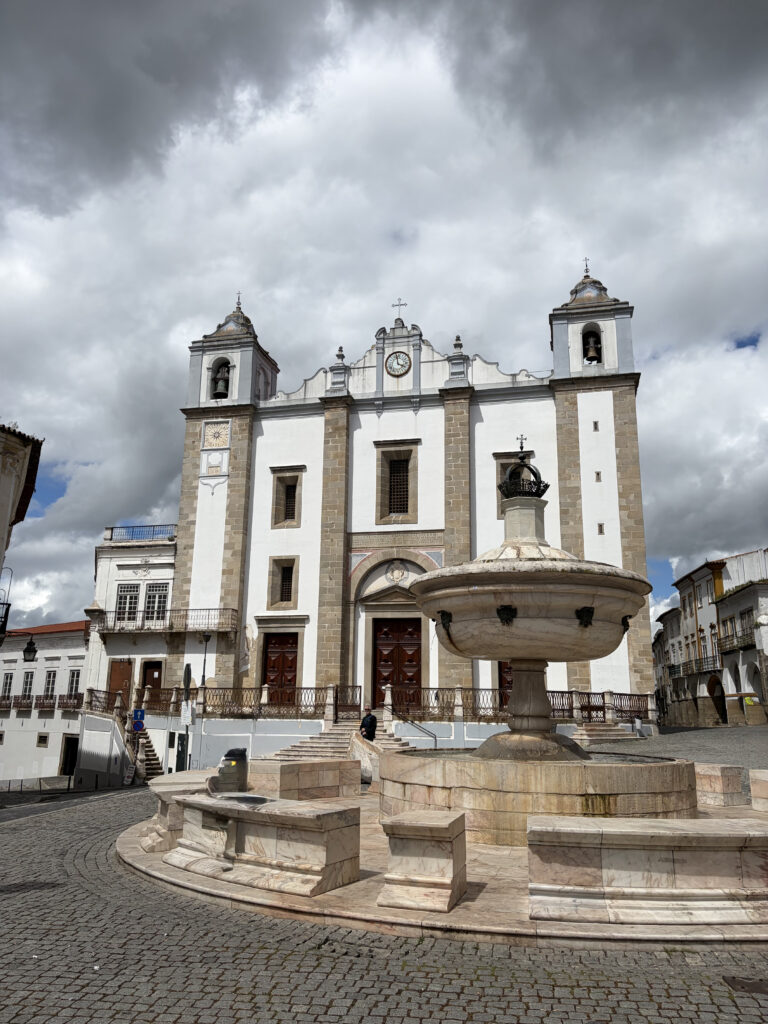
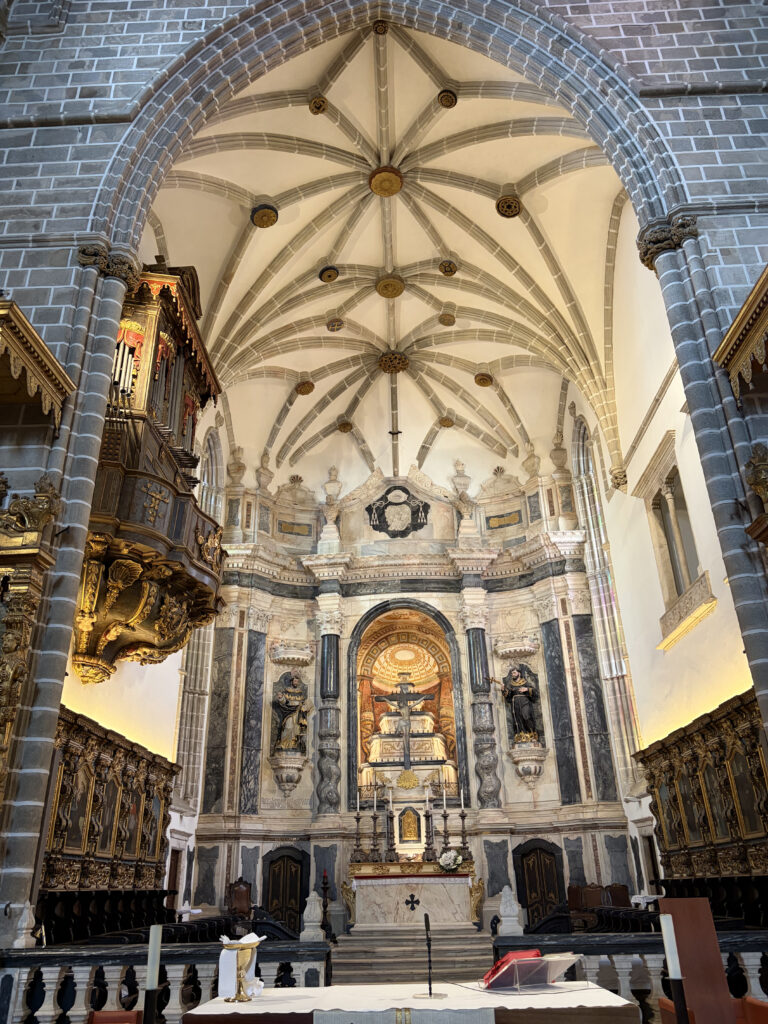
We stepped back into daylight like we had just exited a very philosophical haunted house and landed in Praça do Giraldo—bright, open, full of people doing much lighter things like drinking espresso and not contemplating mortality.
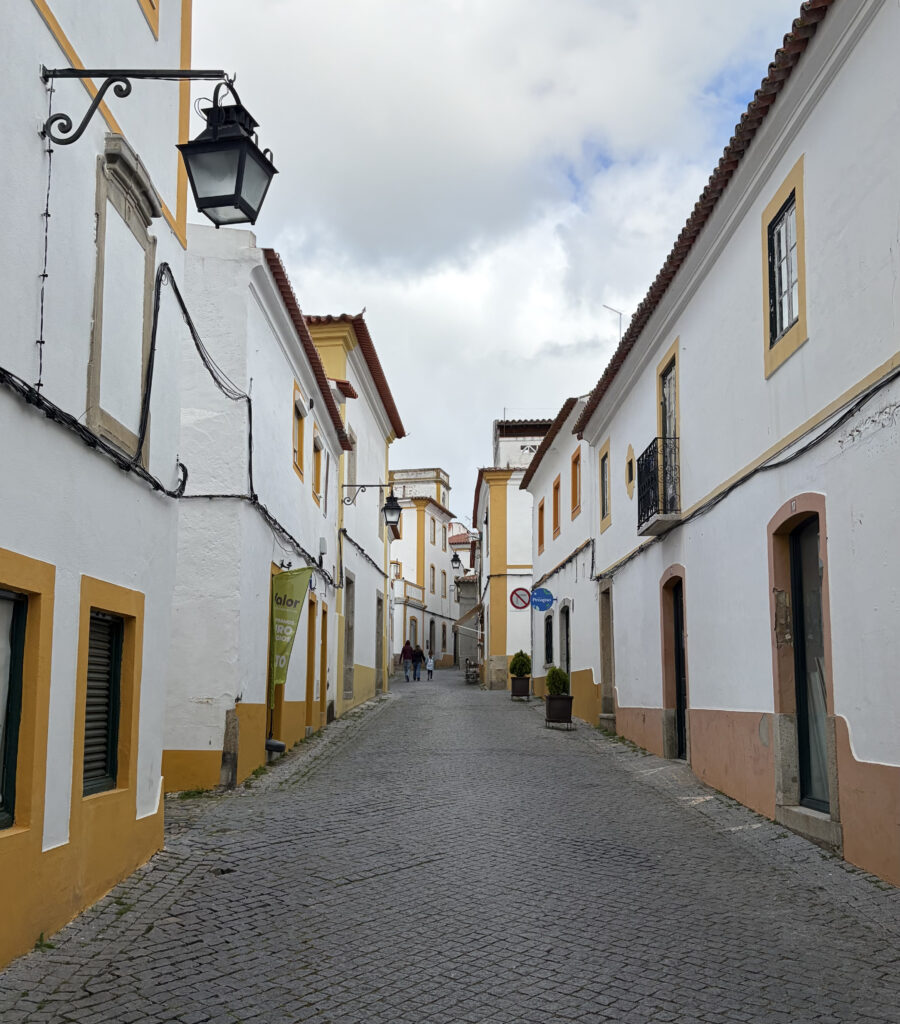
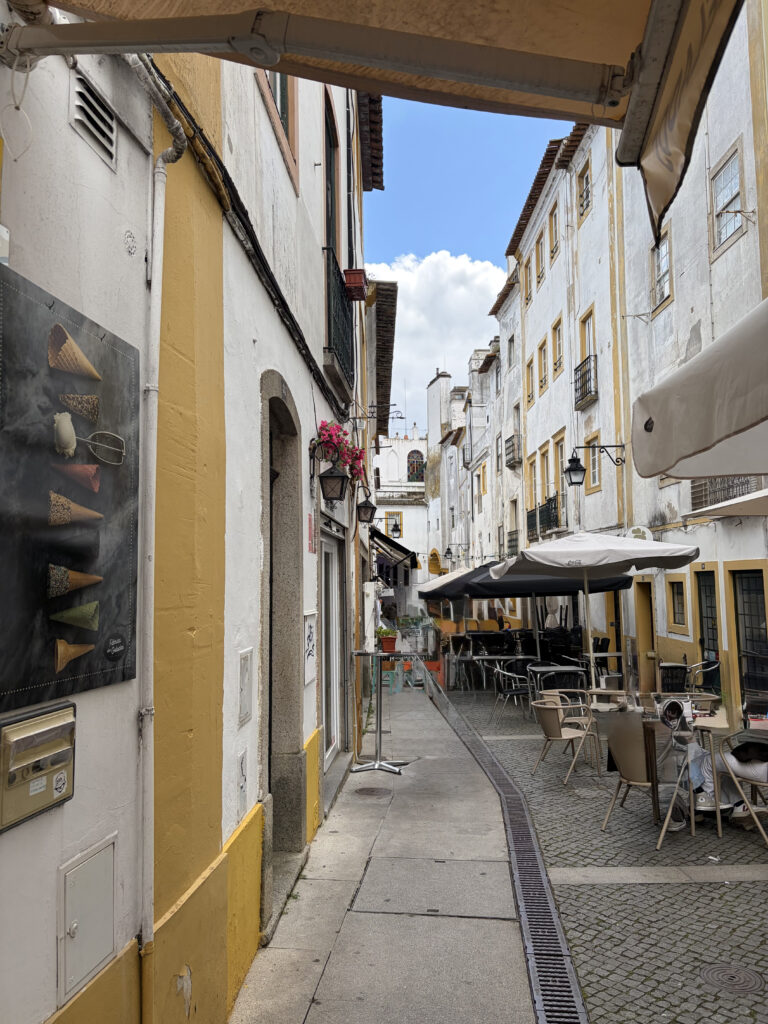
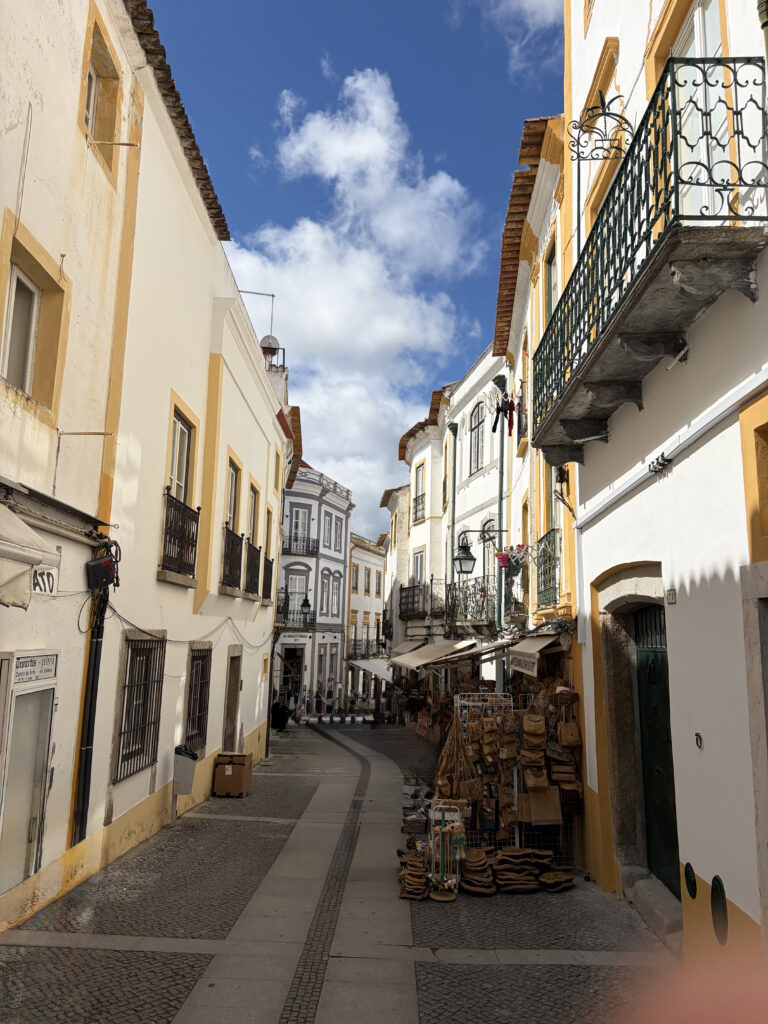
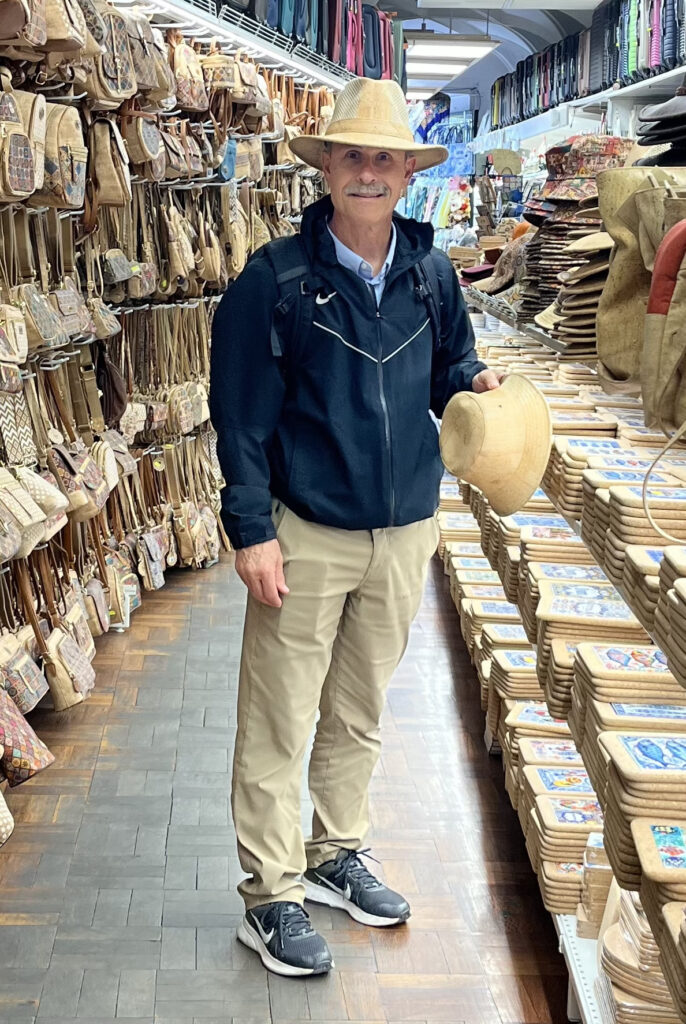
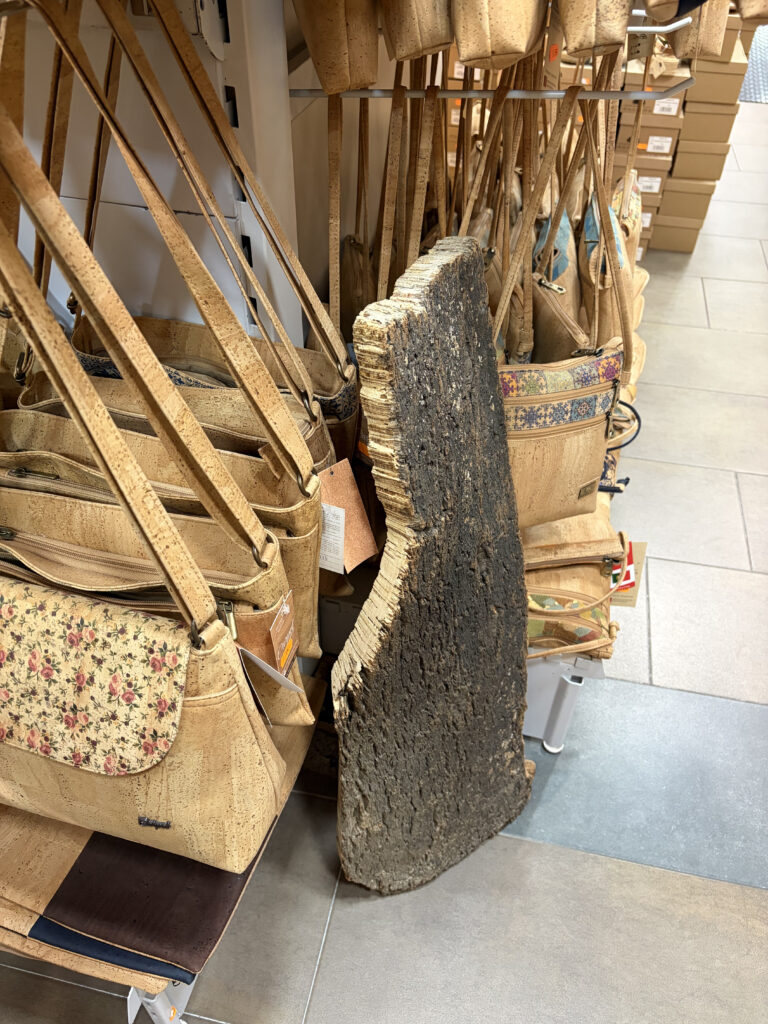
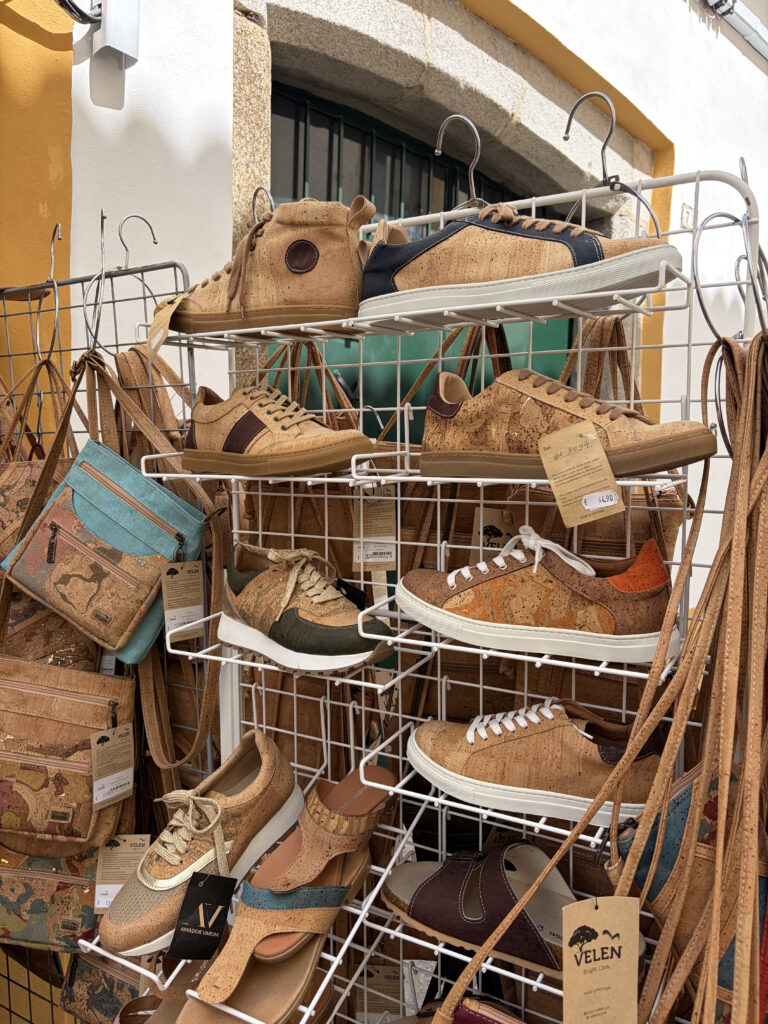
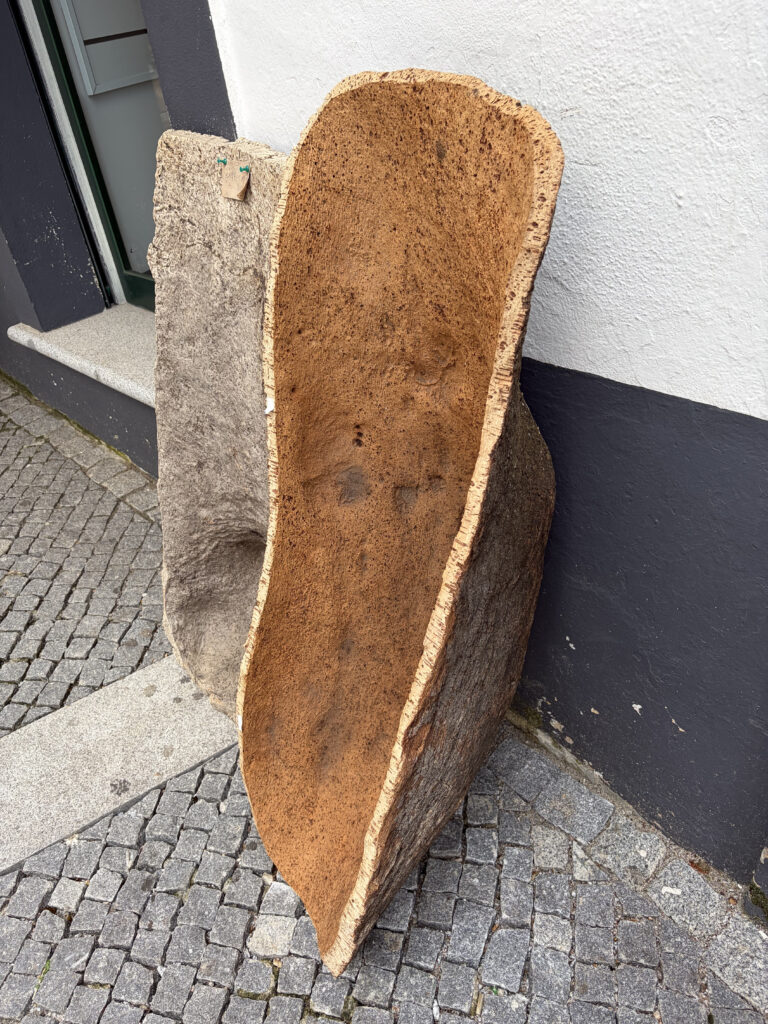
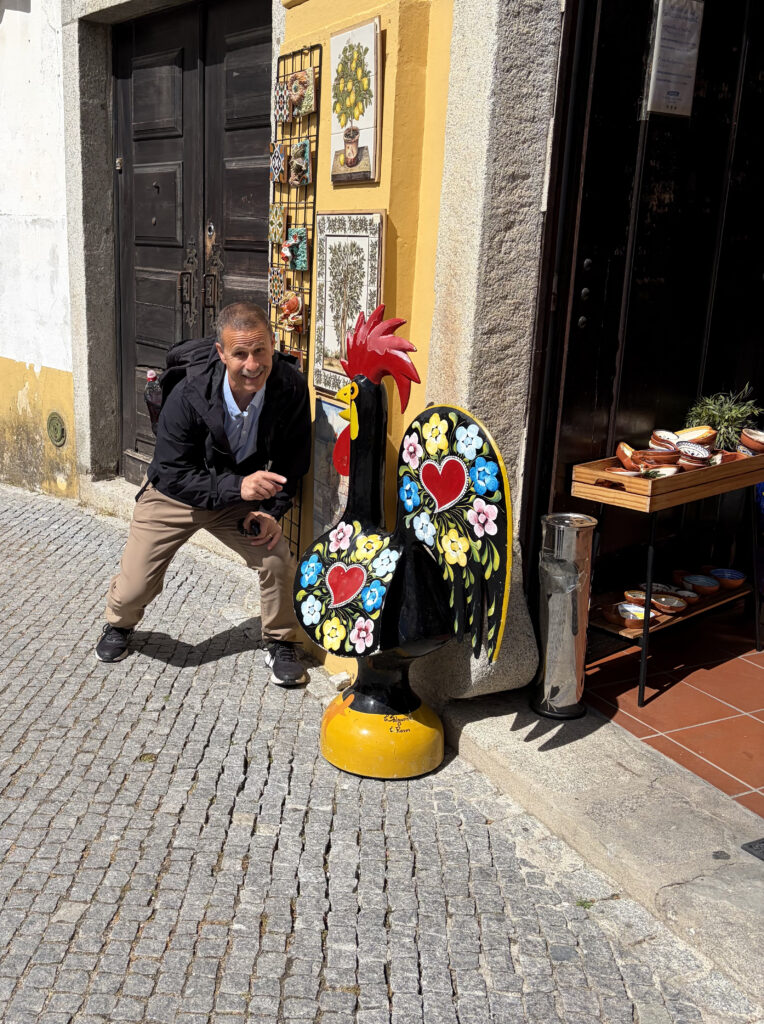
We wandered down Rua Cinco de Outubro, which is basically a cork explosion. Bags, wallets, hats—if it could be made of cork, it was. Portugal produces more than half the world’s cork, which explains why you start considering whether you need a cork backpack. (You don’t. But you might.) Portugal produces over half the world’s cork, which somehow makes all of it feel less like souvenirs and more like local identity.
Then, almost casually, you turn a corner and there it is: Templo Romano de Évora.
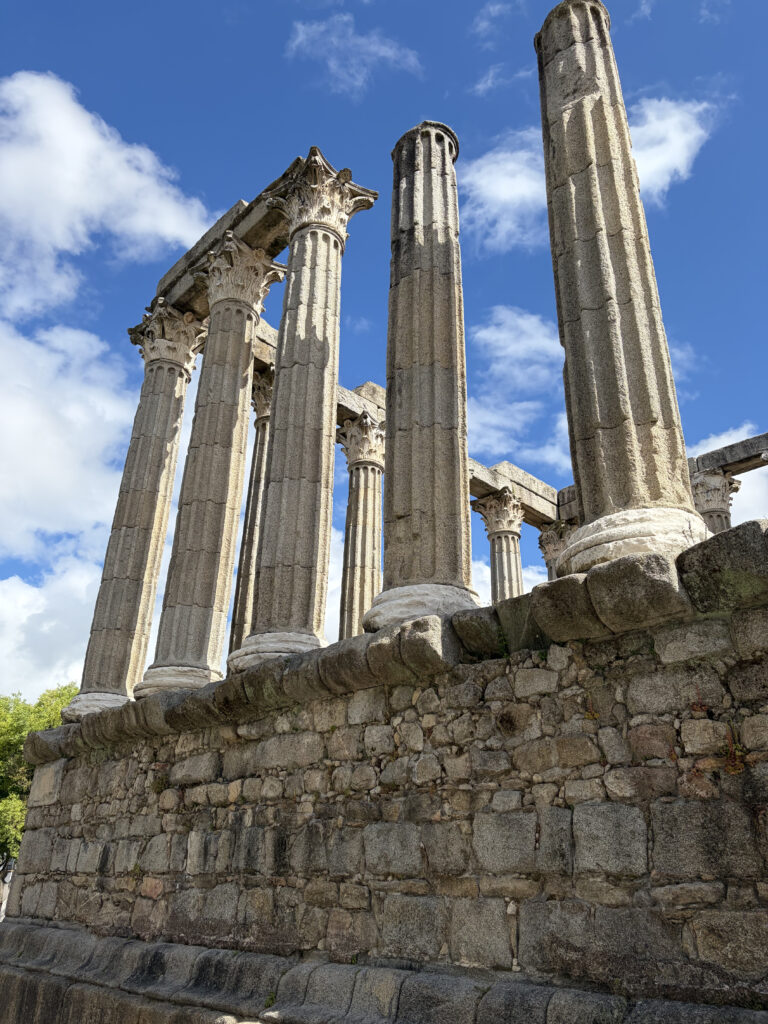
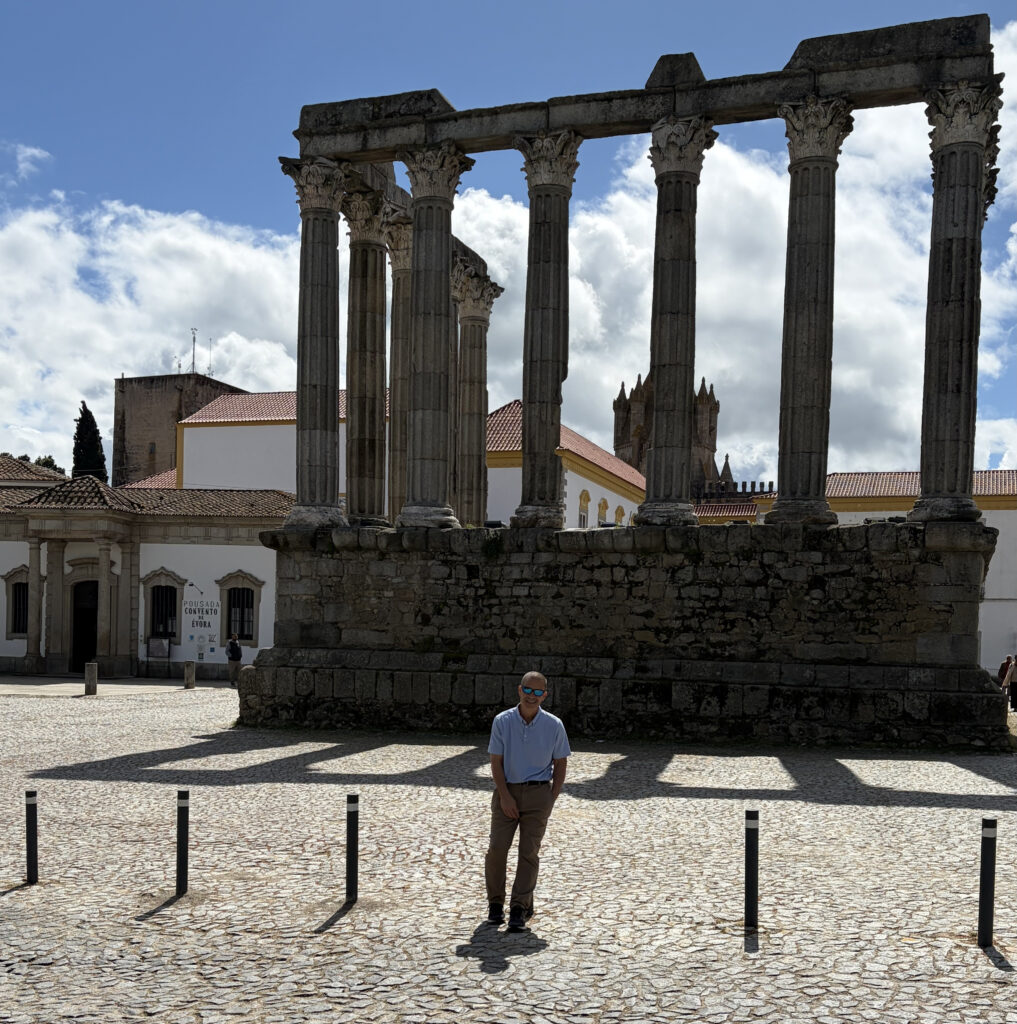
Two thousand years old, just… sitting there in the middle of town like it belongs. Built during the Roman Empire, possibly dedicated to Emperor Augustus. No ropes, no grand staging—just columns holding their ground through centuries of everything.
We ended the Évora loop drifting through Jardim Público de Évora, which felt like the city exhaling. Green, shaded, slower. A nice counterbalance before getting back in the car.
Lisbon, on the other hand, does not gently suggest anything.
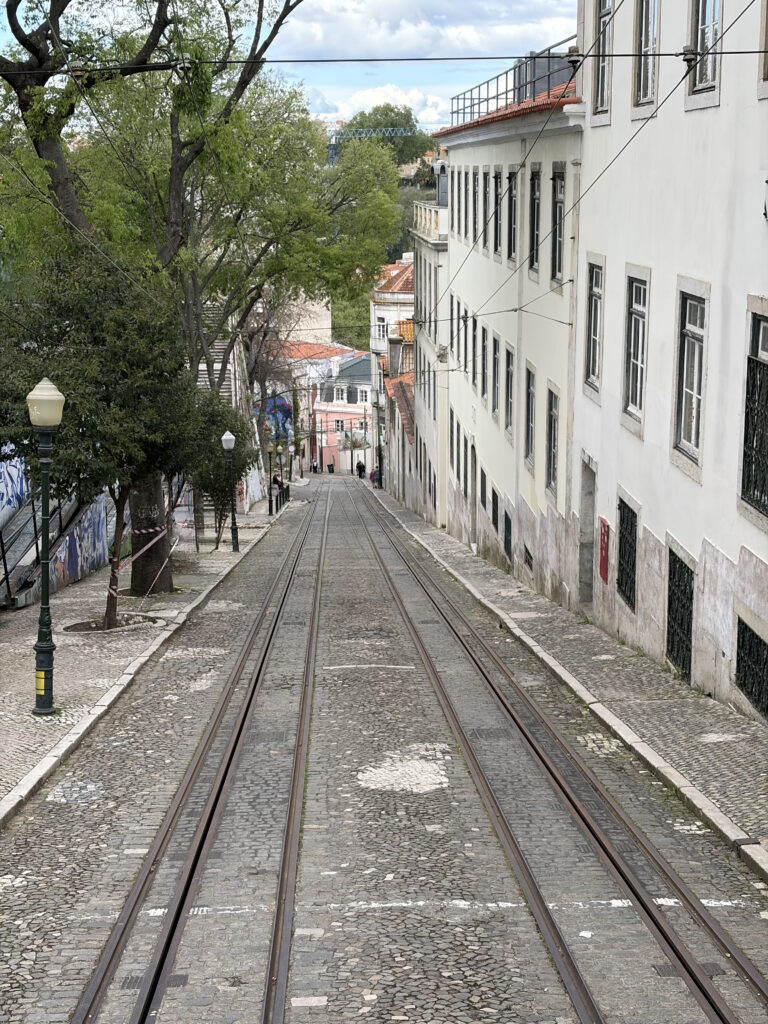
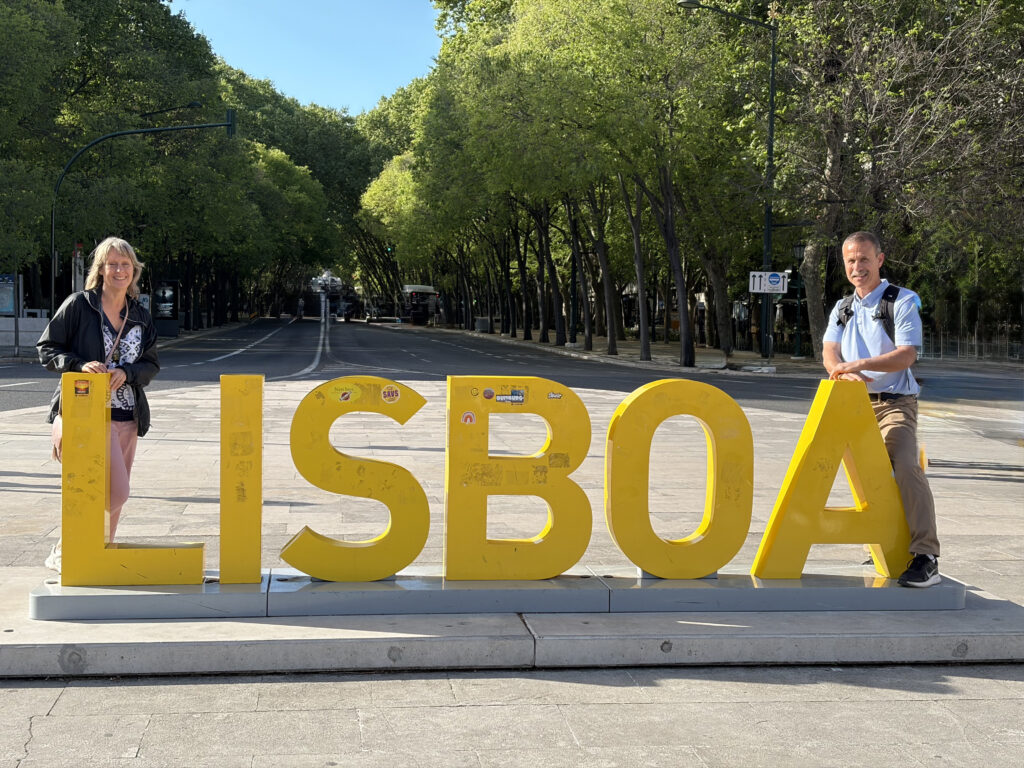
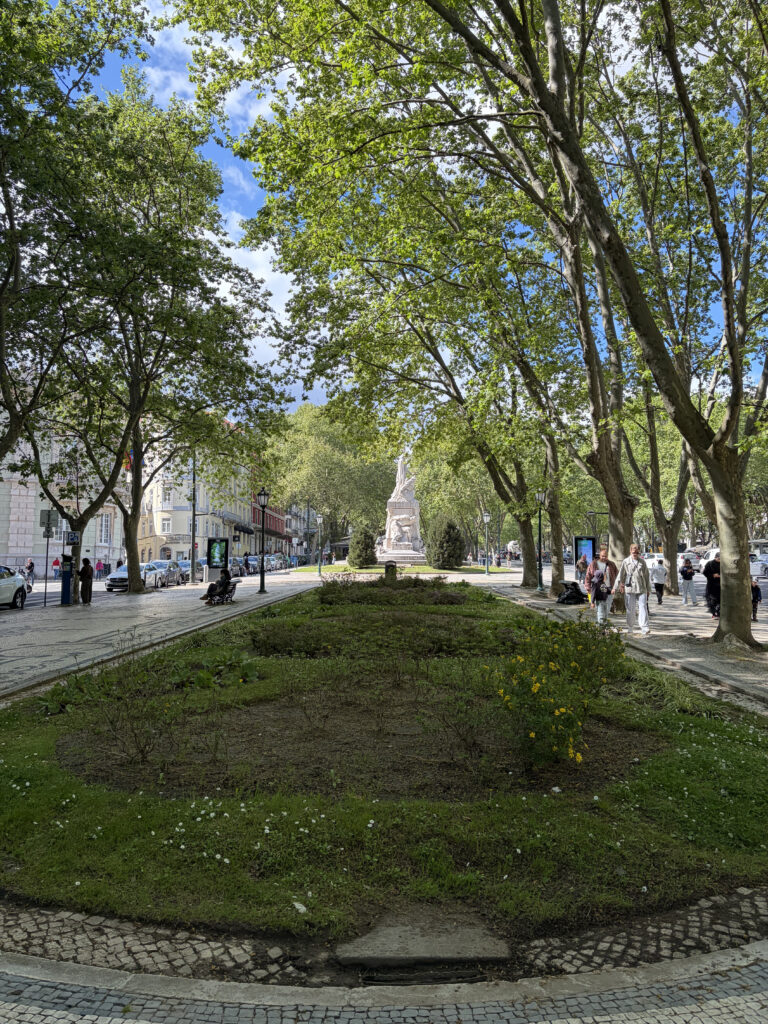
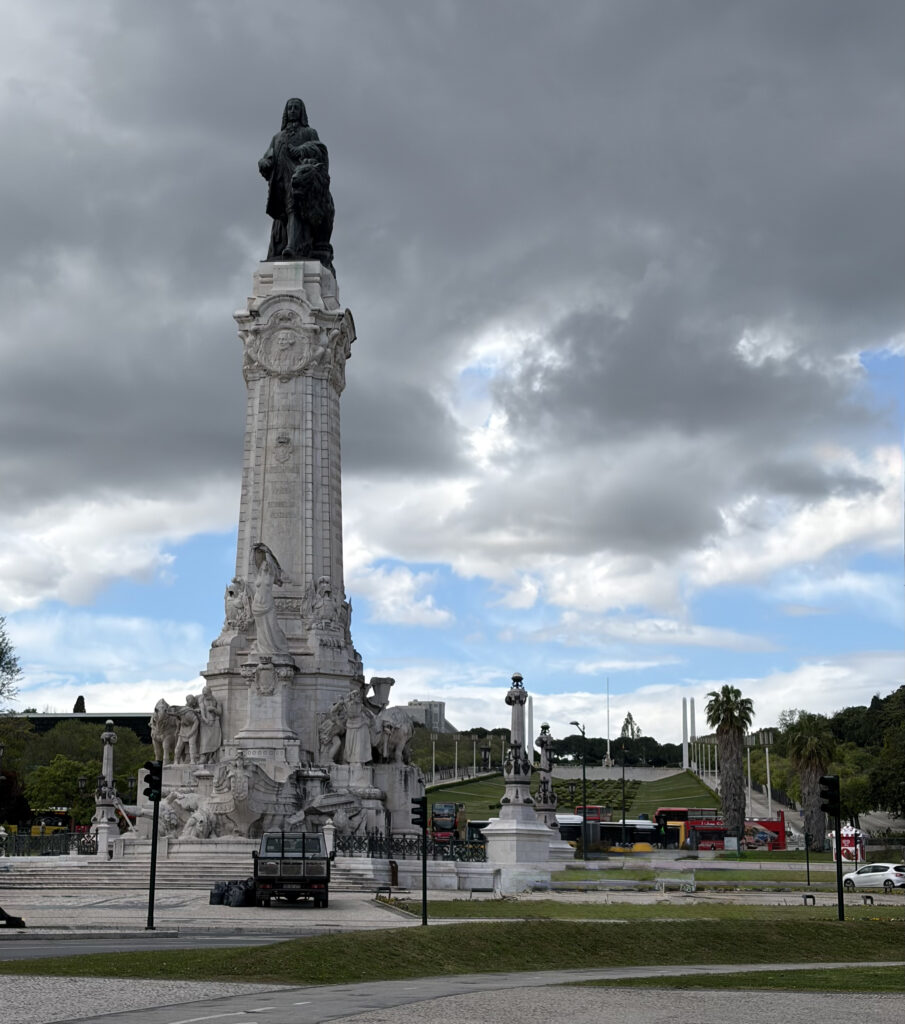
We checked into Moxy Lisbon City, dropped our bags, and immediately went back out like we had something to prove. Entering via Avenida da Liberdade feels grand and manageable—wide sidewalks, trees, a false sense of security.
And then Lisbon reveals its true personality: stairs.
We climbed into Bairro Alto, which I’m pretty sure is just one long, scenic leg workout disguised as a neighborhood. Every time you think you’re at the top, Lisbon politely introduces you to another hill.
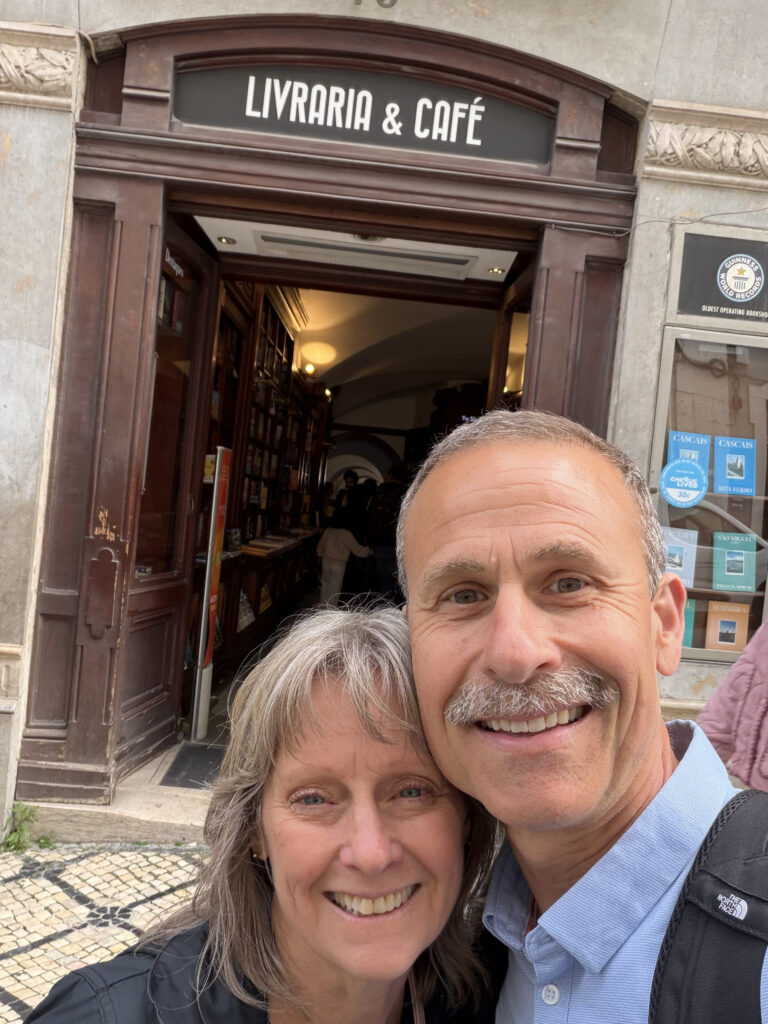
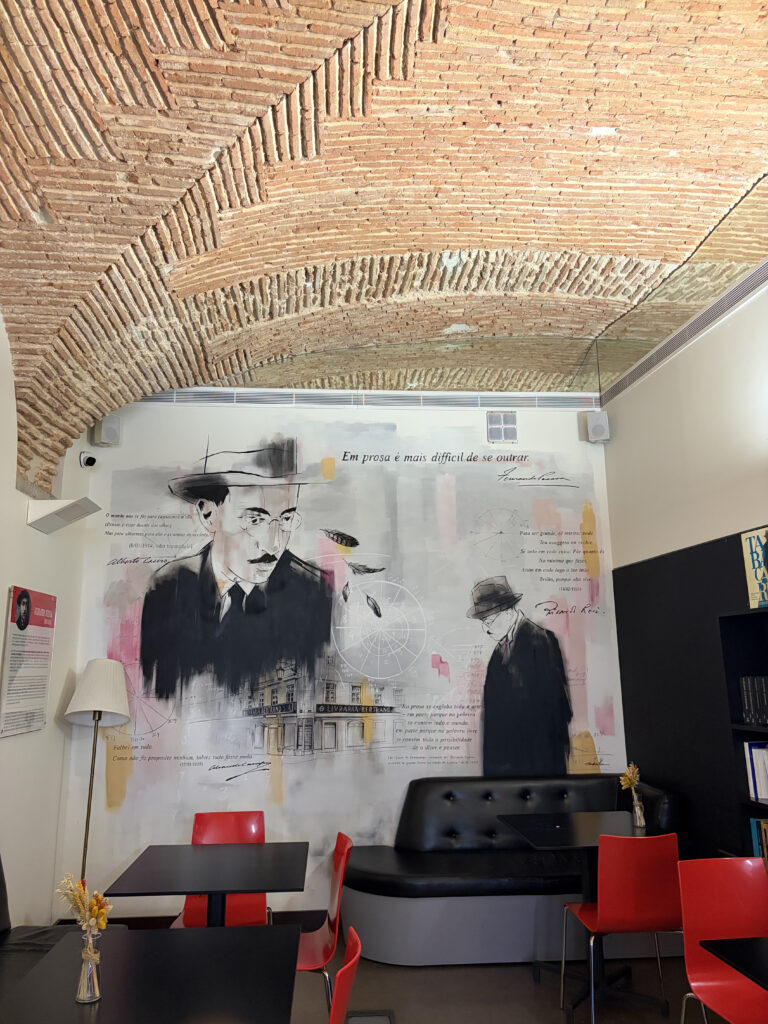
Somewhere in there, we stopped at Livraria Bertrand—the oldest operating bookstore in the world, open since 1732. It survived earthquakes, revolutions, everything. Shelves packed tight, wood worn smooth from centuries of hands. You don’t rush in a place like that.
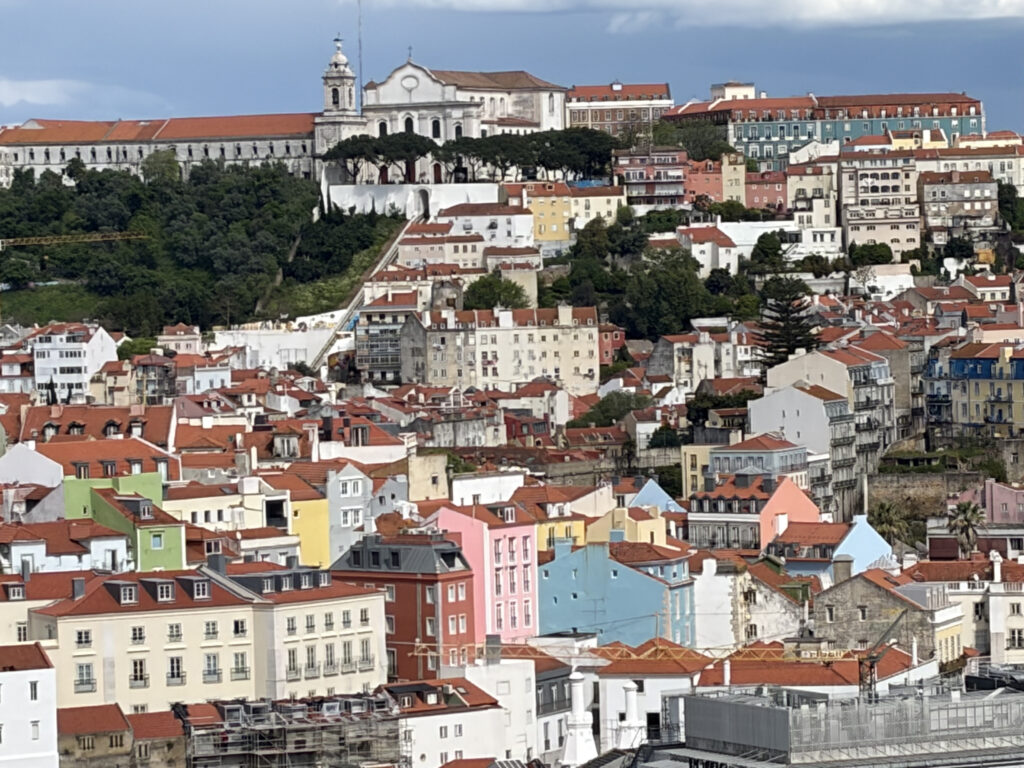
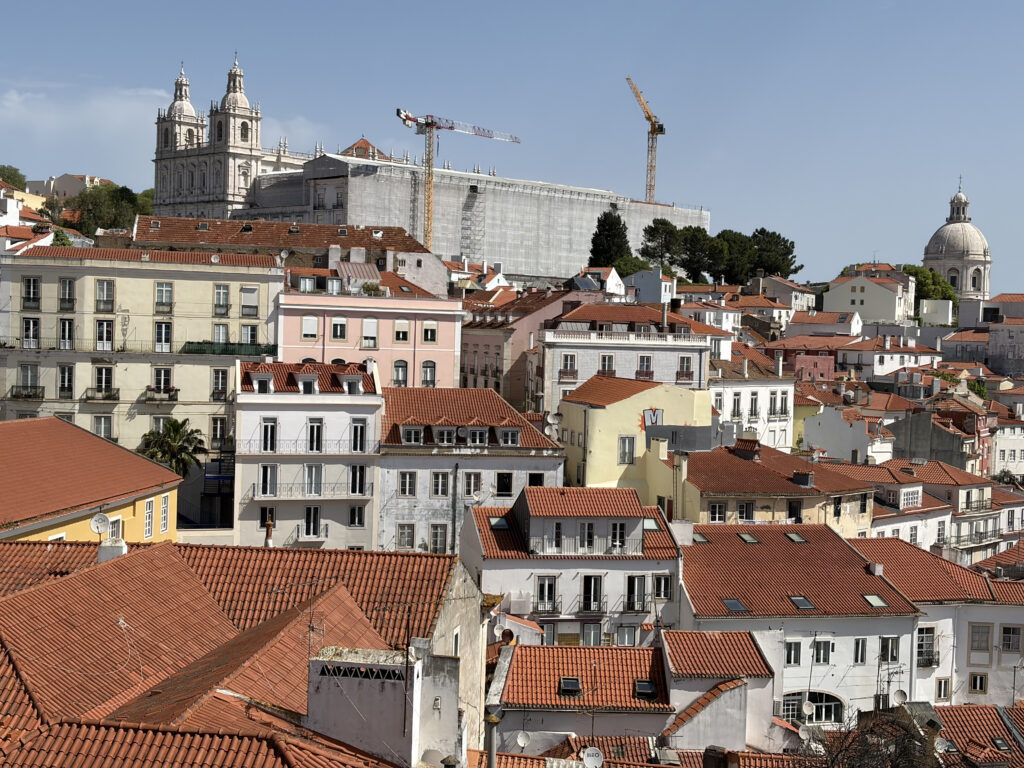
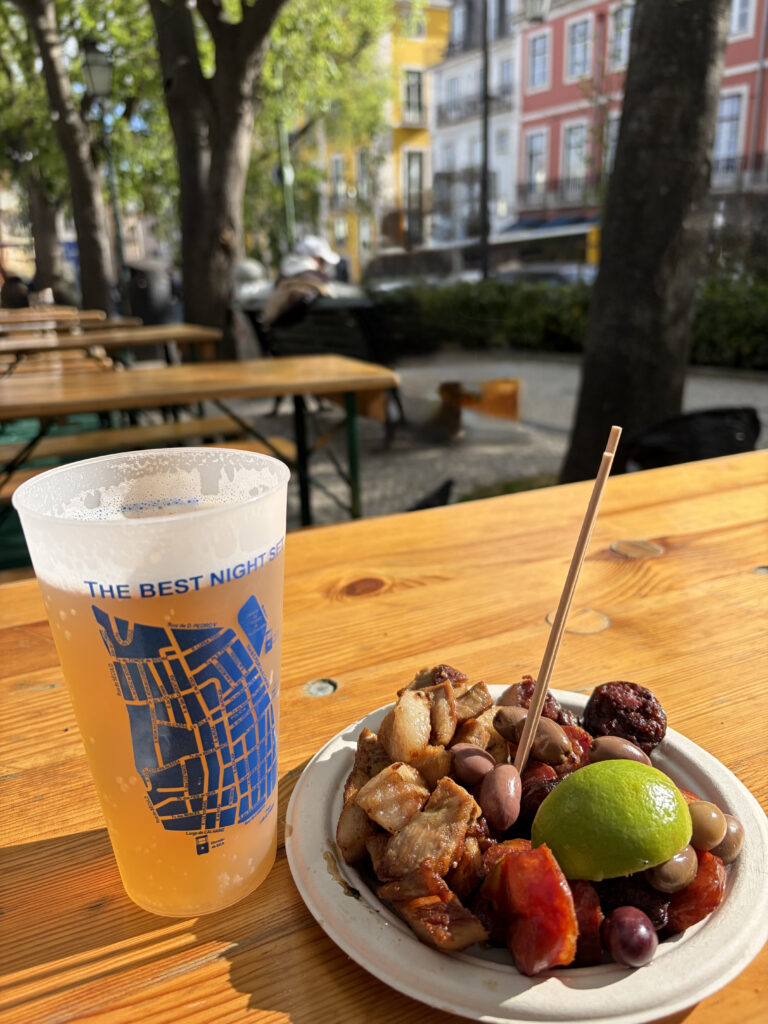
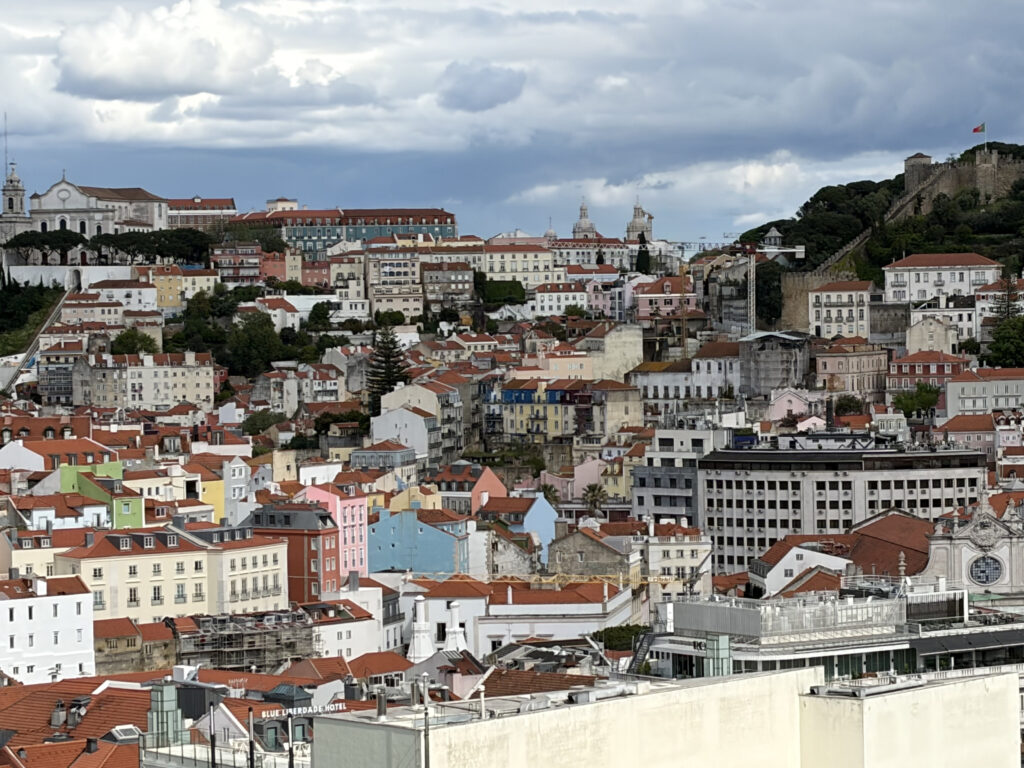
Dinner came early, mostly because we were done climbing. We ended up at Miradouro de São Pedro de Alcântara, eating with one of those views that makes you forget what you ordered. Lisbon just spills out in front of you—terracotta roofs, the castle up on the hill, the river catching the last light.
The next morning started slower but somehow covered more ground.
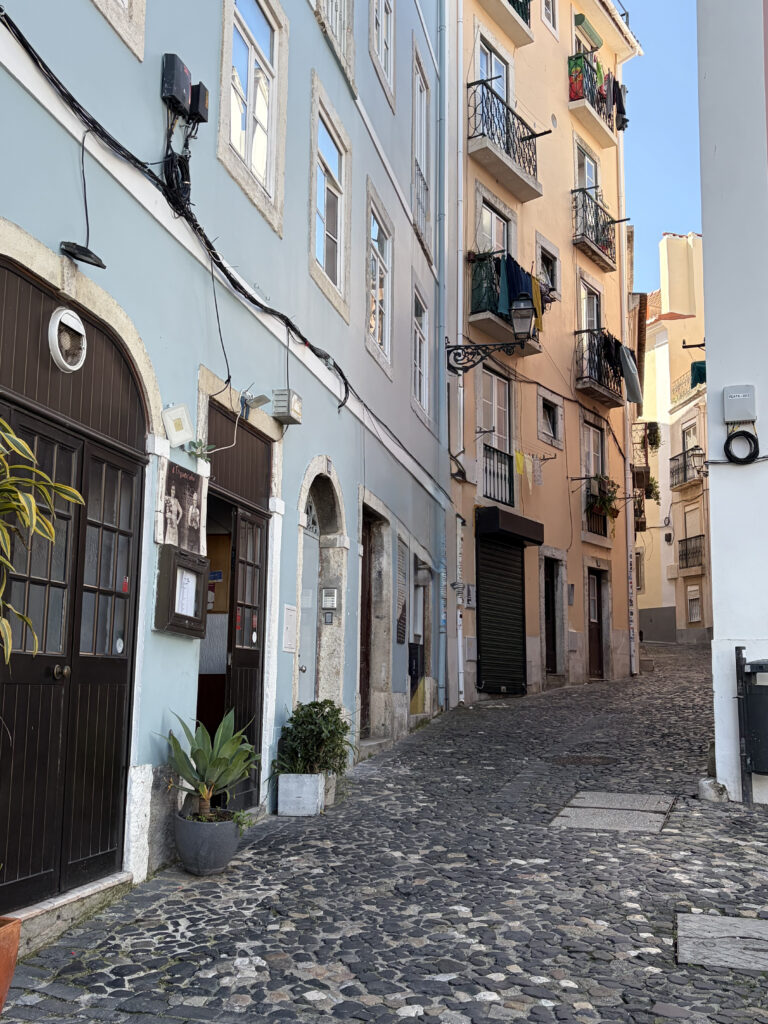
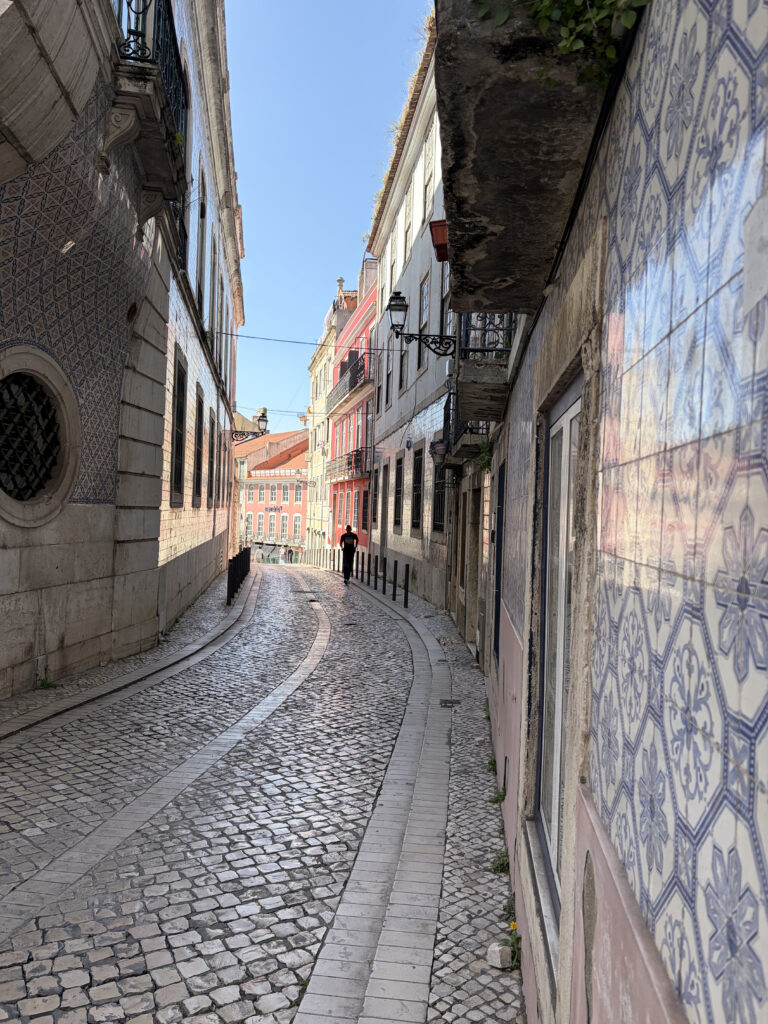
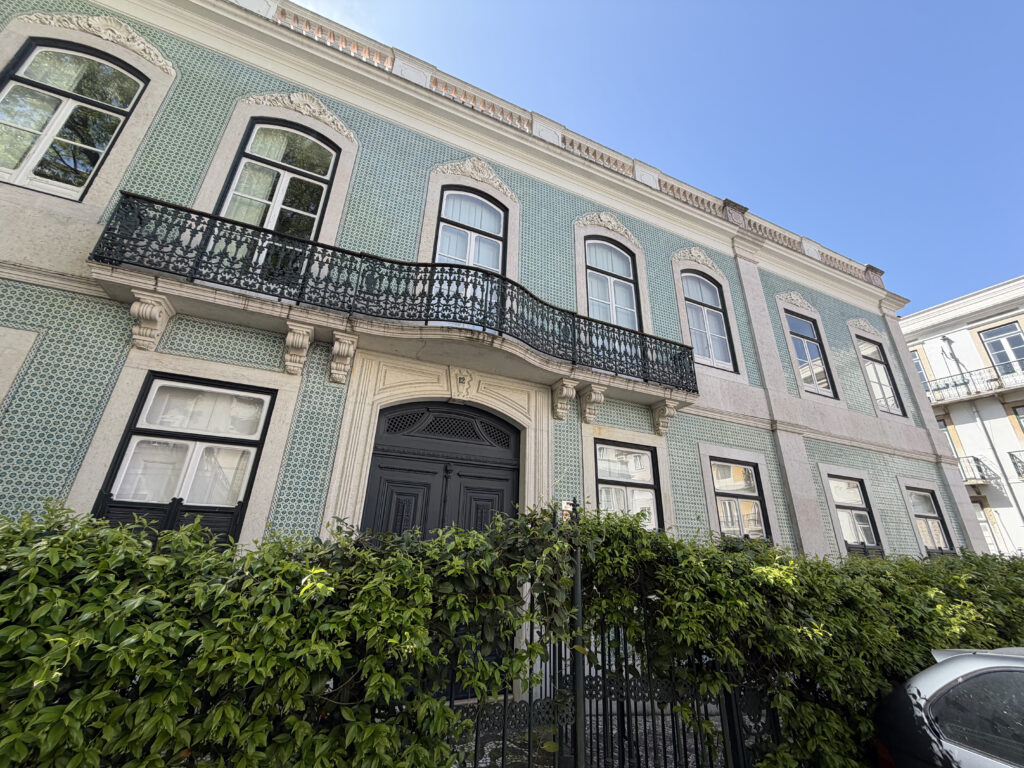
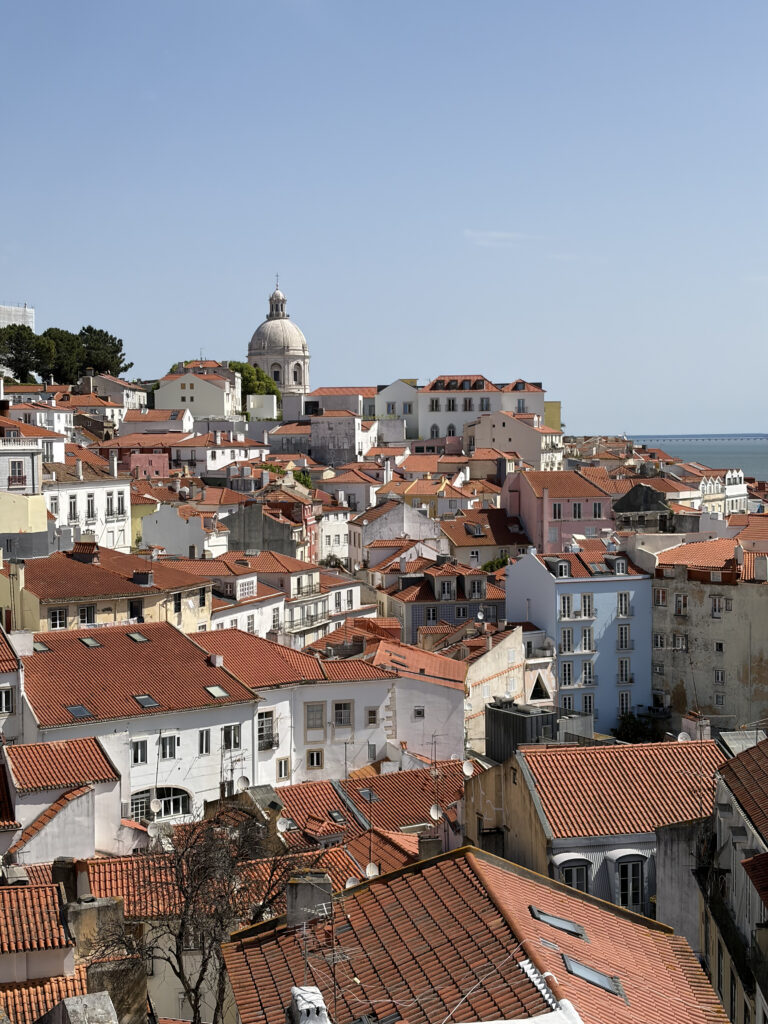
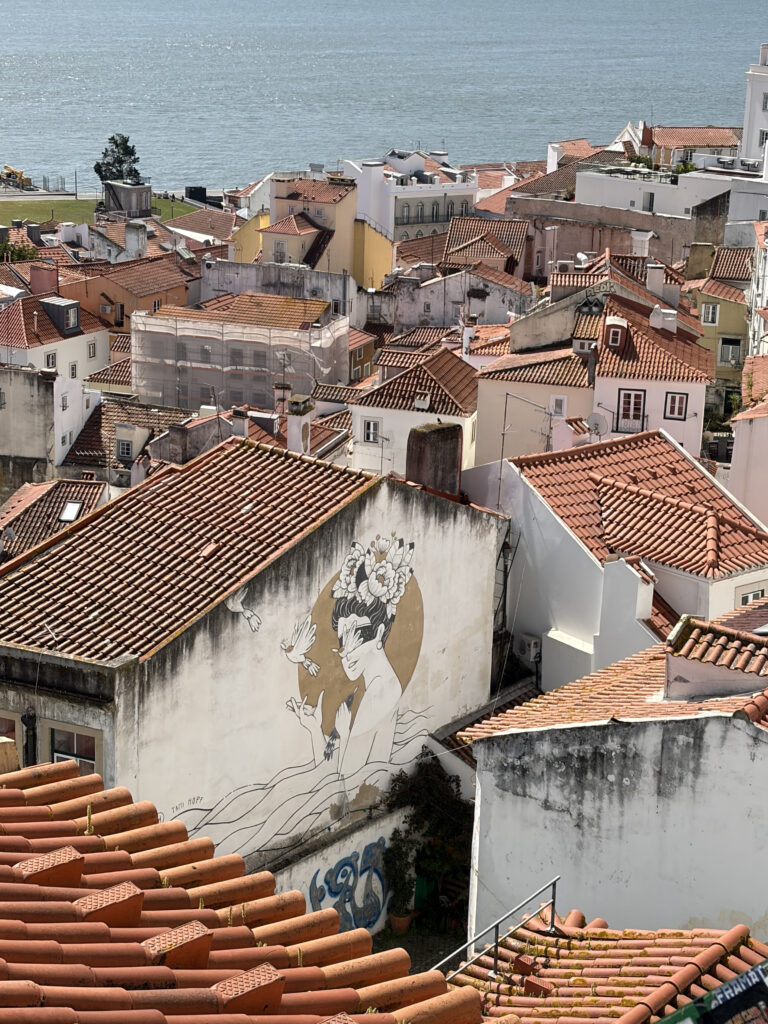
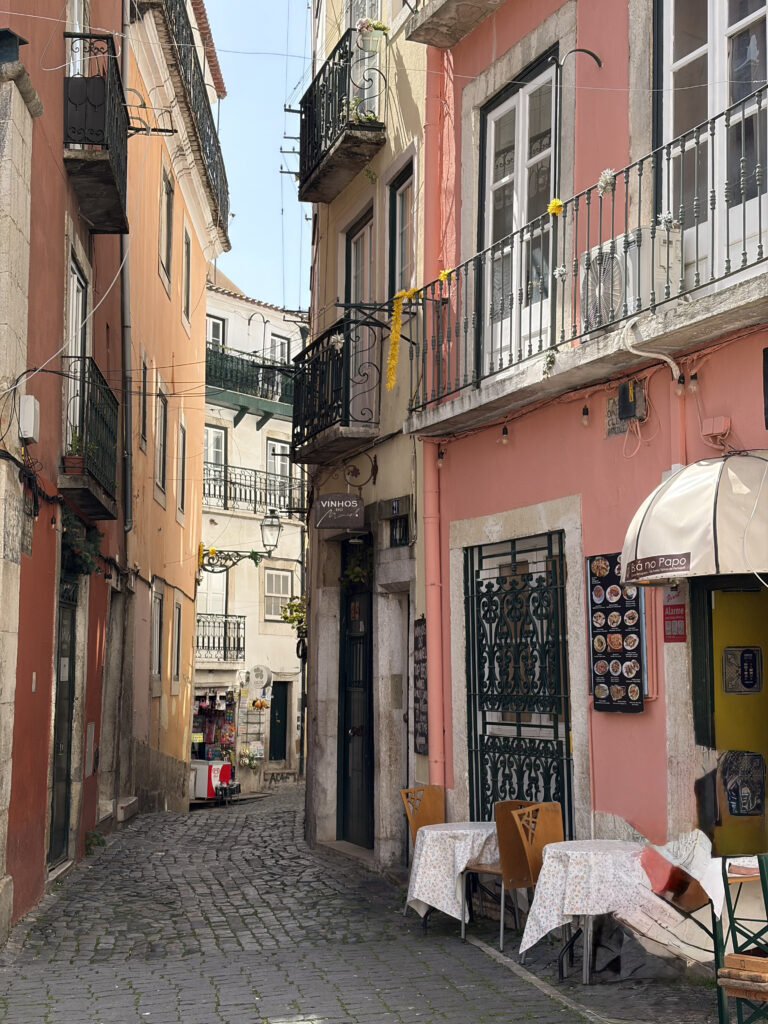
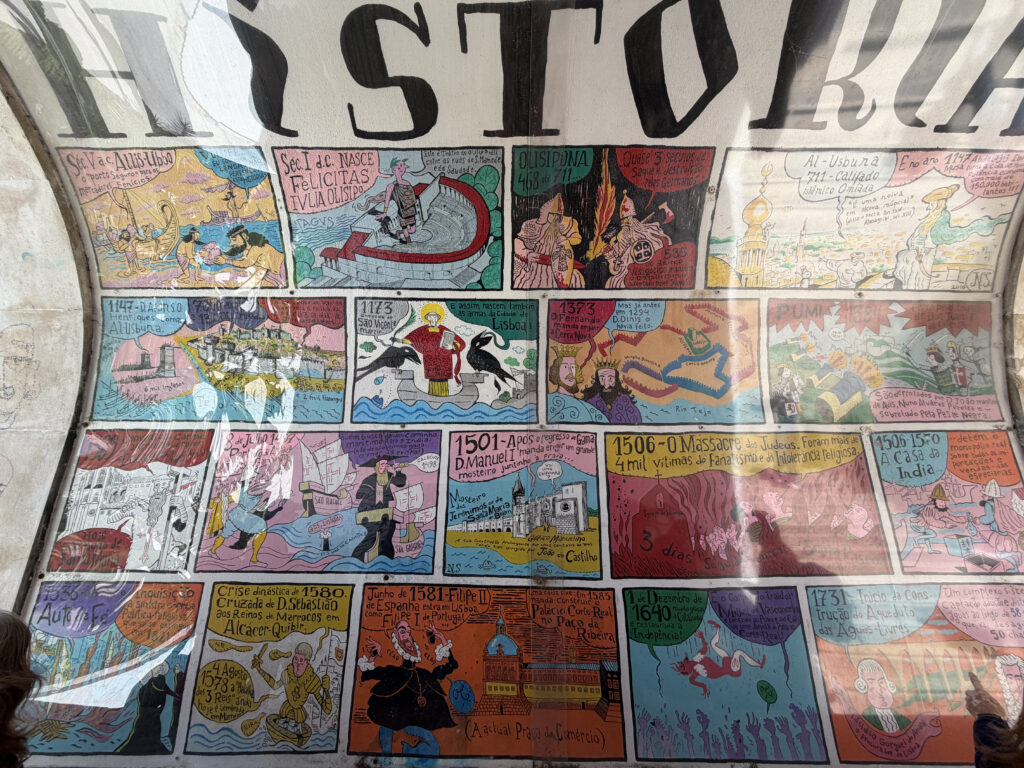
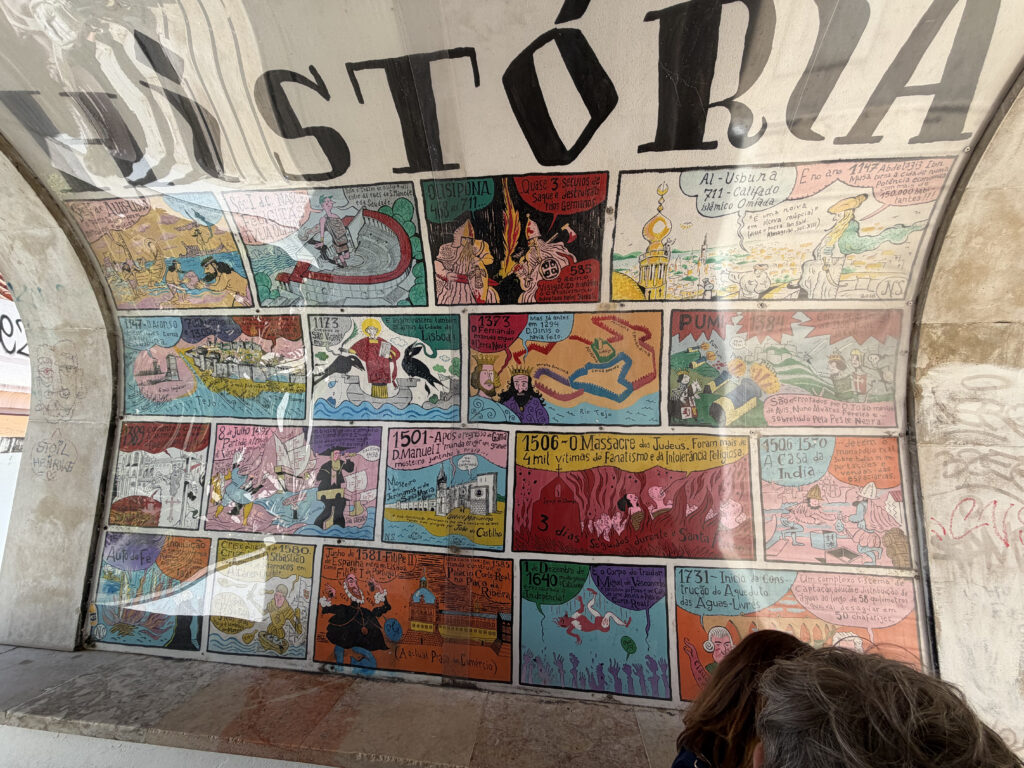
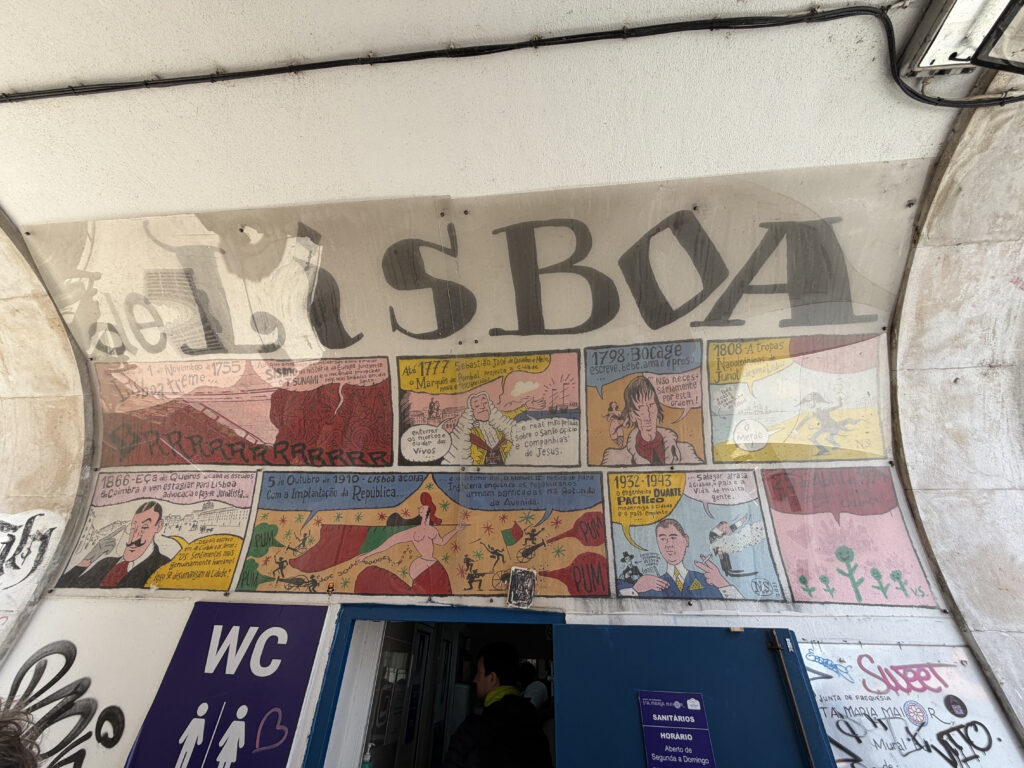
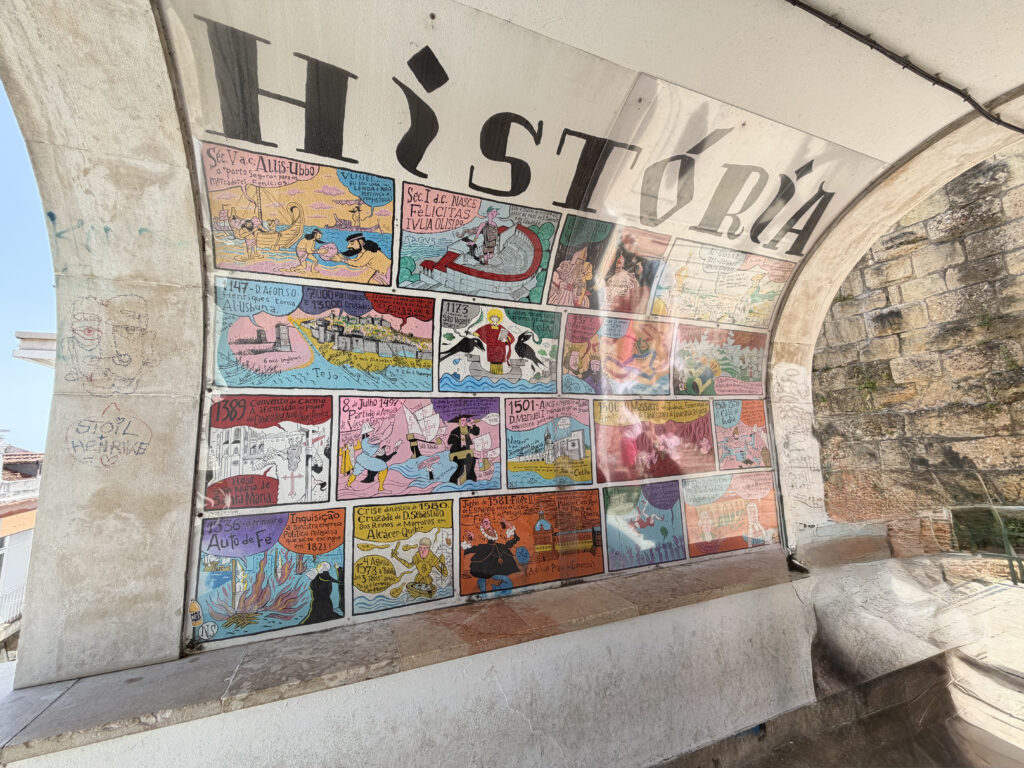
We joined a live history walk through Alfama, which feels like the oldest heartbeat of the city. Narrow alleys, tiled facades, laundry hanging above your head—it’s survived since Moorish times, even the massive 1755 earthquake that reshaped most of Lisbon. You can feel how old it is in the way the streets refuse to be straight.
From there we drifted toward Martim Moniz to catch Tram 28—the famous yellow tram that rattles through the city like it’s part transportation, part time machine. It squeezes through streets that feel too small for it, which is half the fun.
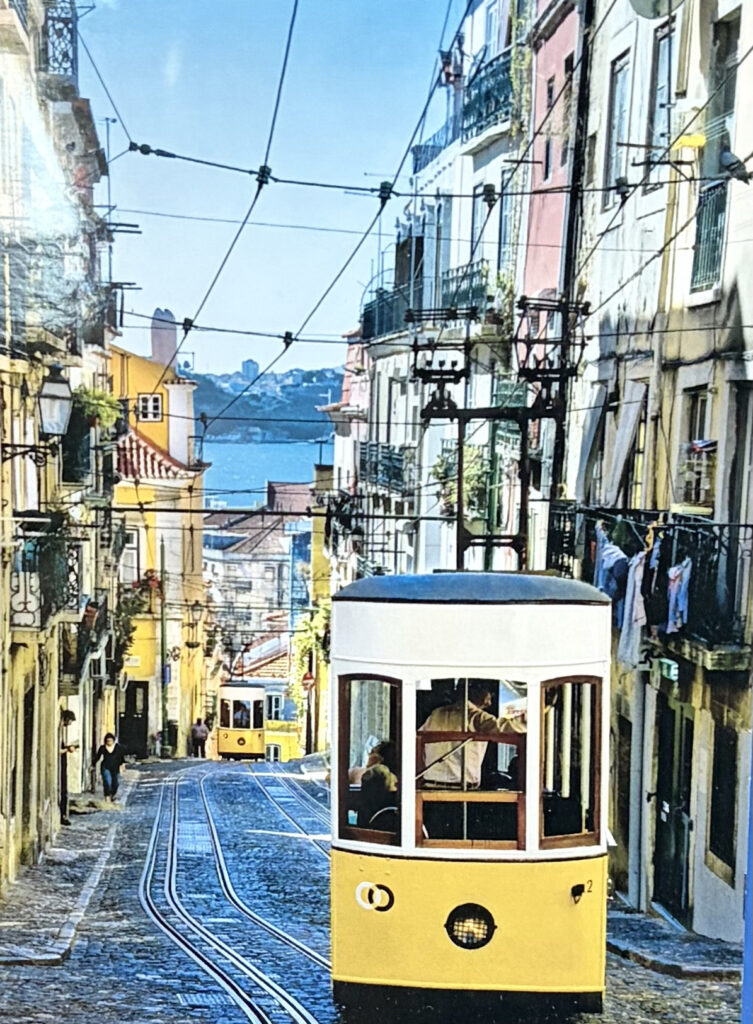
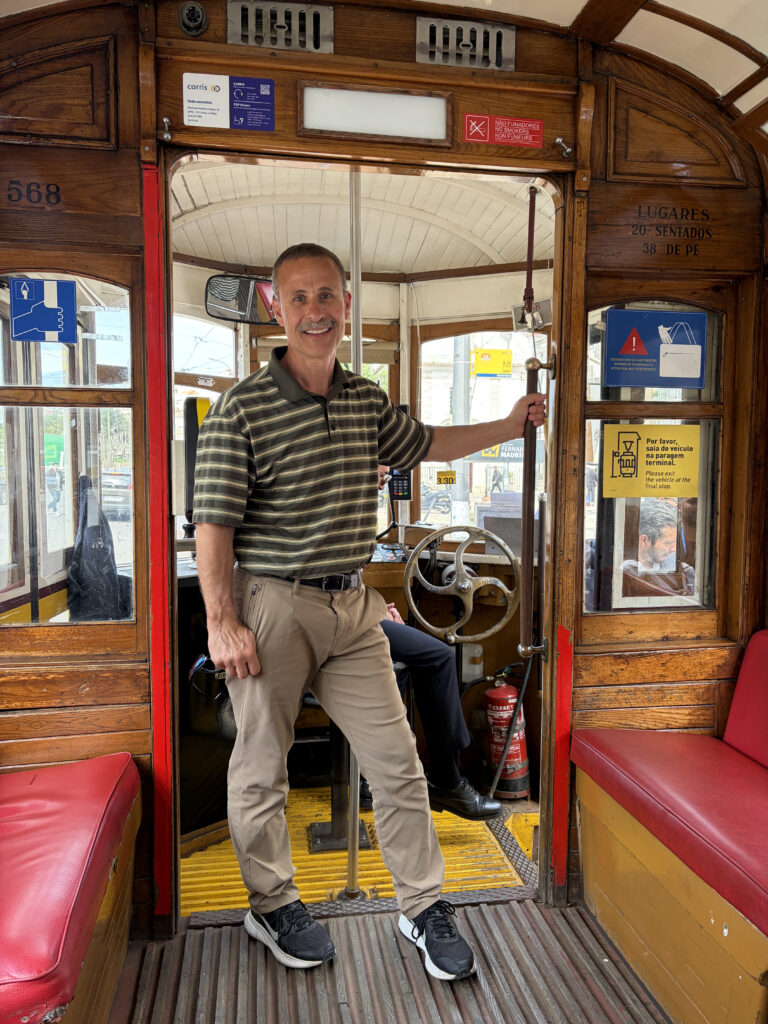
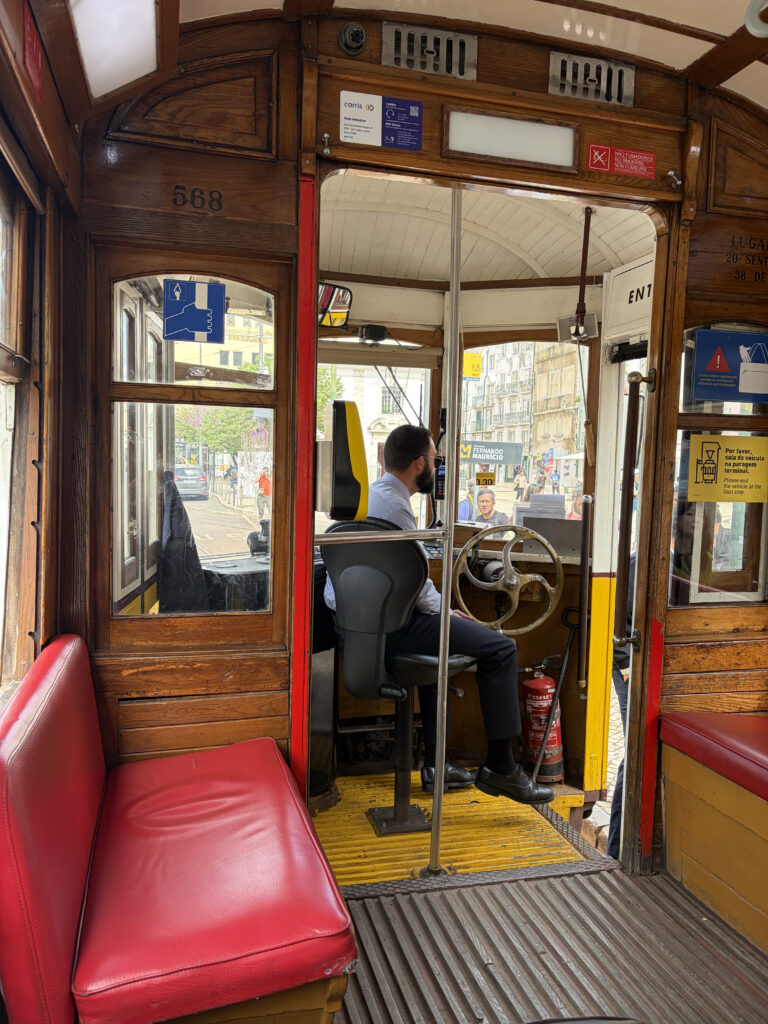
And then… the moment. Halfway up a narrow hill, the tram suddenly stopped. Not a gentle pause—more like a dramatic we are not moving until this is resolved. Turns out, a couple of modern cars were coming downhill toward us, clearly under the impression that they had the right of way.
Our driver? Not having it. He gets out. Walks into the middle of the street. And proceeds to absolutely lecture these drivers—full hand gestures, raised voice, the works. The general message (translated loosely through tone and pointing):
“This tram has been here for over 100 years. It was here before you. It will be here after you. Move.”
And honestly? Fair. Kellie kept pushing me to get the video out and film the confrontation as our tram cheered him on:) After a bit of very Portuguese stand-off energy, the cars backed up, the tram reclaimed its territory, and we all continued like nothing had happened—except now everyone on board felt like they’d just witnessed public transit defend its honor…….and certainly appreciated it!
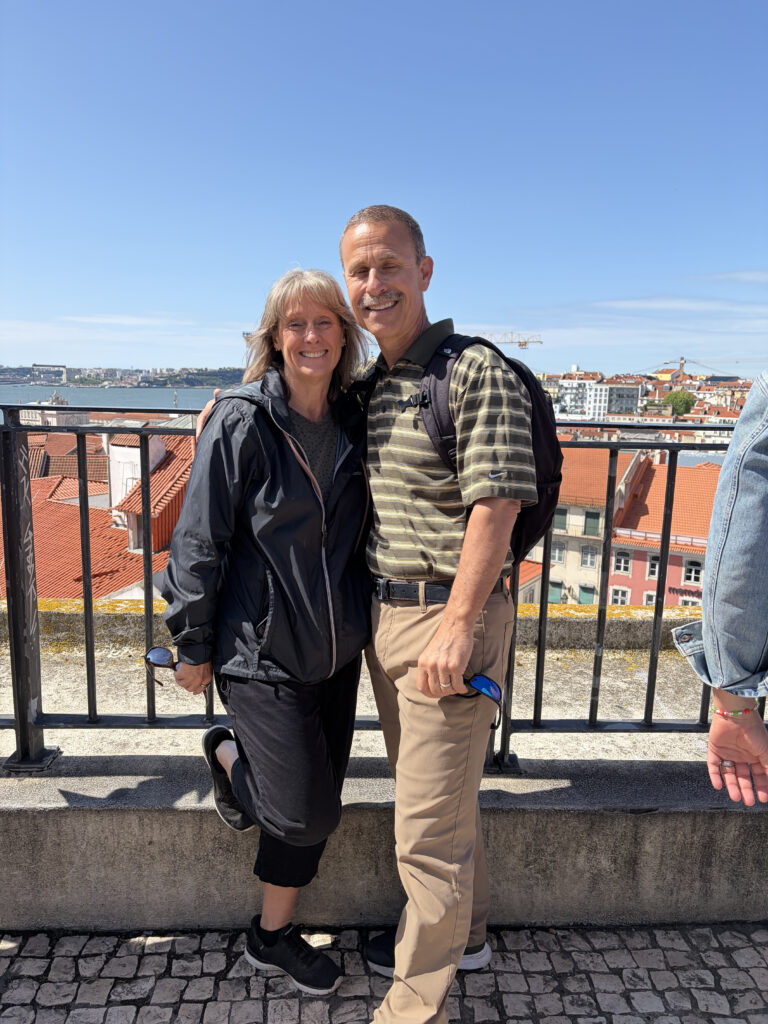
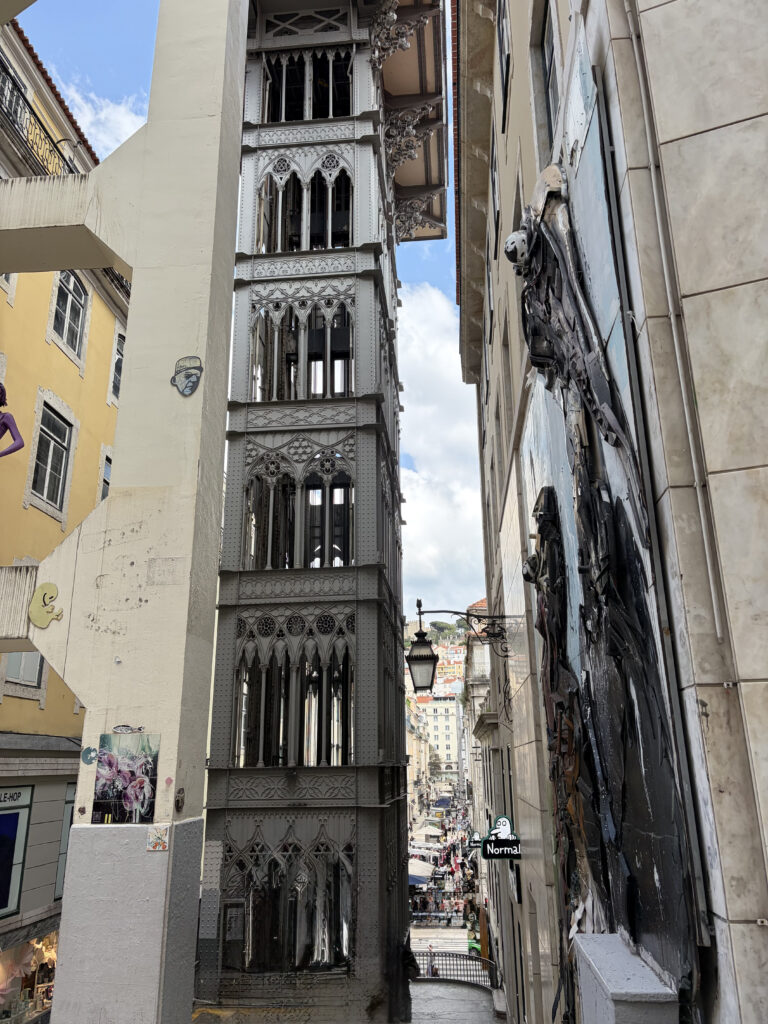
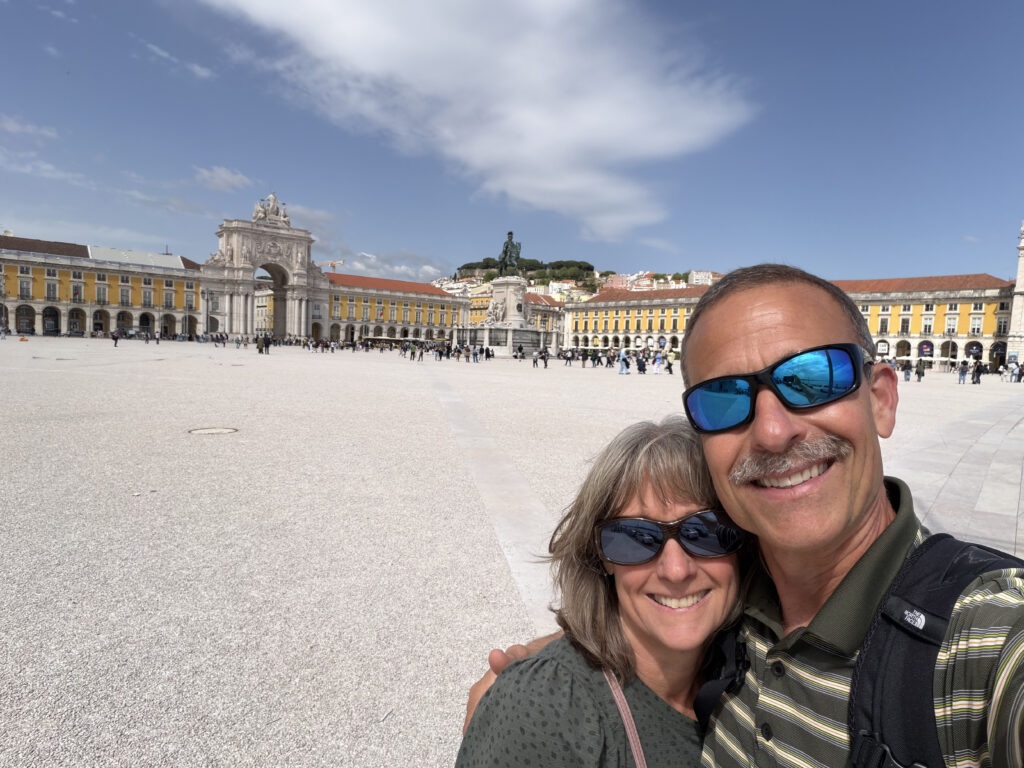
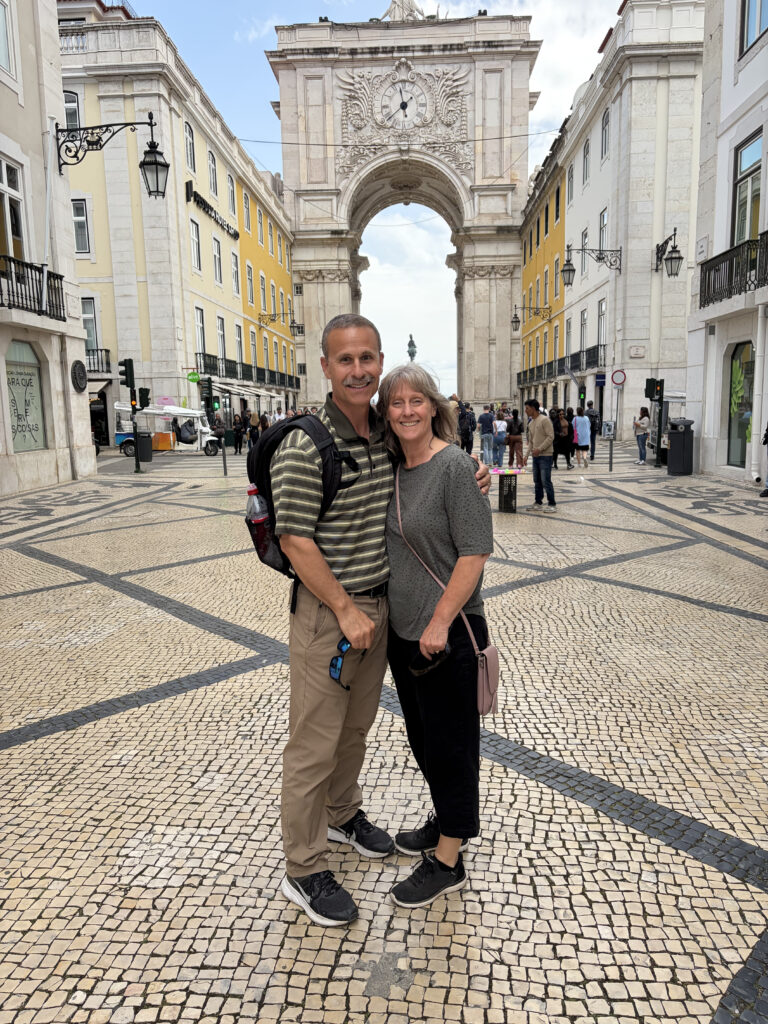
We hopped off near Rua Augusta and walked down toward Praça do Comércio, that huge open plaza facing the Tagus River. It used to be the site of the royal palace before the earthquake, and now it just feels like Lisbon opening itself up to the water.
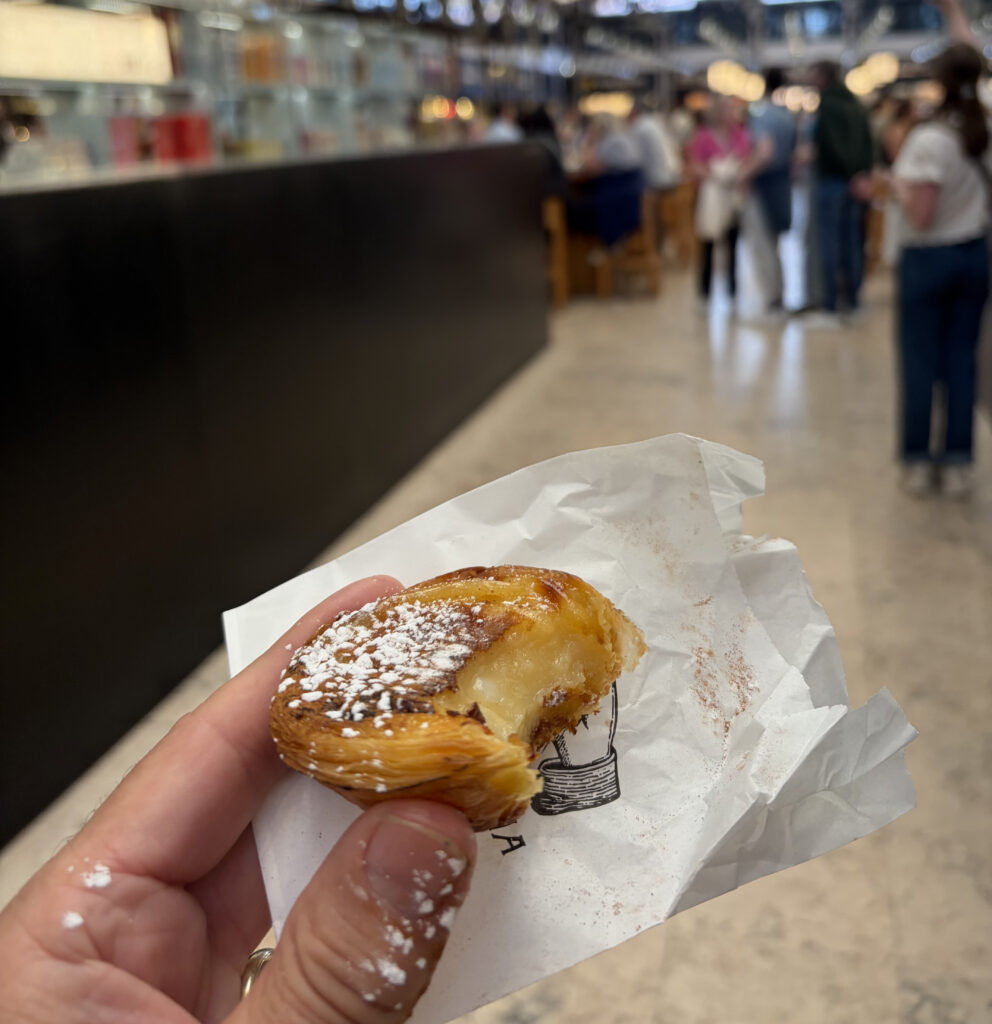
At some point hunger kicked in and we ducked into Time Out Market—which is chaos in the best way. Dozens of stalls, chefs, locals, tourists, all packed together. We grabbed small things, nothing fancy, just enough to keep moving.
And then we did what Lisbon quietly demands again: we climbed.
Back up toward the hotel, stopping at little pop-up tents along Avenida da Liberdade, browsing without urgency. It felt like the kind of shopping where you’re not really trying to buy anything—you’re just stretching out the day.
We grabbed fruit and vegetables from a tiny neighborhood shop—simple stuff, nothing curated—and carried it back like it was part of the plan all along. Back at the Moxy, beer and mocktail in hand, cutting into fresh fruit as the light faded over Lisbon. No big landmark moment, no schedule—just the city softening around us. That last sunset we took upstairs.