
We were already halfway through breakfast when it hit me that we hadn’t rushed once all morning. Just sat there, coffee going warm between sips, watching the light come in off the Atlantic like it had nowhere else to be.
Portugal has a way of doing that to you. By the time we finally packed up and pointed the car inland, the day already felt like a bonus round.
Óbidos — stepping into a storybook
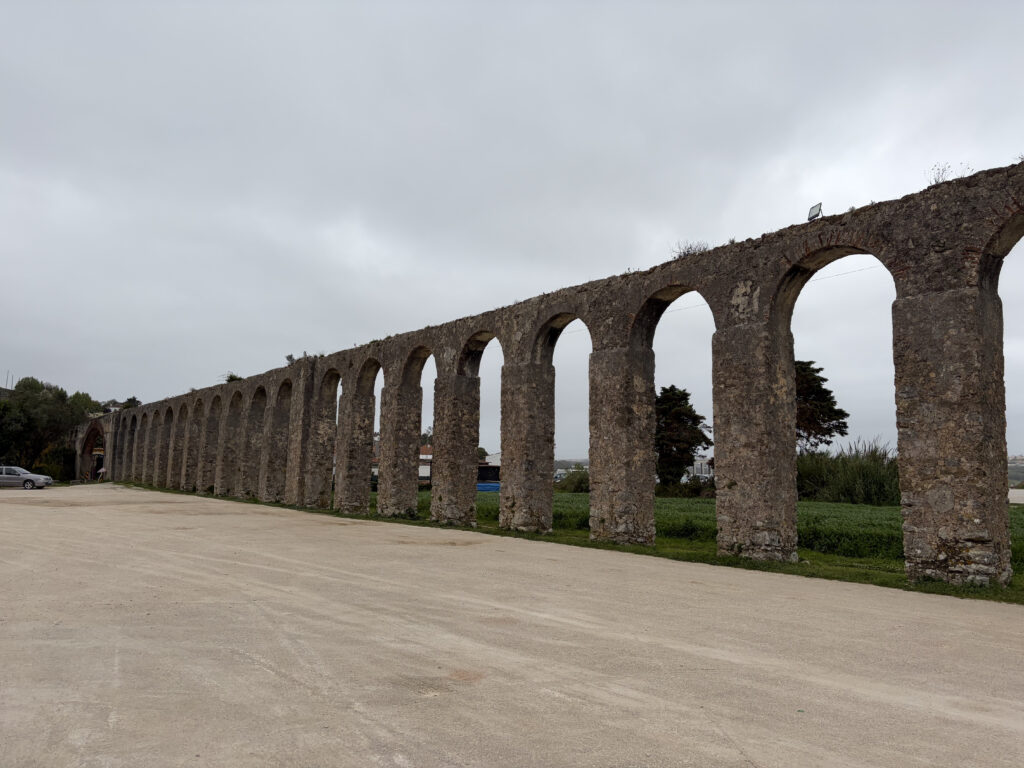
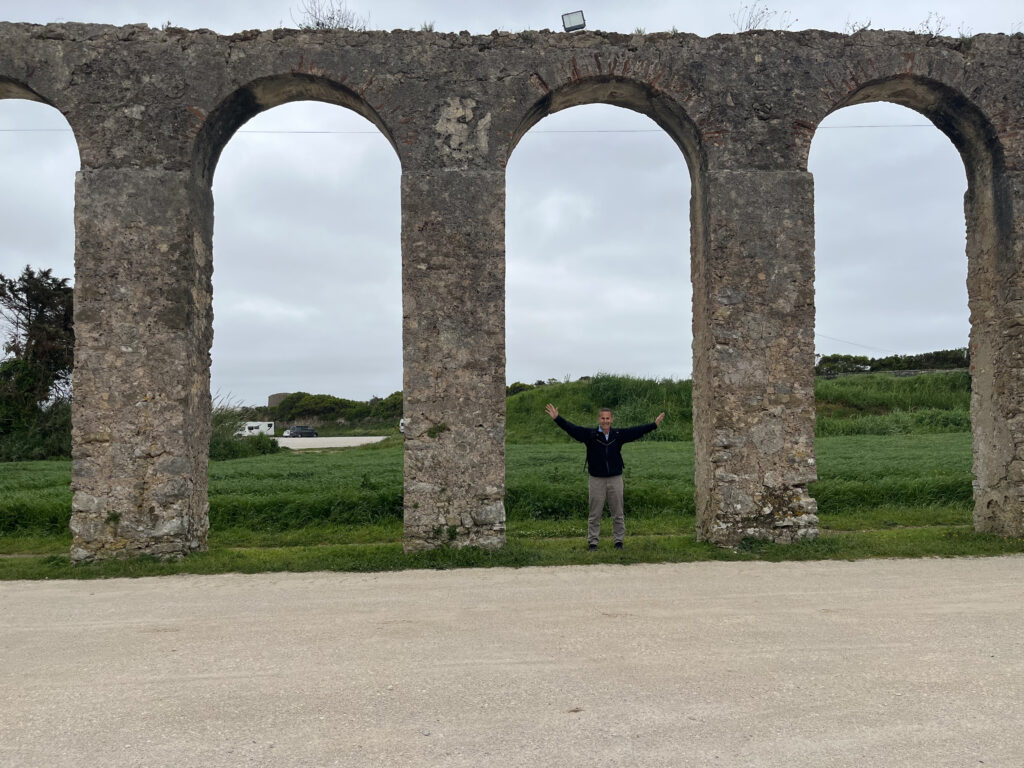
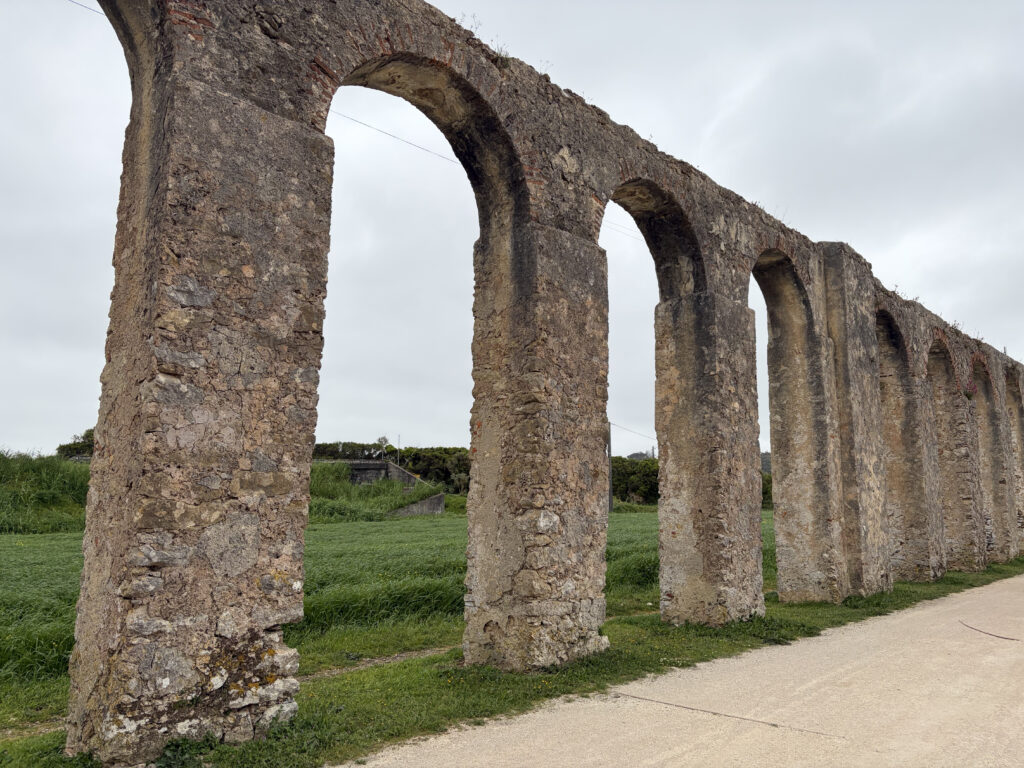
The first thing that really stopped us wasn’t even inside town—it was the long, sun-bleached stretch of the Aqueduto de Óbidos. Built in the 1500s to bring water into the hilltop village, it still runs almost completely intact, like a quiet introduction before the main act.
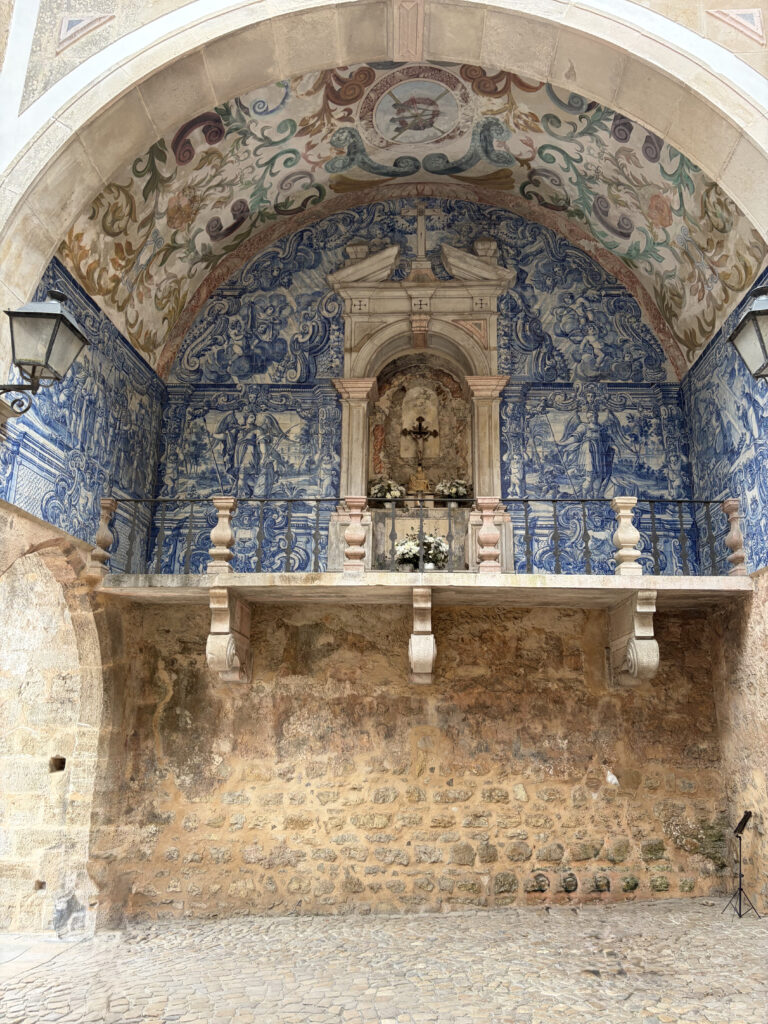
Then came the Porta da Vila—and you could immediately see the strategy. Two staggered gates, not lined up, forcing anyone entering to slow down, turn, hesitate. Medieval defense disguised as charm. Inside, the blue-and-white azulejo tiles told stories right on the walls—some religious, some just… everyday life frozen in ceramic.
Óbidos itself dates back to Roman times, but it really took shape under the Moors before being captured by Portugal’s first king in the 12th century. Later, it became part of a royal wedding gift tradition—passed from king to queen for centuries. You can kind of feel that softness layered over all the stone.
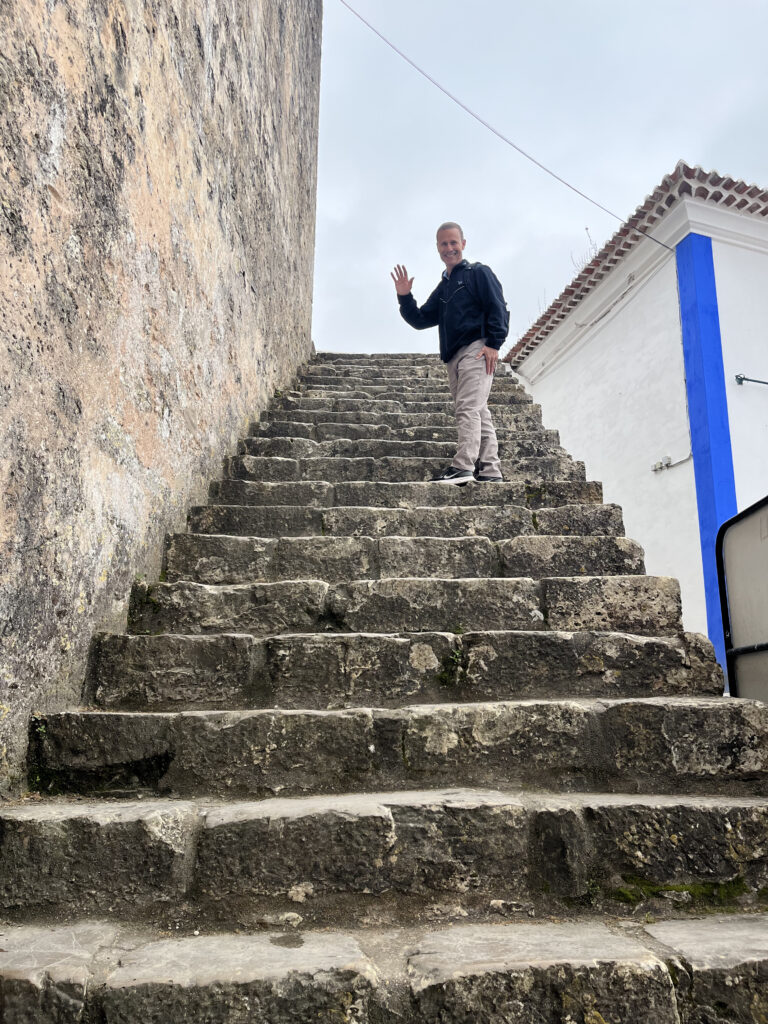
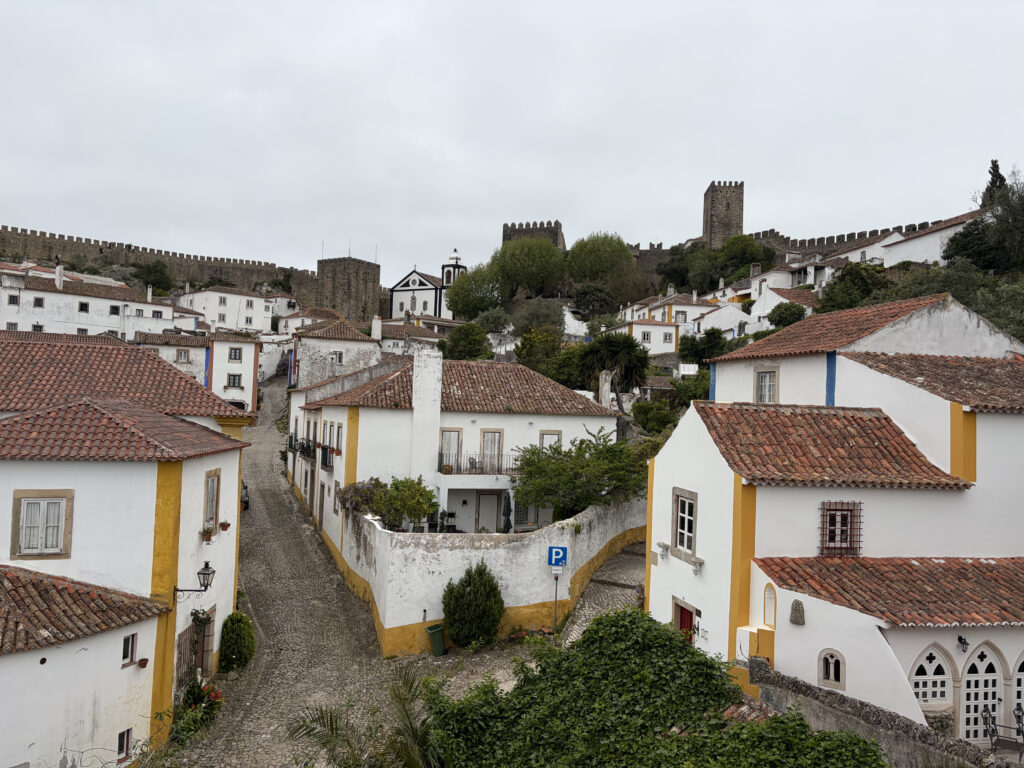
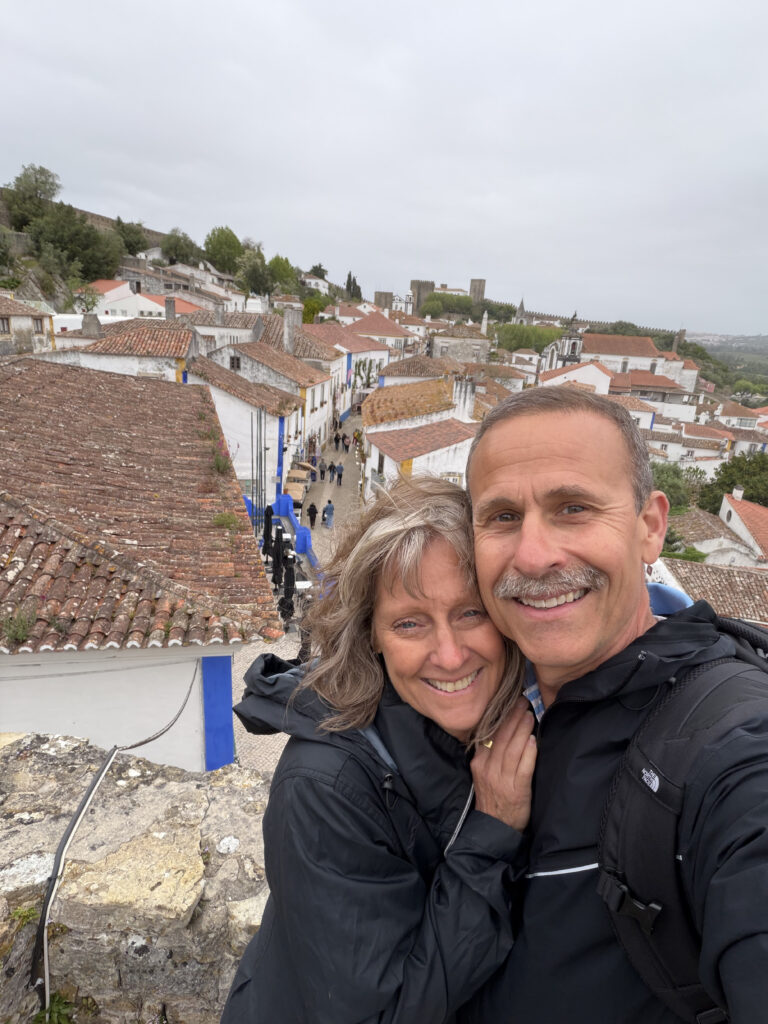
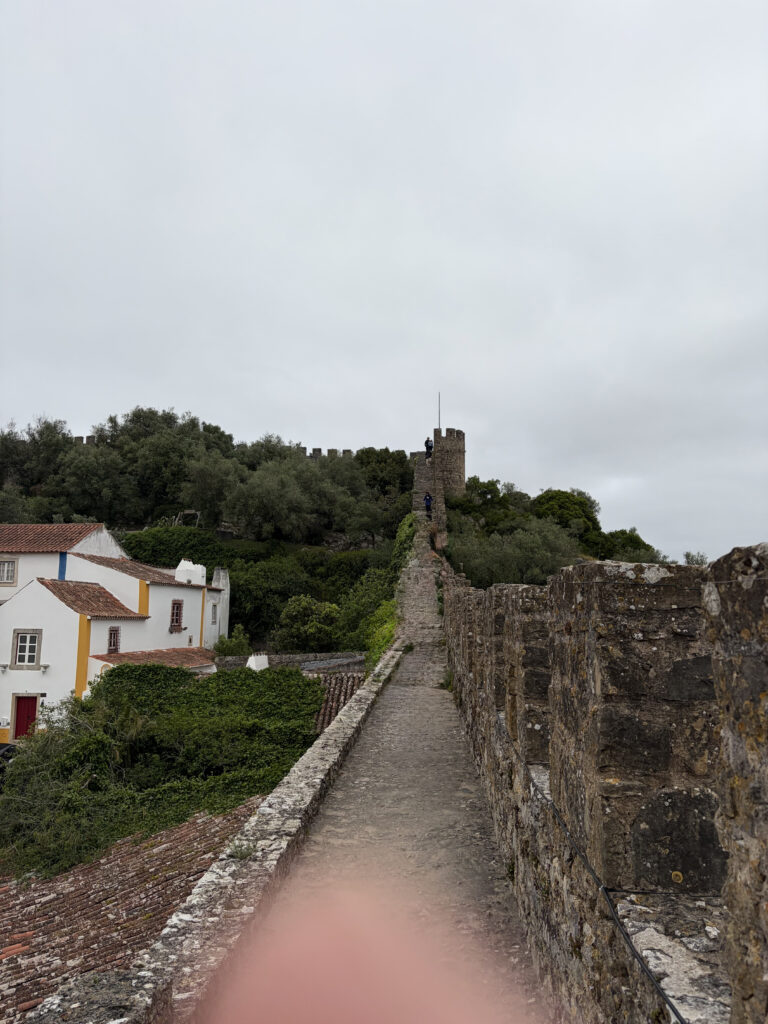
We climbed the walls—completely intact, no railings in parts, just you and the drop—and walked the perimeter like kids who didn’t quite understand the risk but loved the view. Whitewashed houses below, orange rooftops glowing, bougainvillea sneaking over walls like it had been there forever.
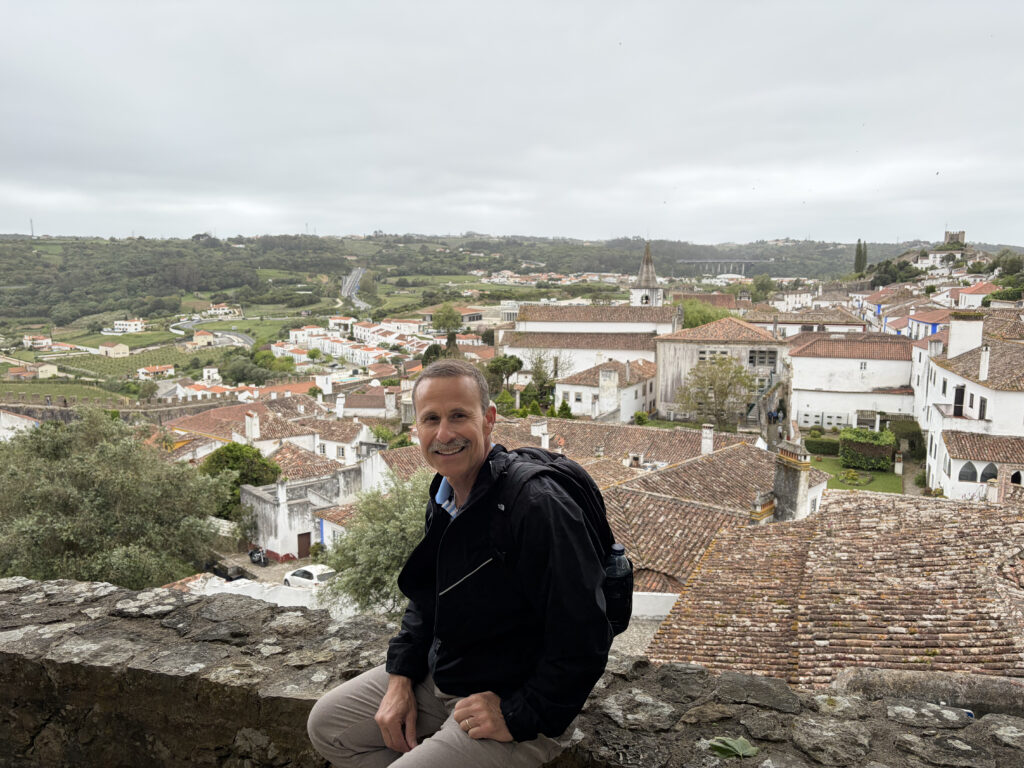
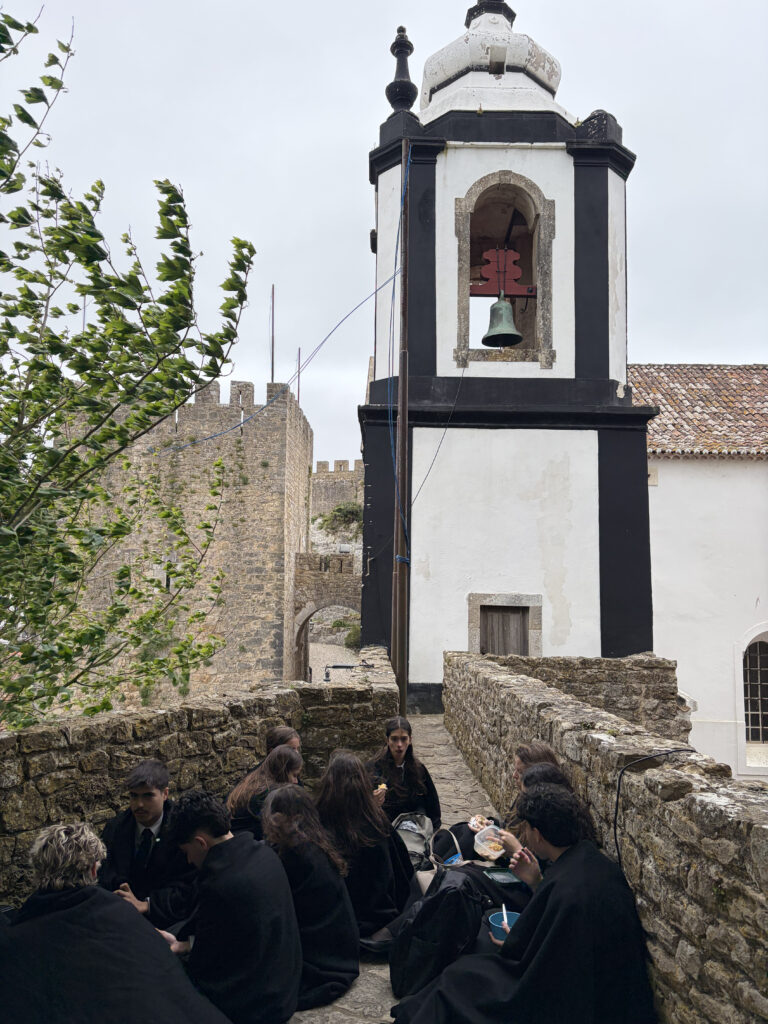
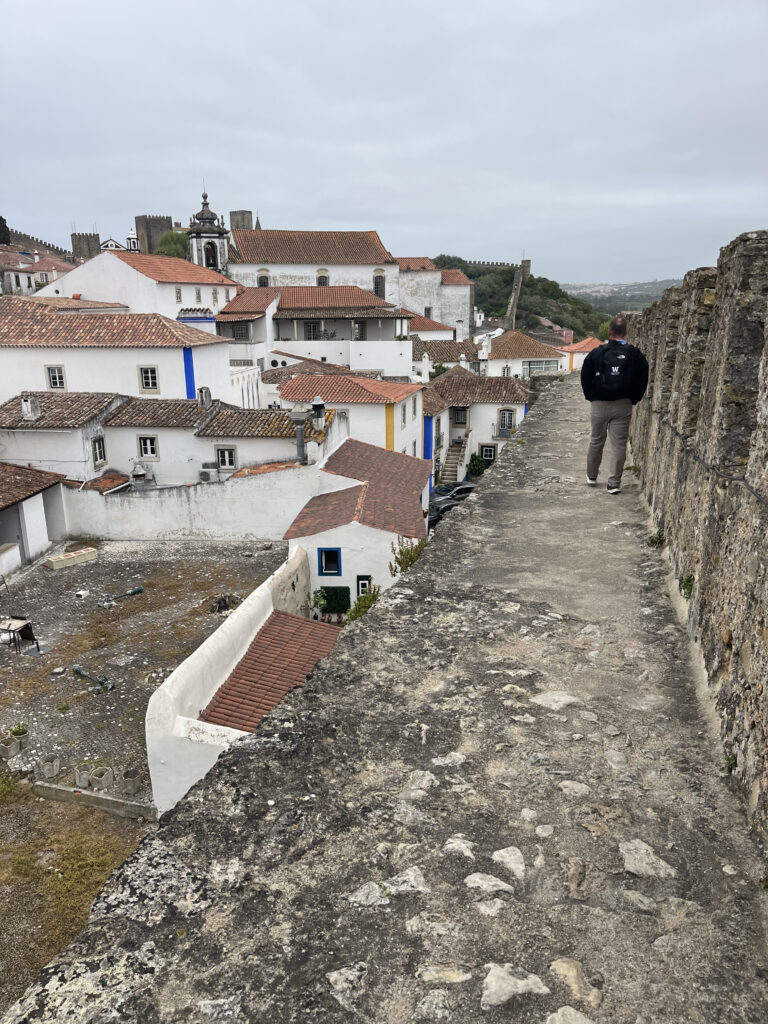
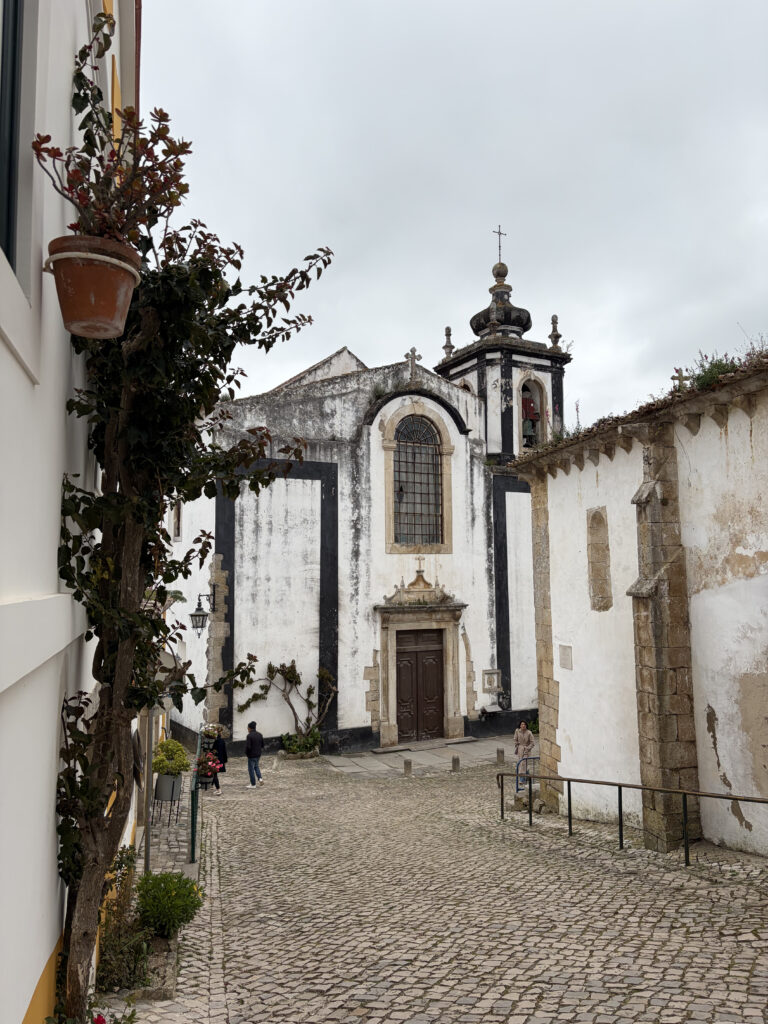
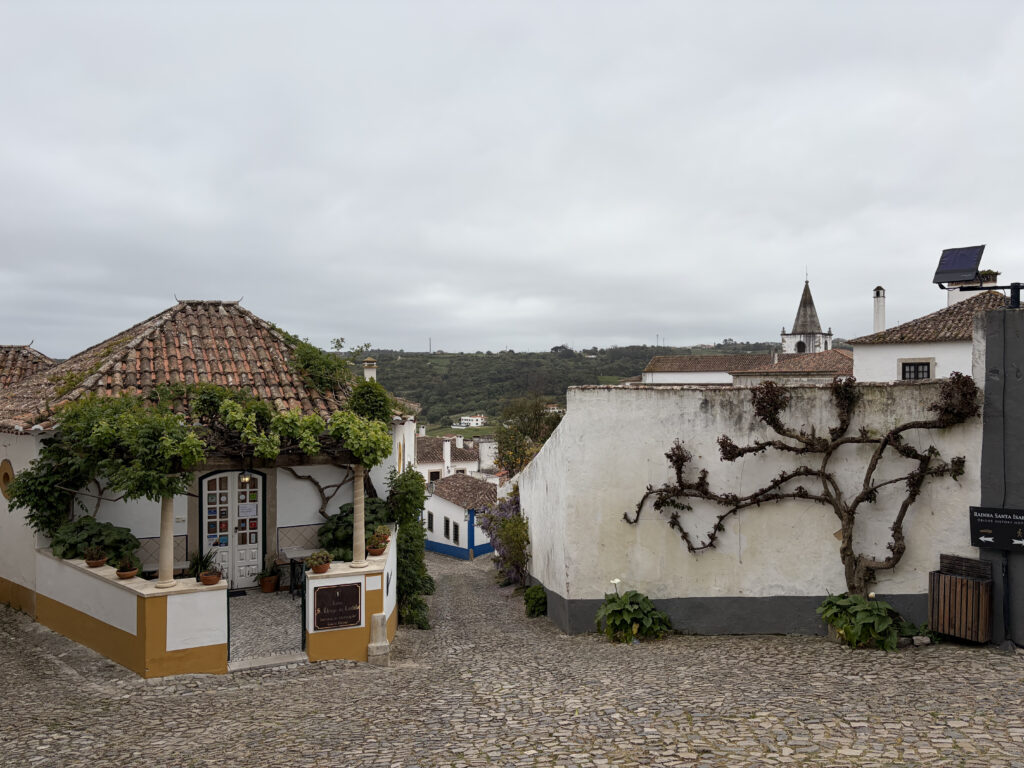
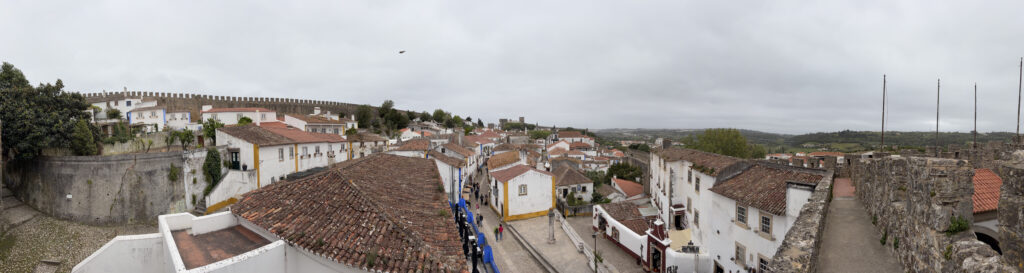
Kellie said it first, but I was already thinking it—this is exactly where you’d want to grow up if your imagination leaned toward castles and secret passageways.
It felt… familiar in a way that doesn’t make sense. Like something out of the Grimm Brothers, except warmer, quieter, and real.
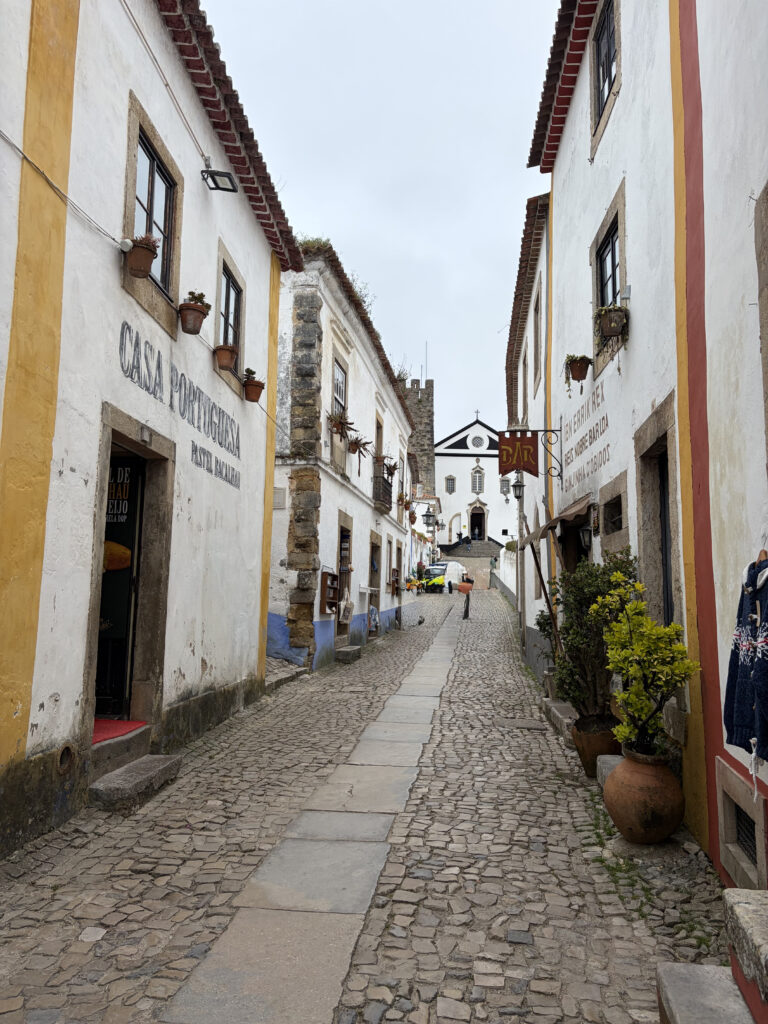
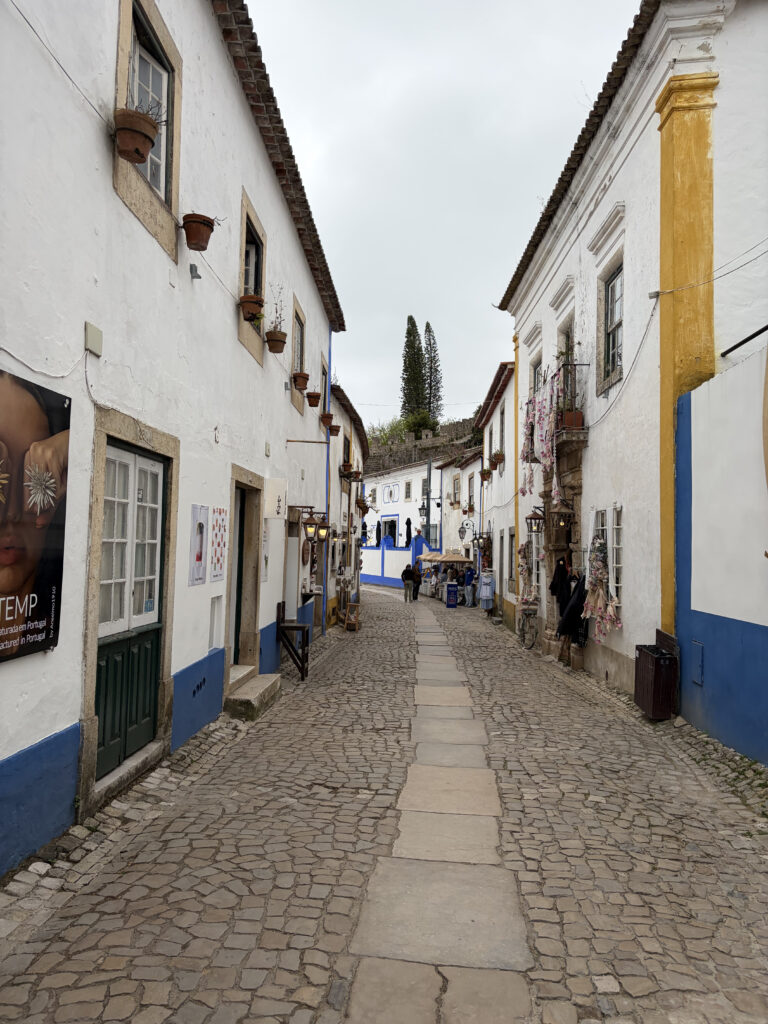
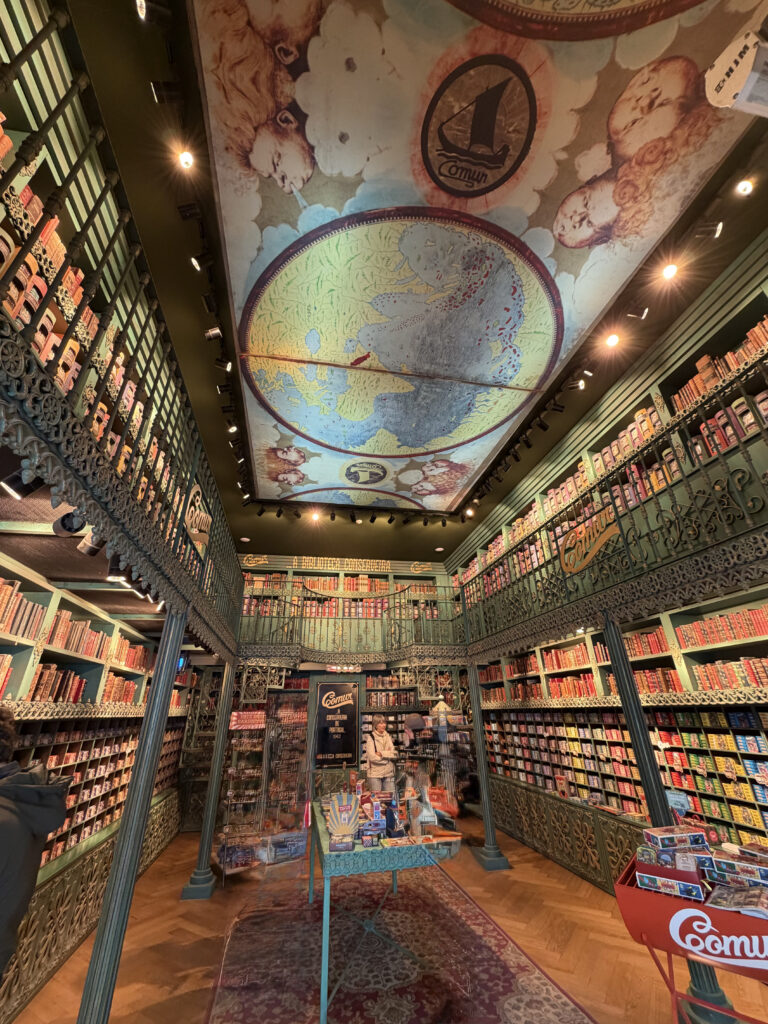
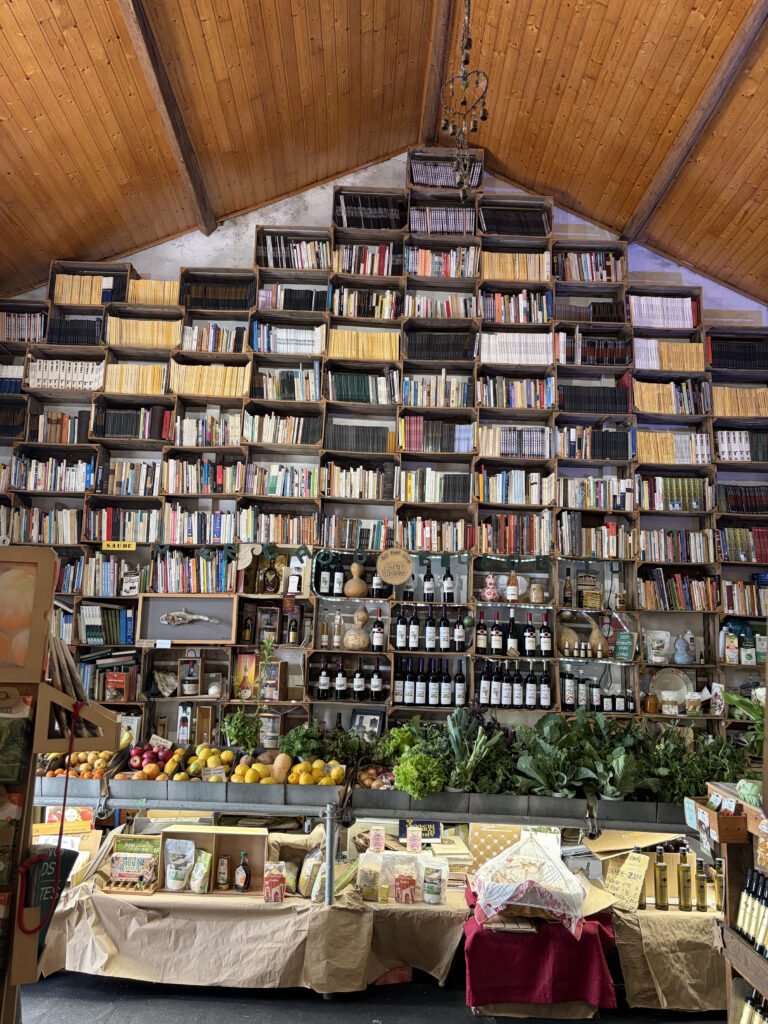
We wandered down Rua Direita, which is basically the spine of the town—bookstores tucked into stone buildings, little bars pouring ginginha in chocolate cups, shops that felt more like personal collections than businesses. Óbidos is even part of UNESCO’s Creative Cities network for literature, which explains the random bookstores in old churches and along the streets.
It’s touristy, sure—but somehow still feels untouched.
Nazaré — wind, waves, and something wilder
Then we drove west again, back toward the ocean, to Nazaré. You hear the waves before you really see them.
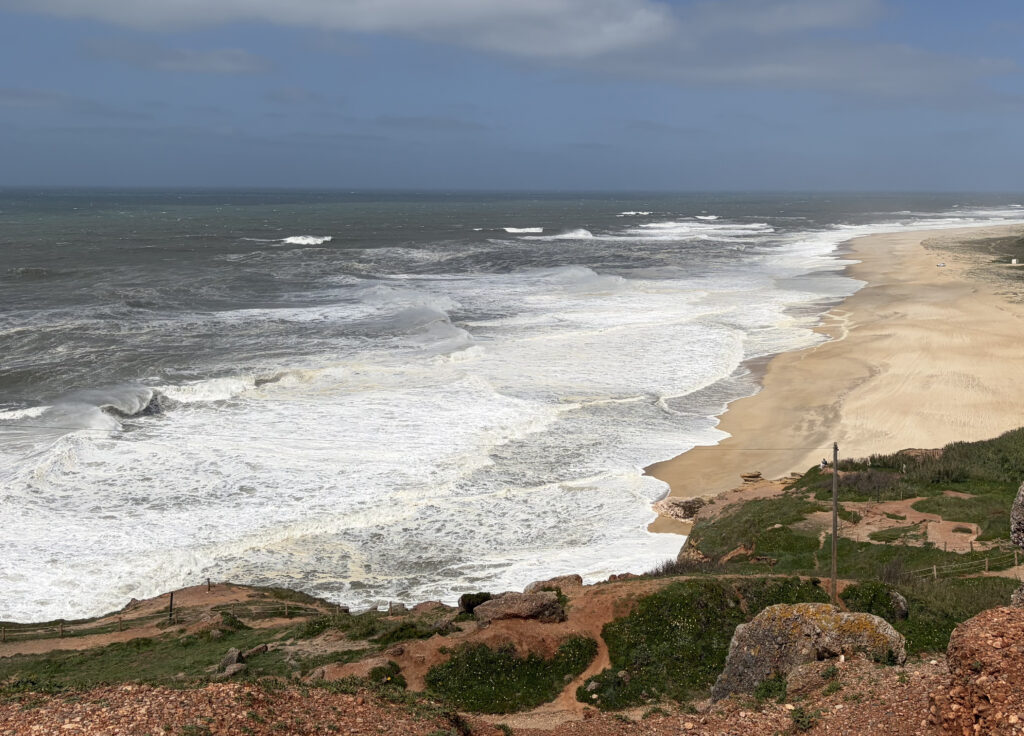
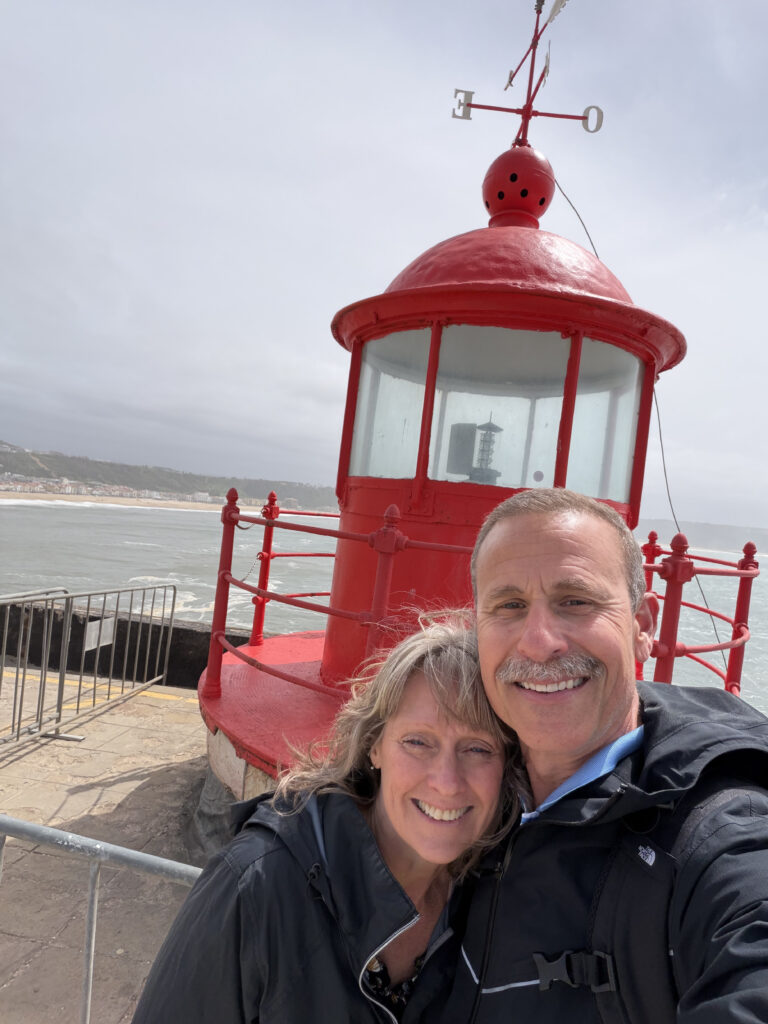
Up at the Forte de São Miguel Arcanjo, the wind was… not messing around. It was the kind that doesn’t just blow—it shoves. We leaned into it just to stay upright, laughing in that slightly nervous way when nature reminds you who’s in charge.
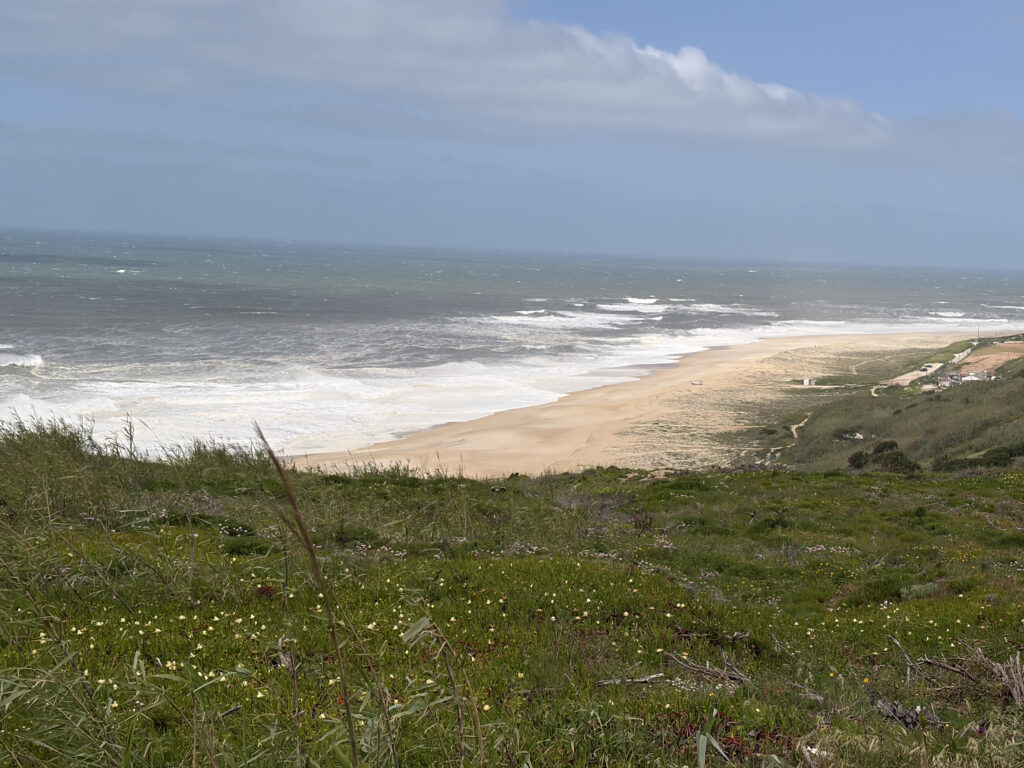
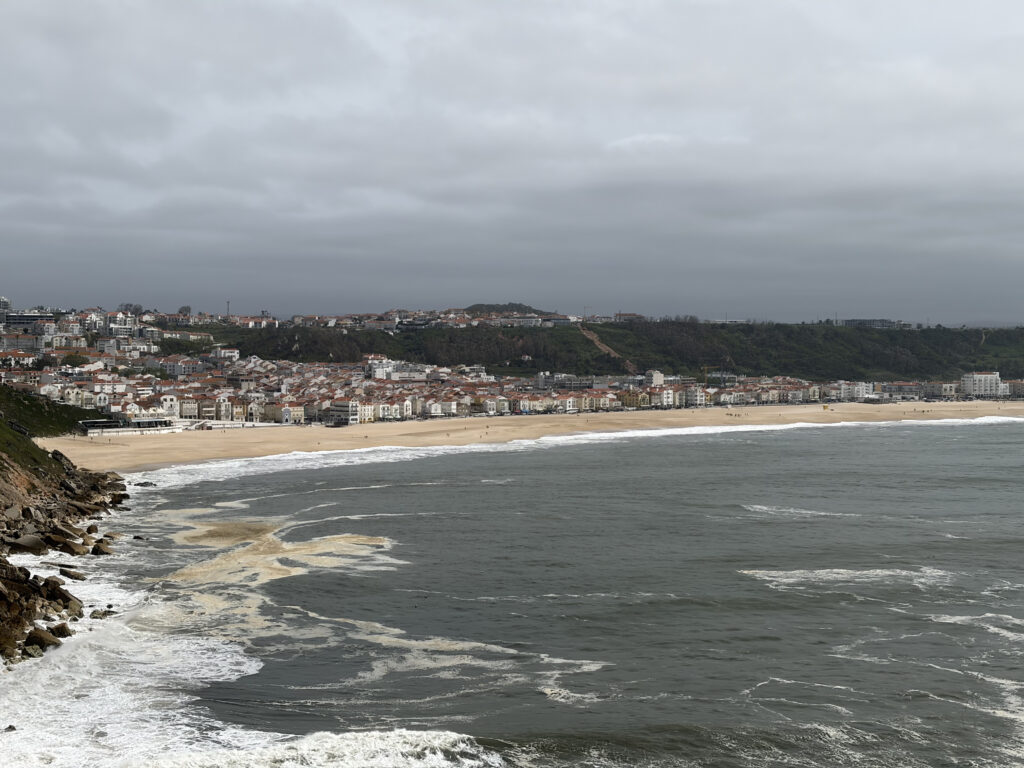
To the left, the long stretch of Nazaré beach. To the right, Praia do Norte—where things get serious.
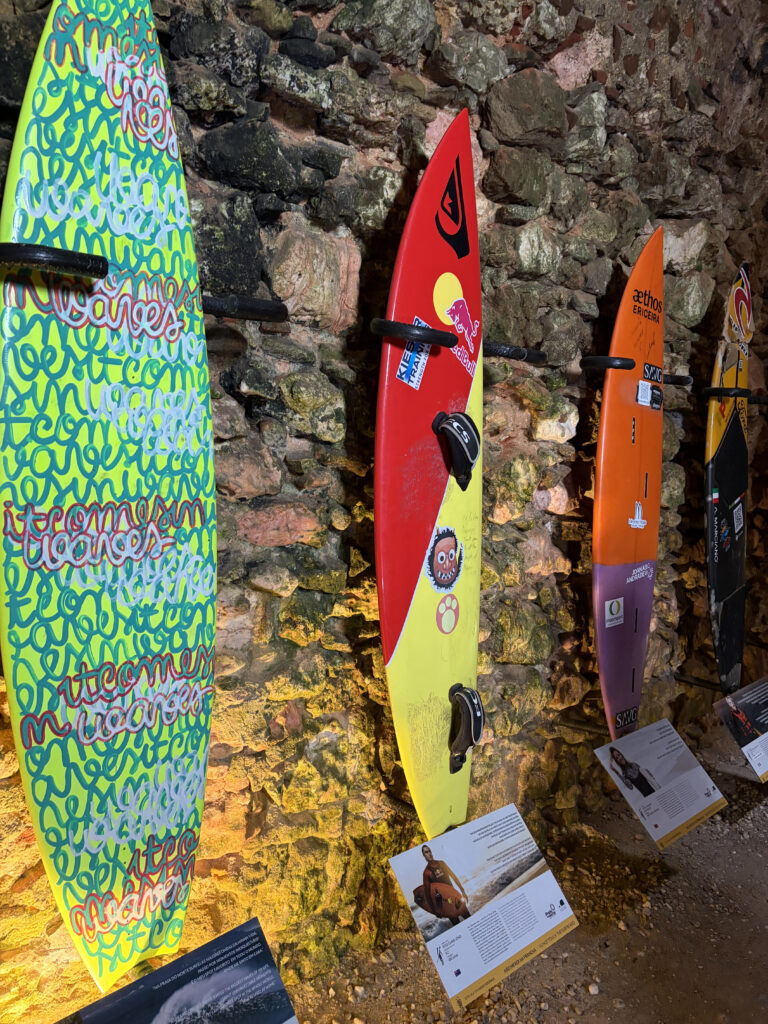
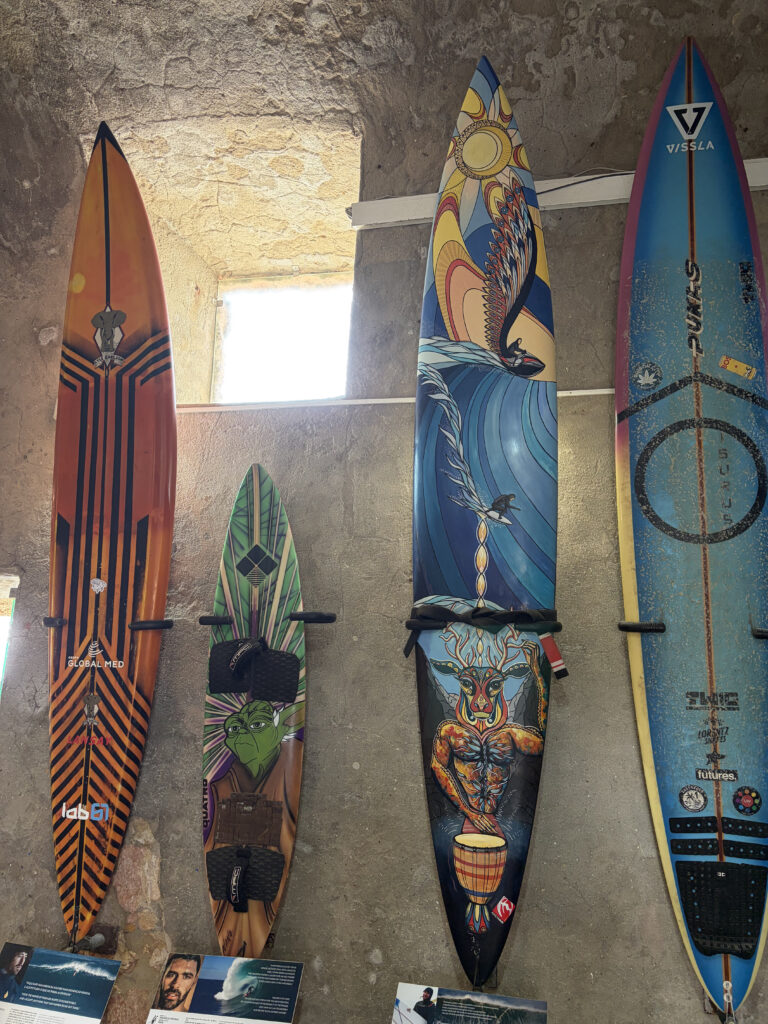
This is where the biggest waves on Earth roll in, thanks to an underwater canyon that funnels and amplifies the Atlantic swell. In 2011, Garrett McNamara put Nazaré on the map by riding a ~78-foot wave. Then Rodrigo Koxa pushed it further. And most recently, Sebastian Steudtner is credited with riding an 86-foot monster here—basically a moving building of water. Many of those amazing boards and their rider and showcased inside the lighthouse as a shrine to those who have conquered.
Standing there, with the wind howling and the ocean churning, it made sense. Even without surfers, it felt extreme. Raw. Like the ocean was just warming up.
We didn’t stay too long—partly the wind, partly the feeling that we were a little underdressed for that kind of power—and headed north.
Porto — soft landing, golden light
By the time we reached Porto, the energy shifted again.
We checked into Origine Porto Gaia, a Tribute Portfolio Hotel, and somehow—completely undeserved—we got upgraded to a room facing the city.
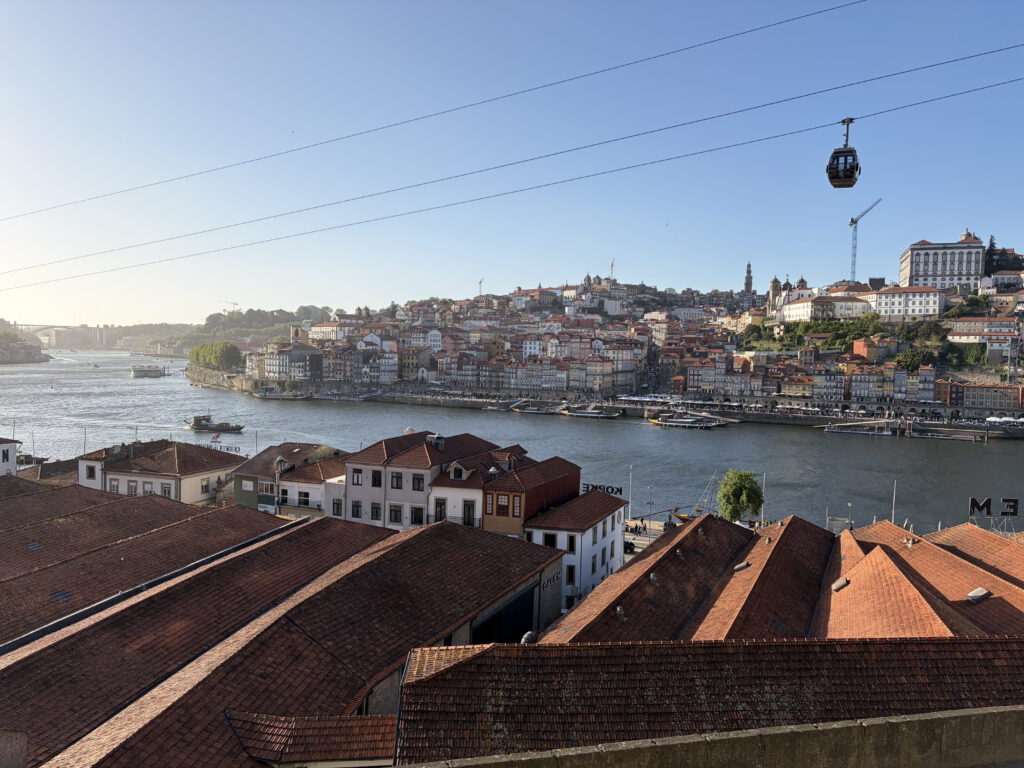
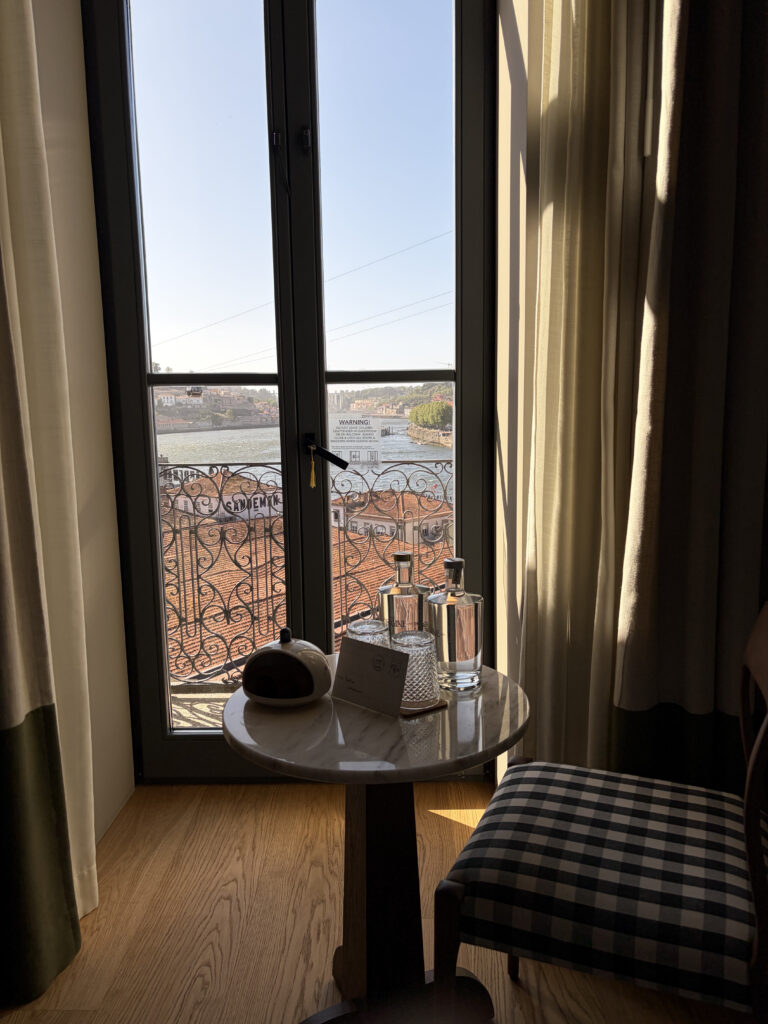
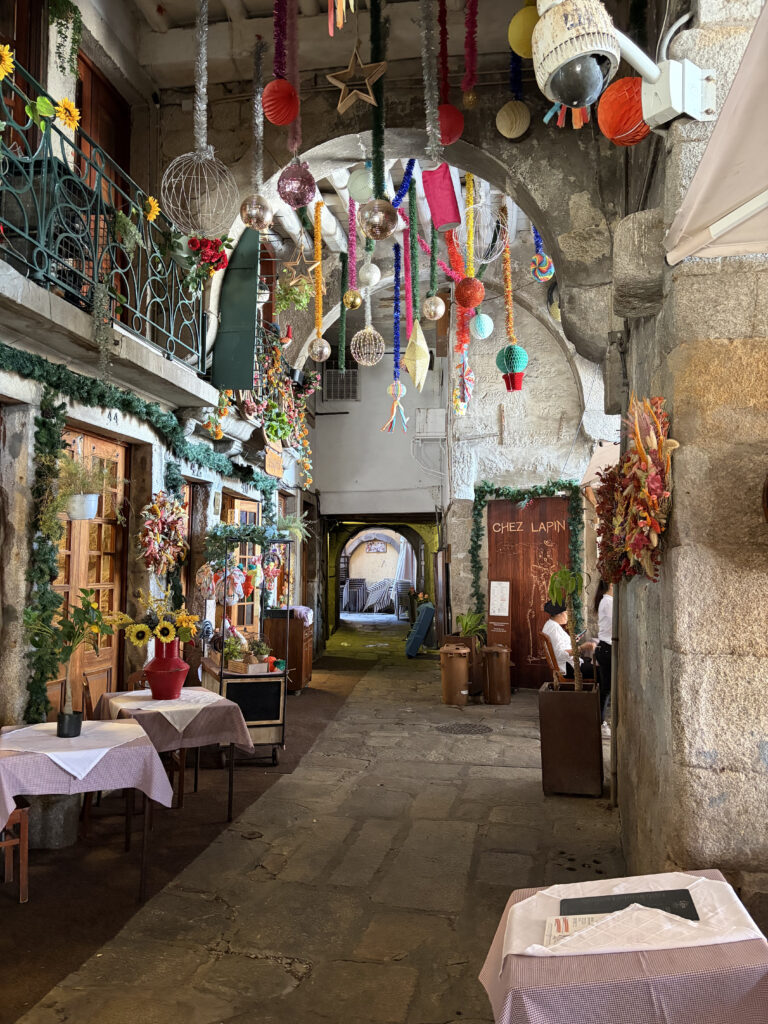
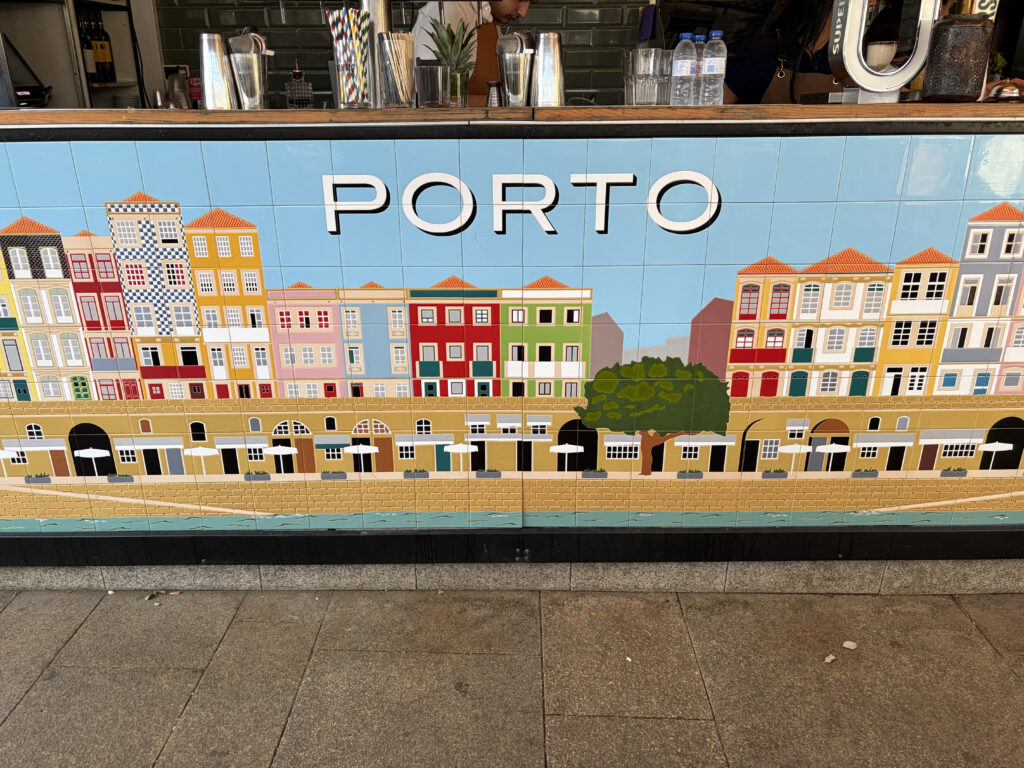
Across the river, Porto just sort of stacked itself upward—layers of color, tile, and history catching the late light. We wandered down along the Douro, grabbed something simple to eat, didn’t overthink it. The kind of meal you don’t remember exactly, but you remember how it felt—easy, unhurried, right place right time.
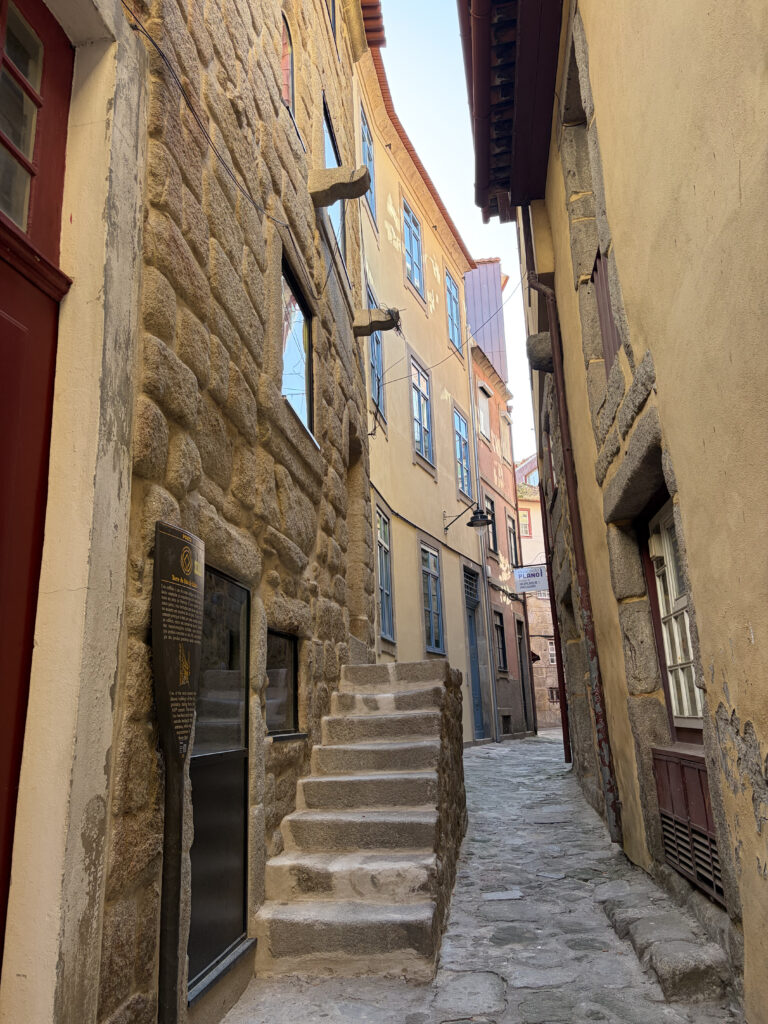
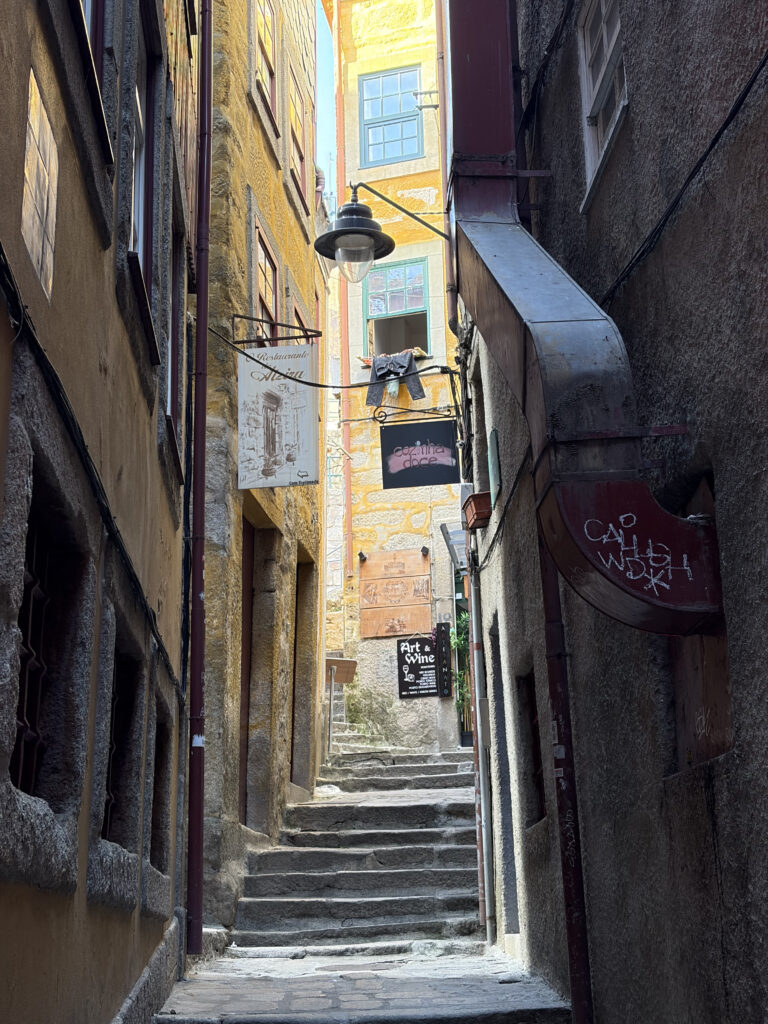
Back in the room by 8:00, just in time for the sunset. And that might’ve been the best part of the whole day.
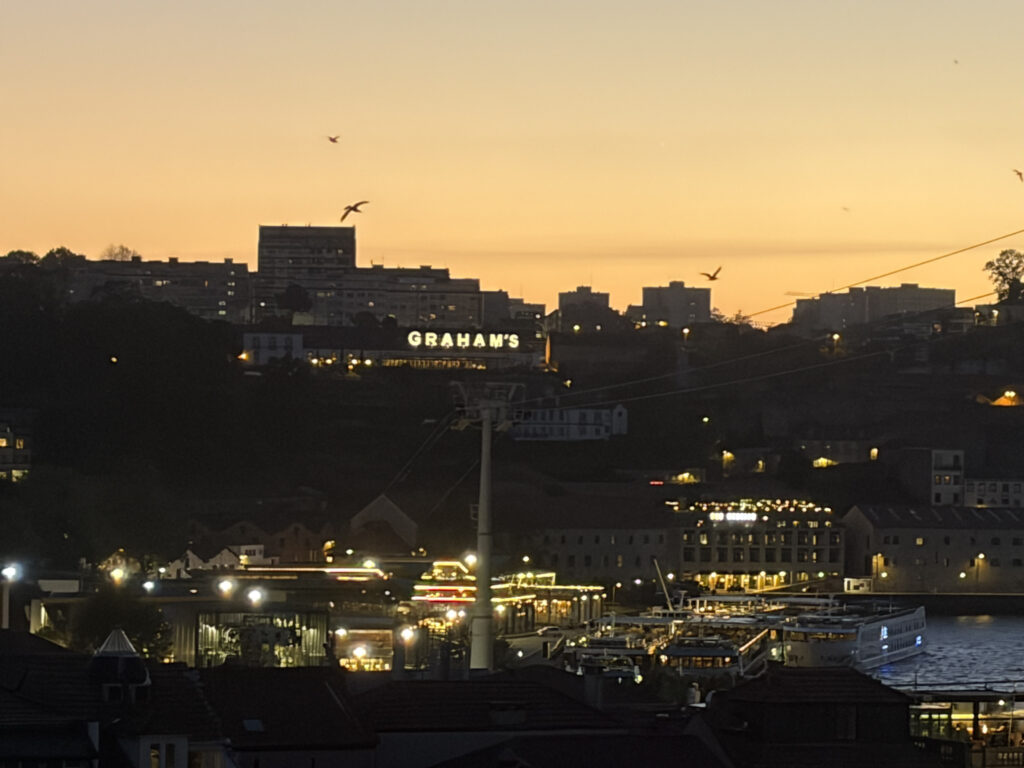
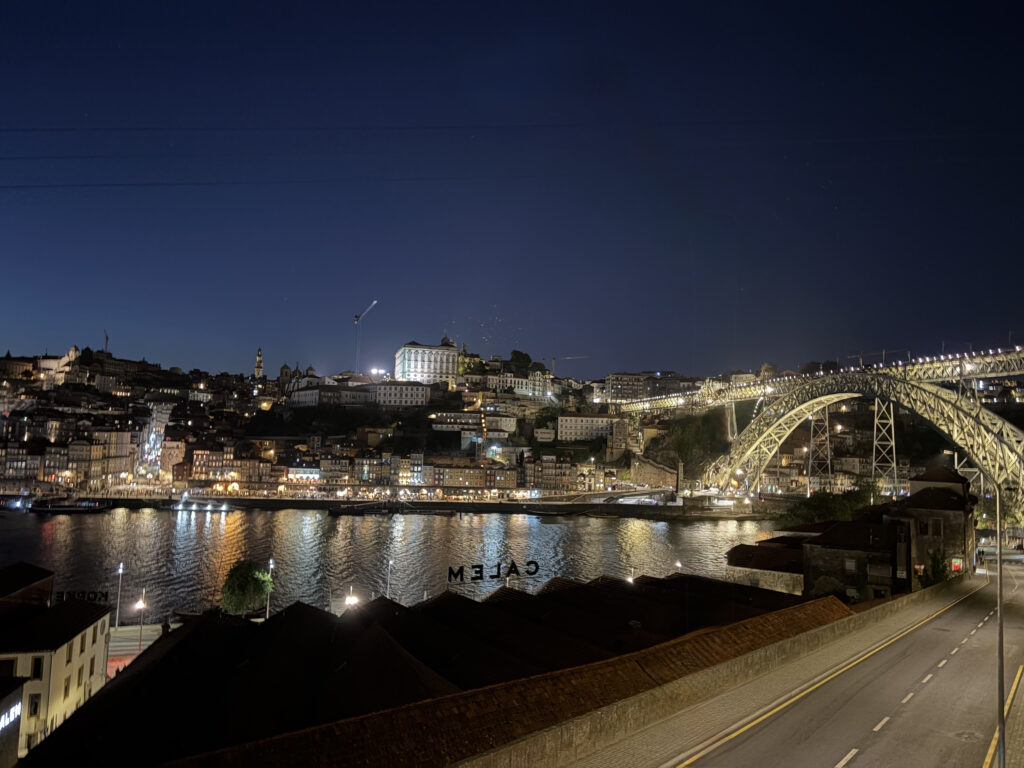
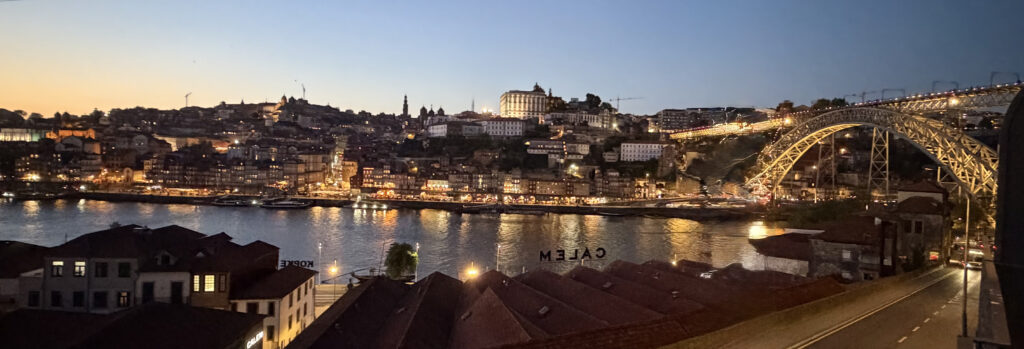
No rushing, no planning—just watching the sky fade over a city that’s been doing this for centuries.