
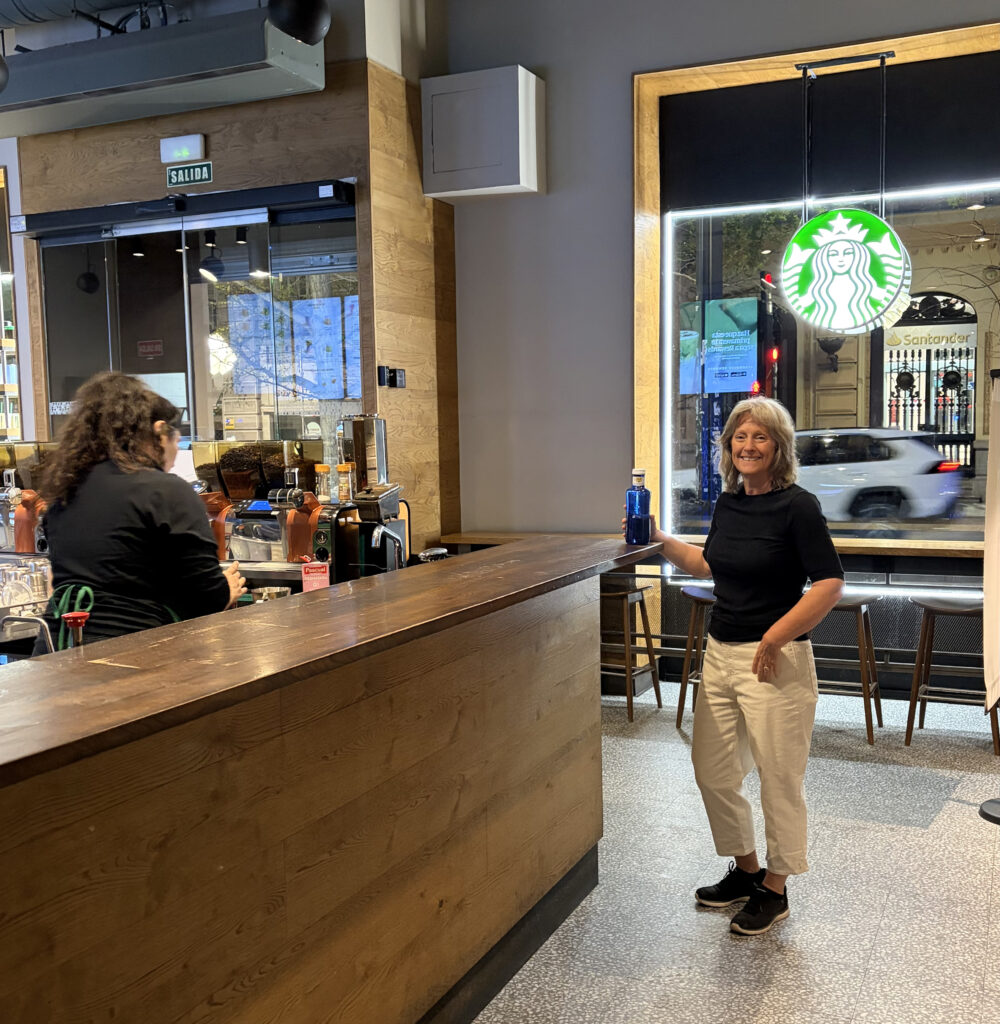
It started early again—still a little quiet in the streets (except that your shoes constantly sqeek as you walk)—but Granada feels different from Madrid and even Toledo. Softer somehow, but also layered in a way that sneaks up on you. To be honest we did stop at Starbuck’s, first to be there as it opened at 7:30AM, for a London fog and Americano:)
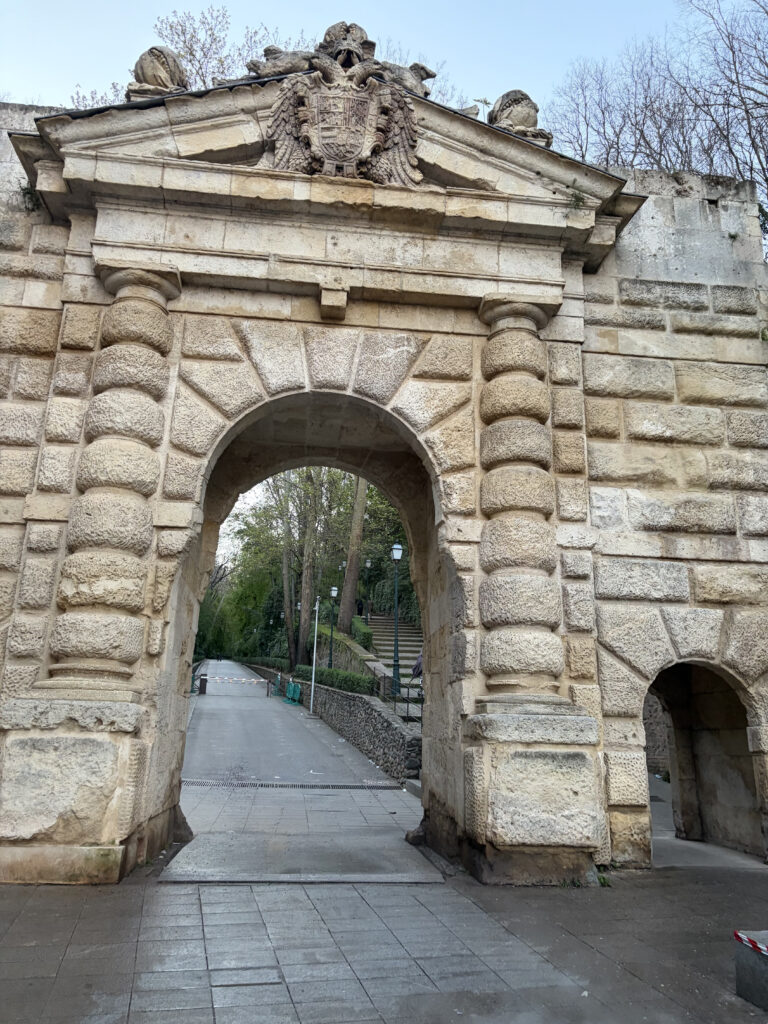
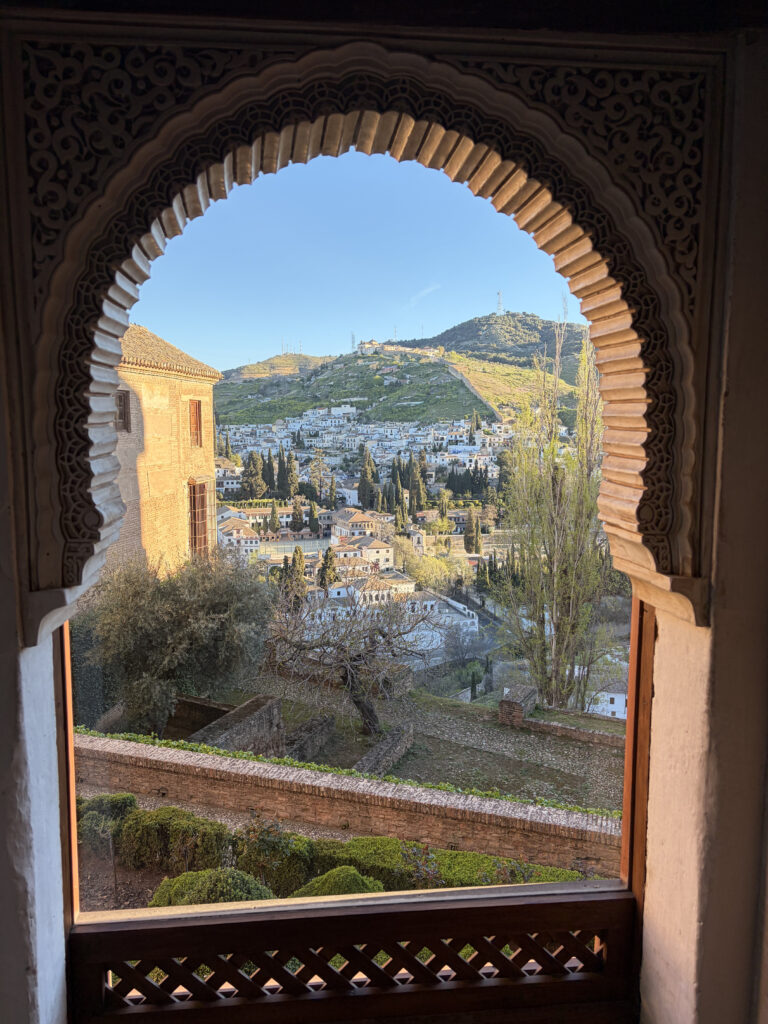
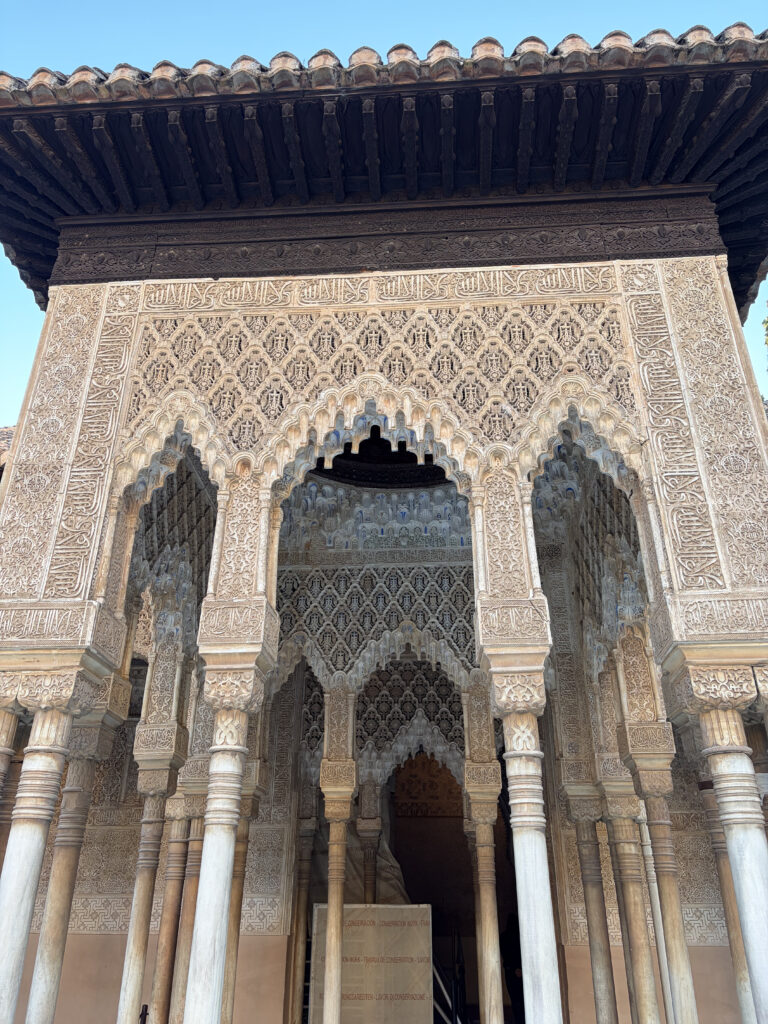
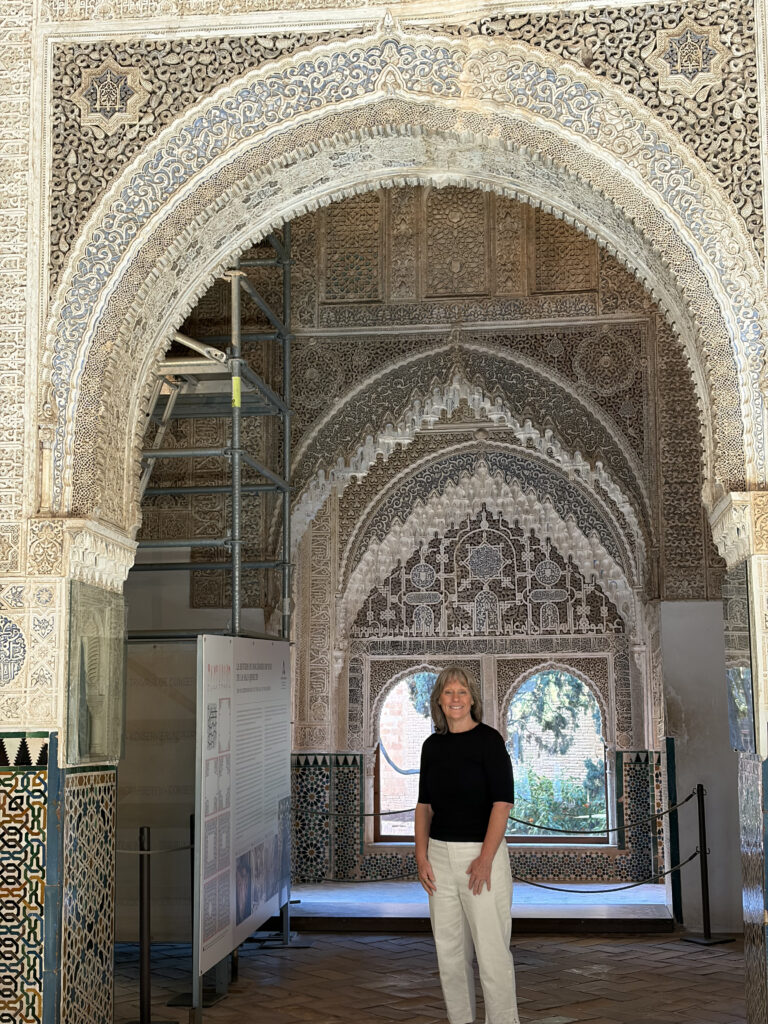
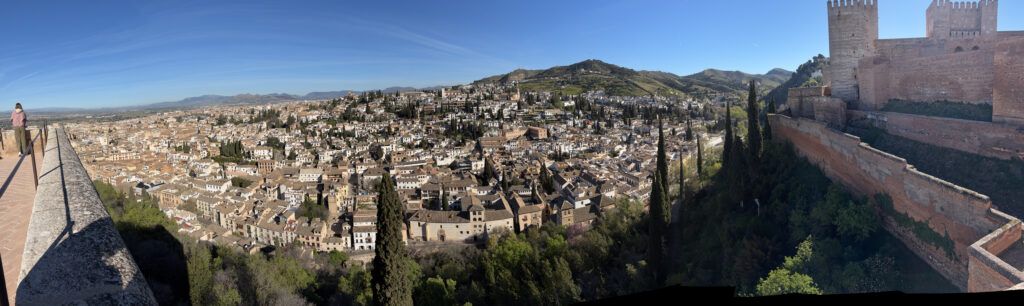
We climbed the 300m elevation—still shaking off the morning a bit—and walked into Alhambra not really knowing what to expect beyond “this is the big one.” And it is. You feel it almost immediately. It’s not just a palace—it’s a whole world sitting up on that hill above Granada. Built back in the 1200s during Moorish rule, and somehow still standing with all that detail intact. That’s the part that kept catching me off guard—not just how old it is, but how much of it is still there. We moved slowly through it, mostly because you kind of have to. Everywhere you look, there’s something—carved walls, geometric patterns, arches that seem almost too delicate to be stone. It’s detailed in a way that doesn’t feel showy, just… endless. Like no surface was left alone.
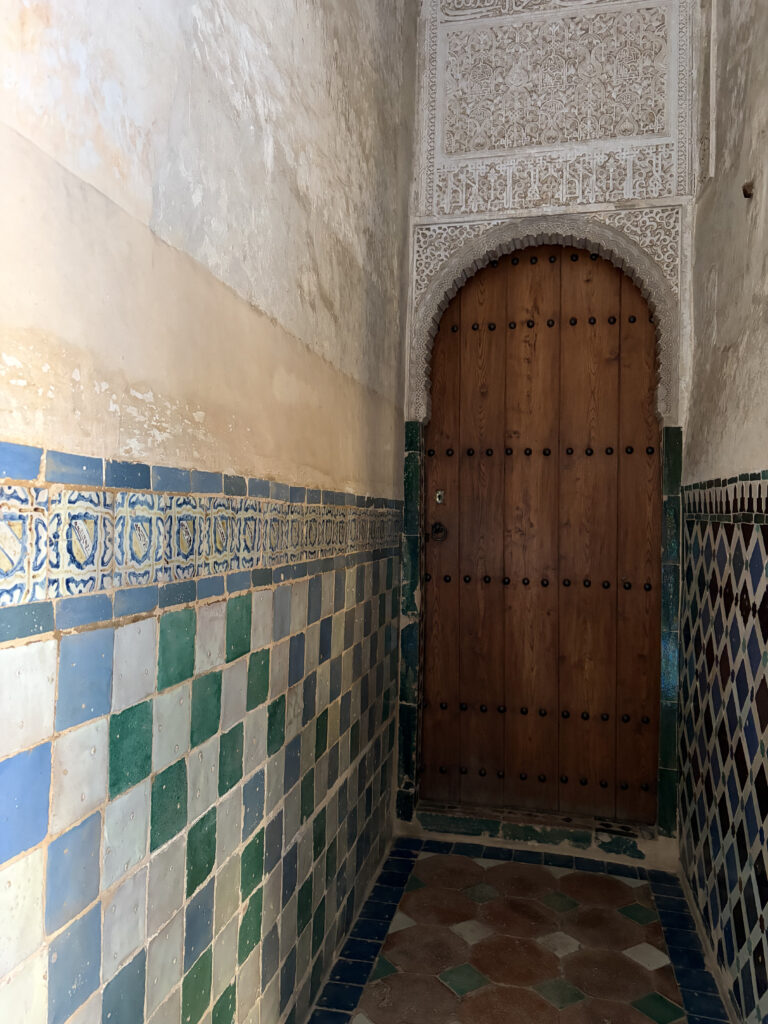
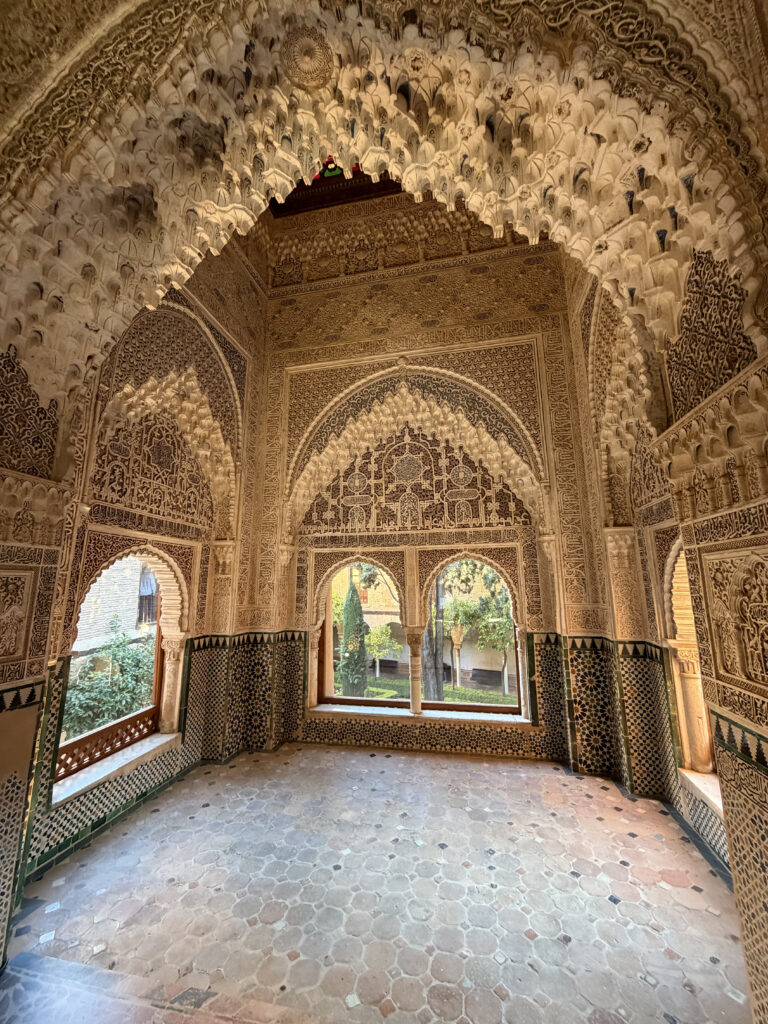
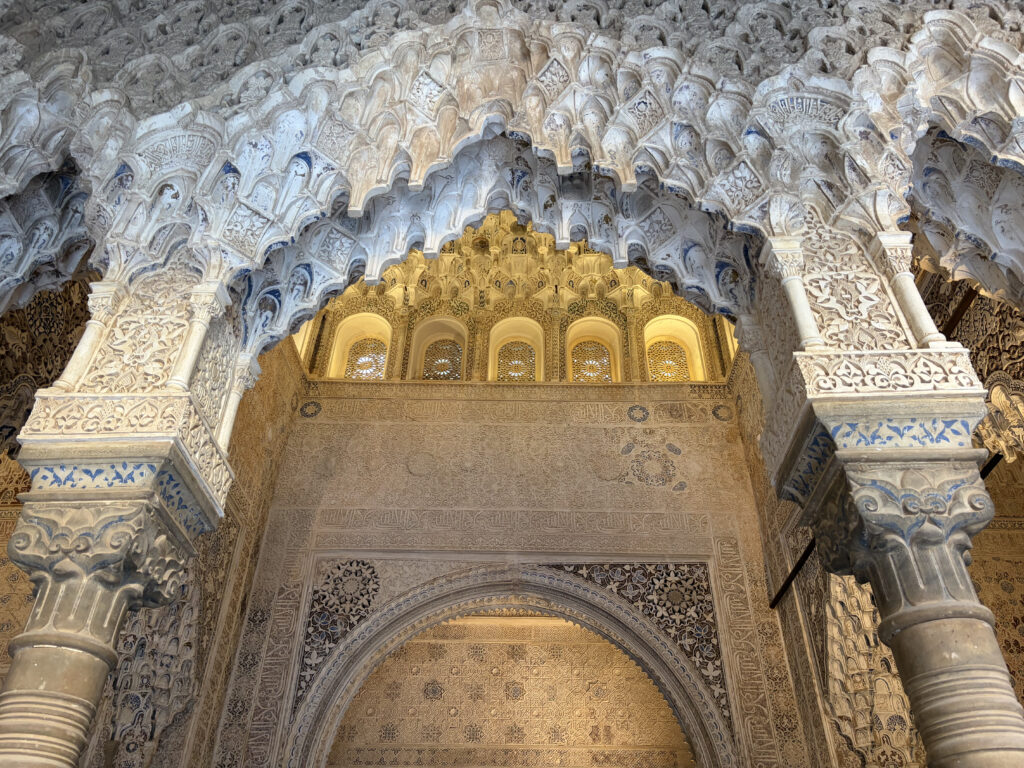
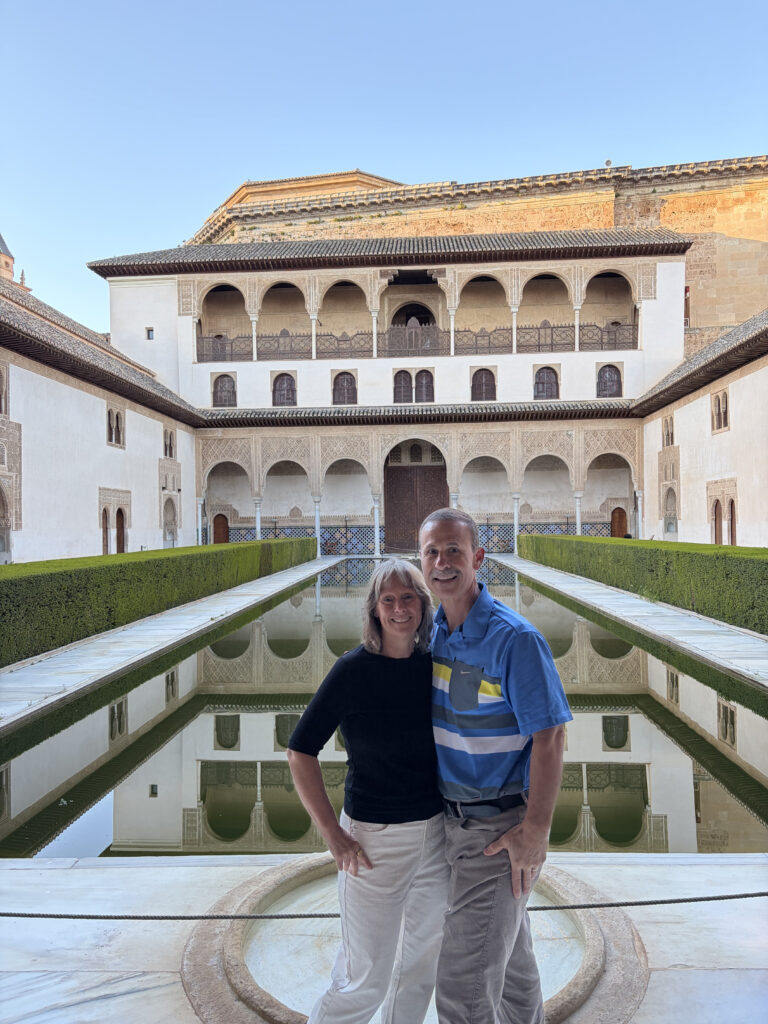
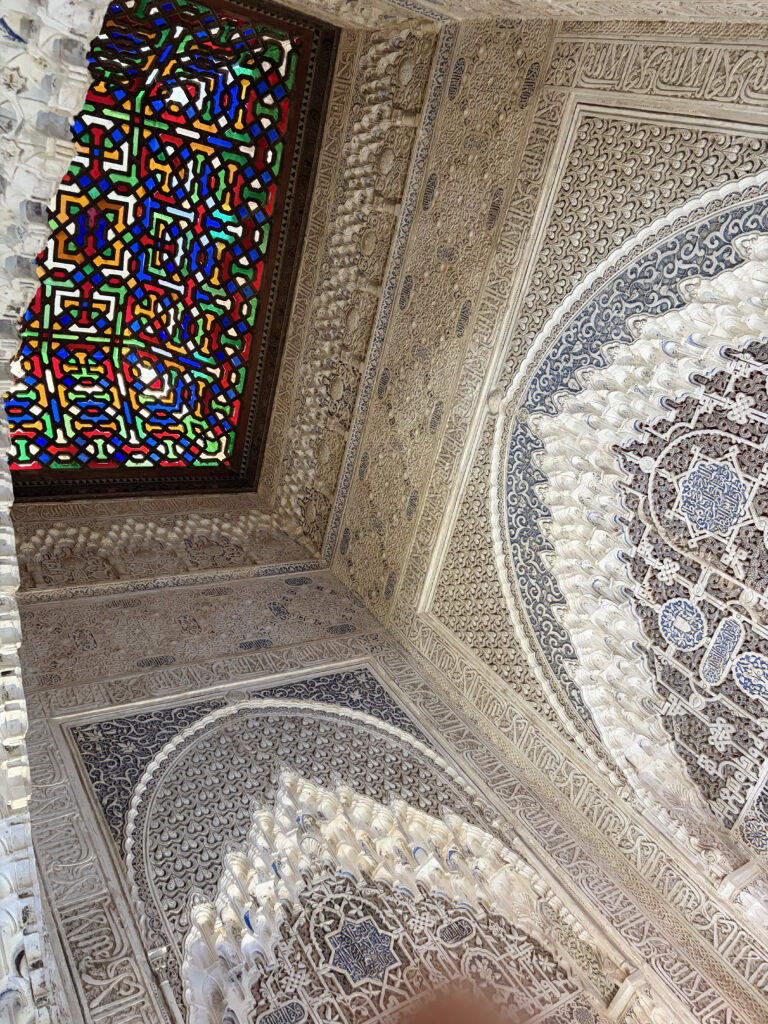
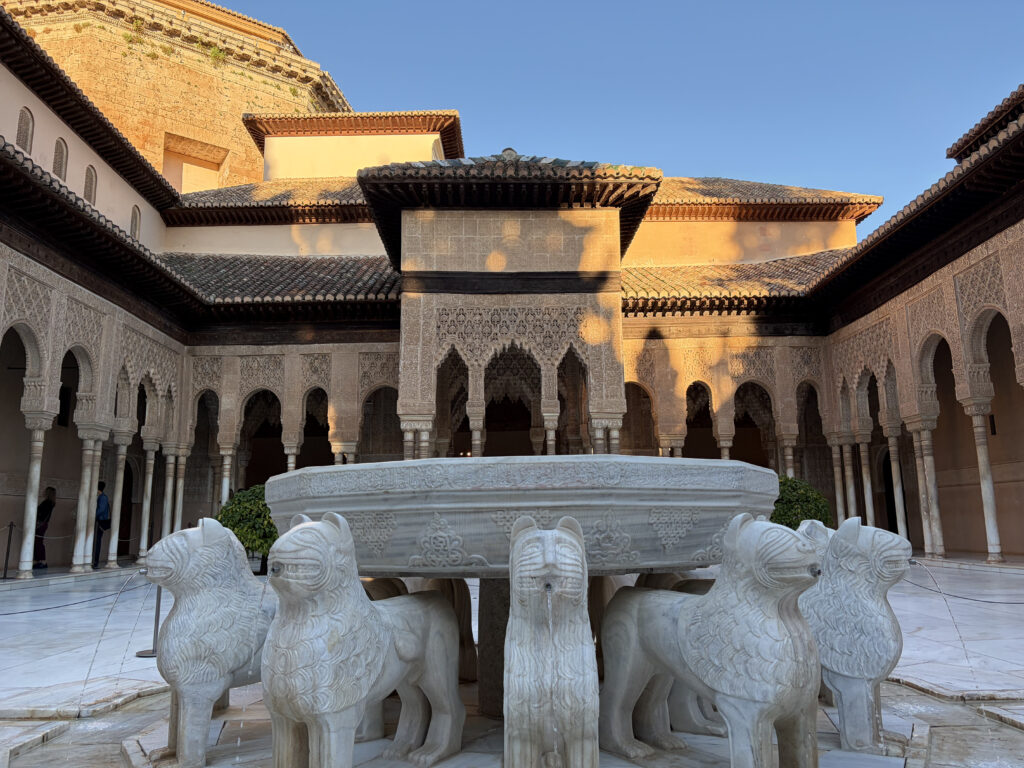
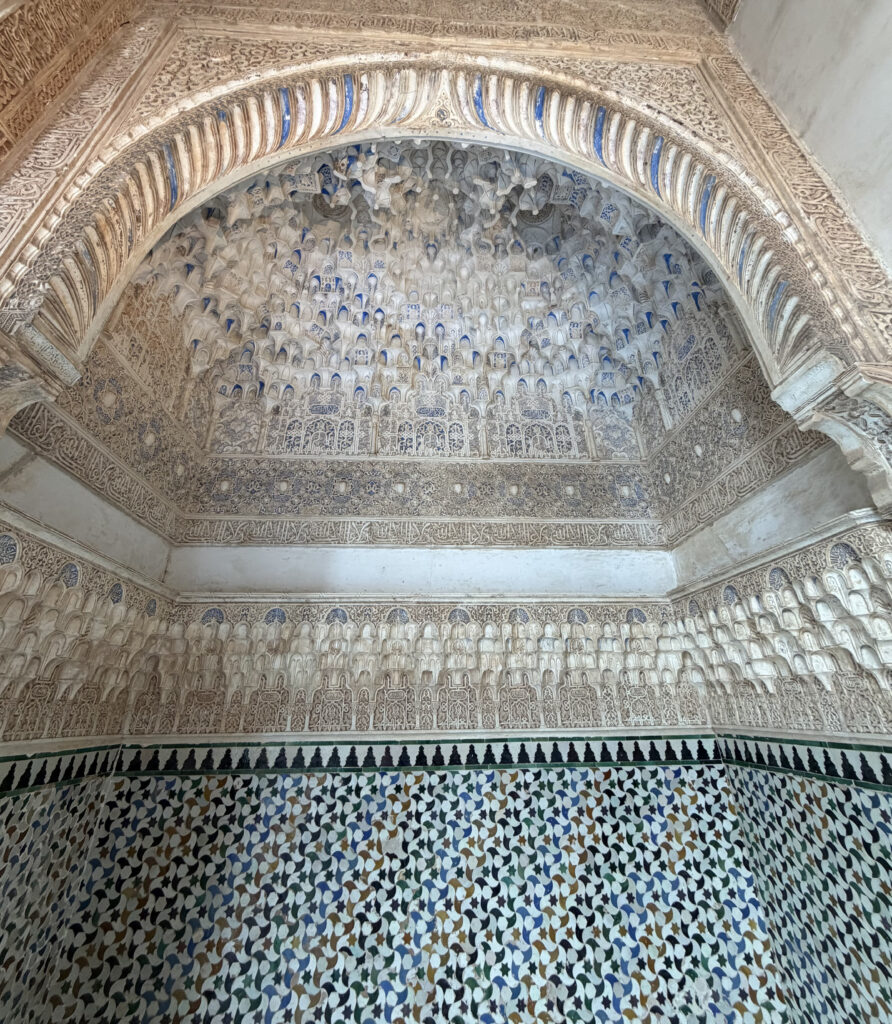
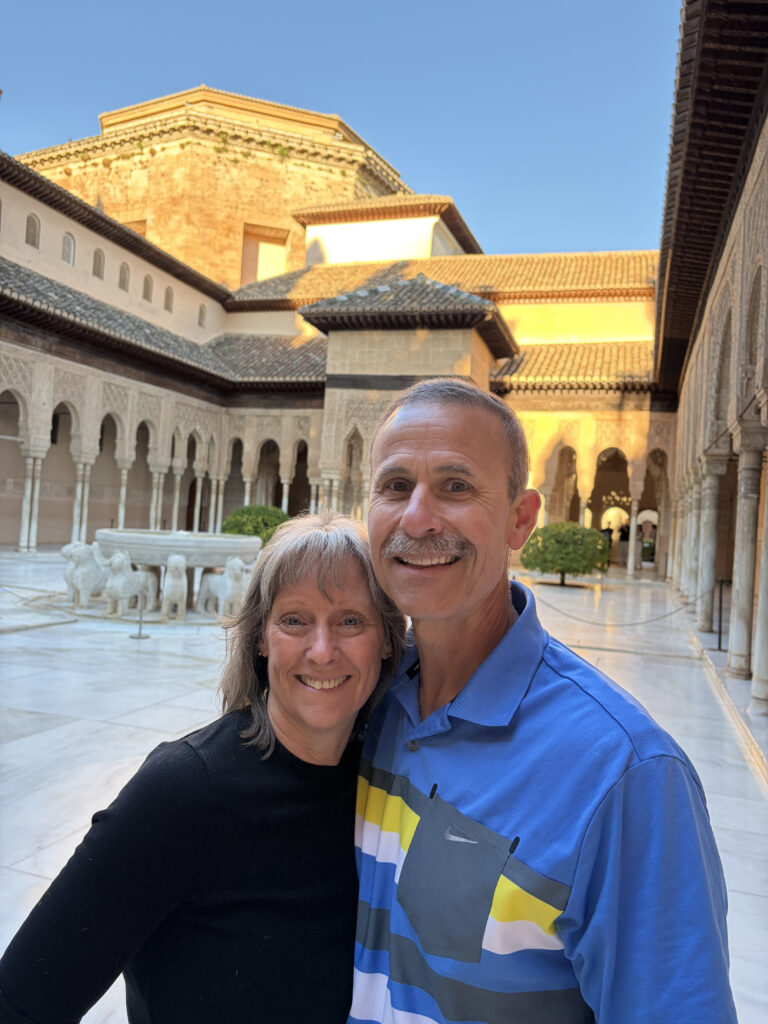
The Nasrid Palaces are where it really hits. You walk into these courtyards with fountains running quietly, light bouncing off the walls, and it just feels calm in a way that’s hard to explain. Not grand in a loud sense—more like everything is perfectly balanced. You look up, then back down, then around again because you’re pretty sure you missed something the first time. It truly is ‘art’ on the walls and ceilings, I was amazed by its intricacies.
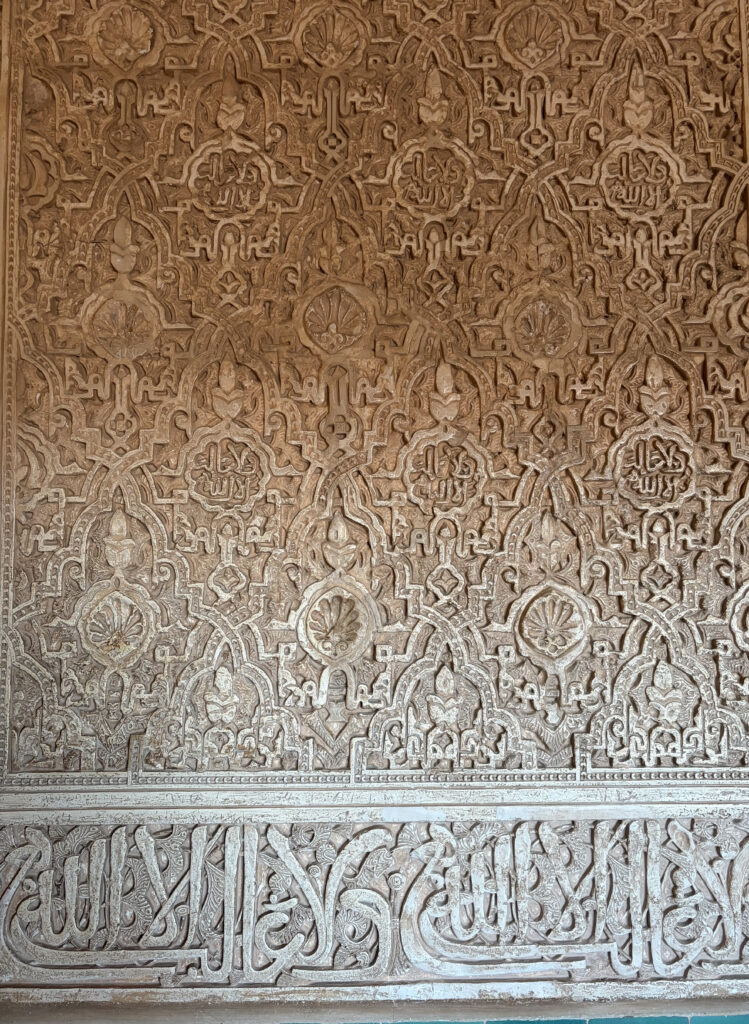
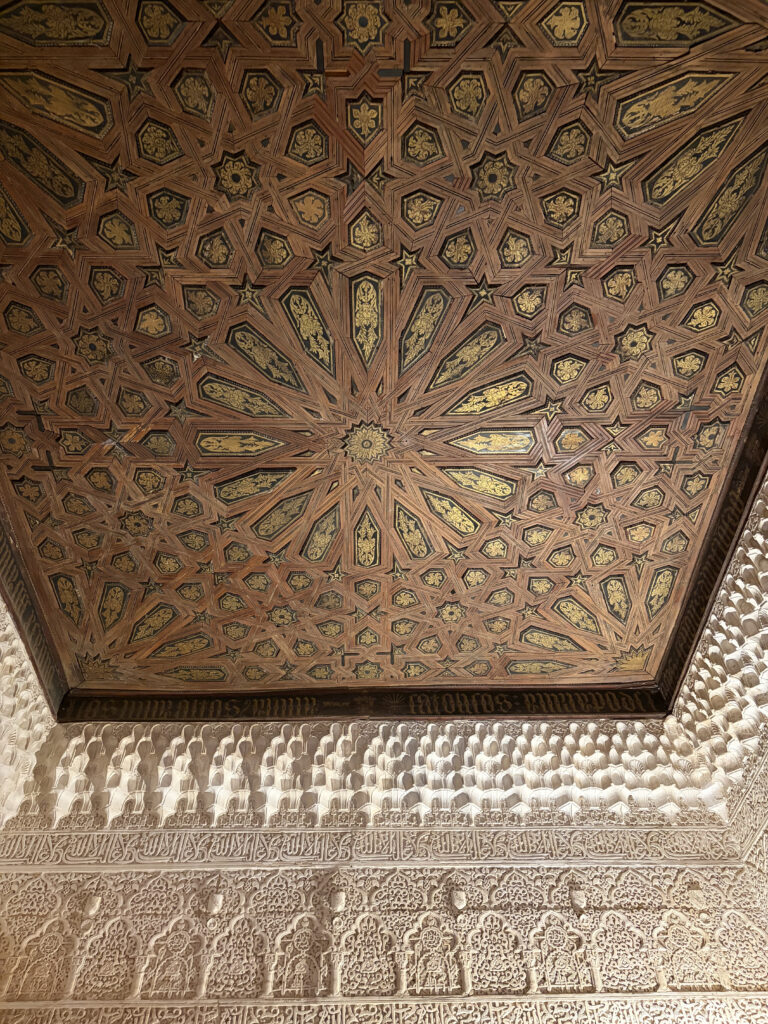
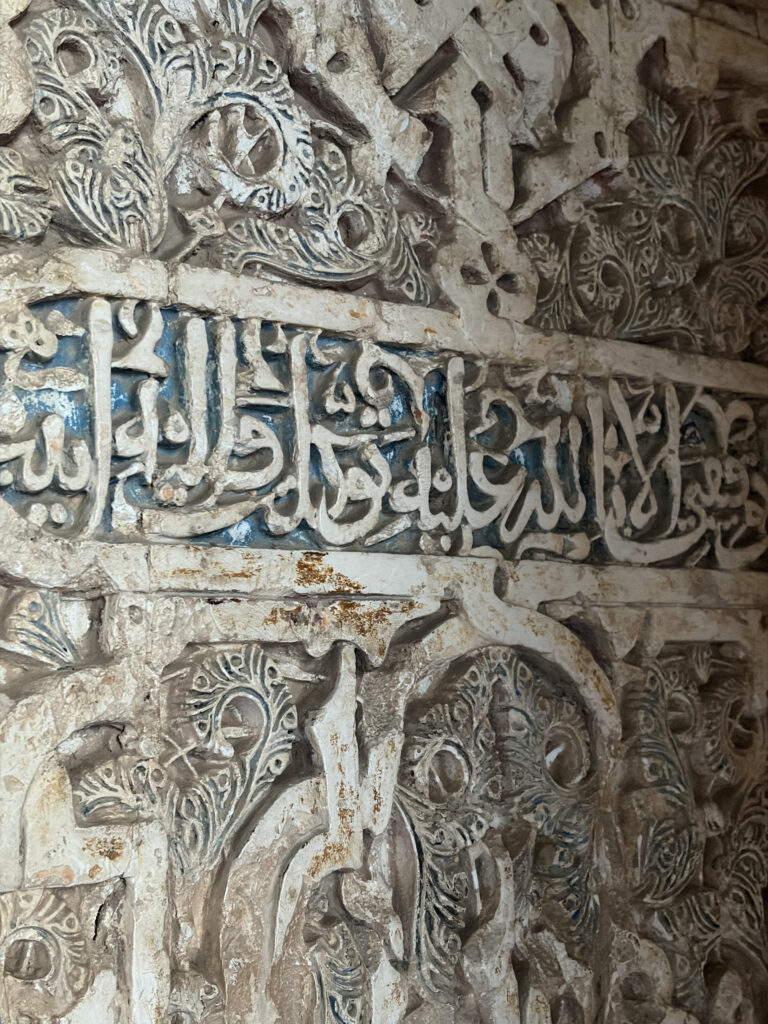
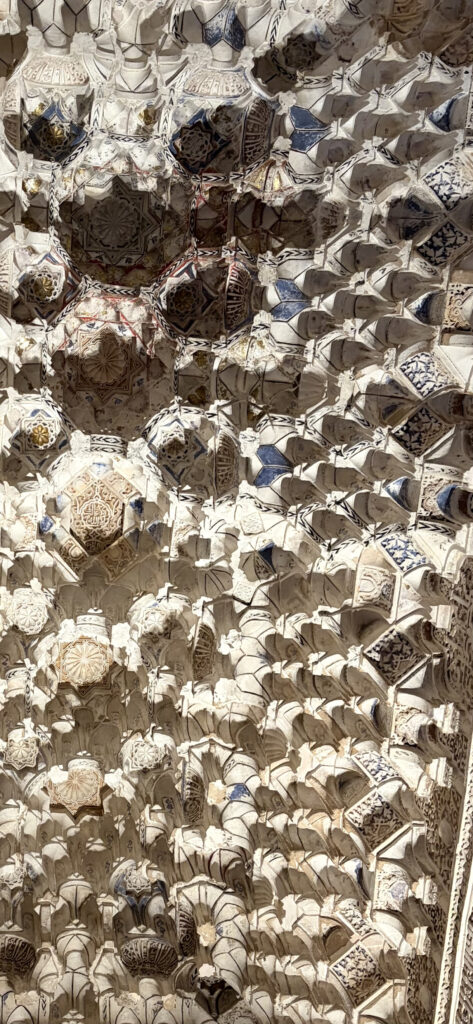
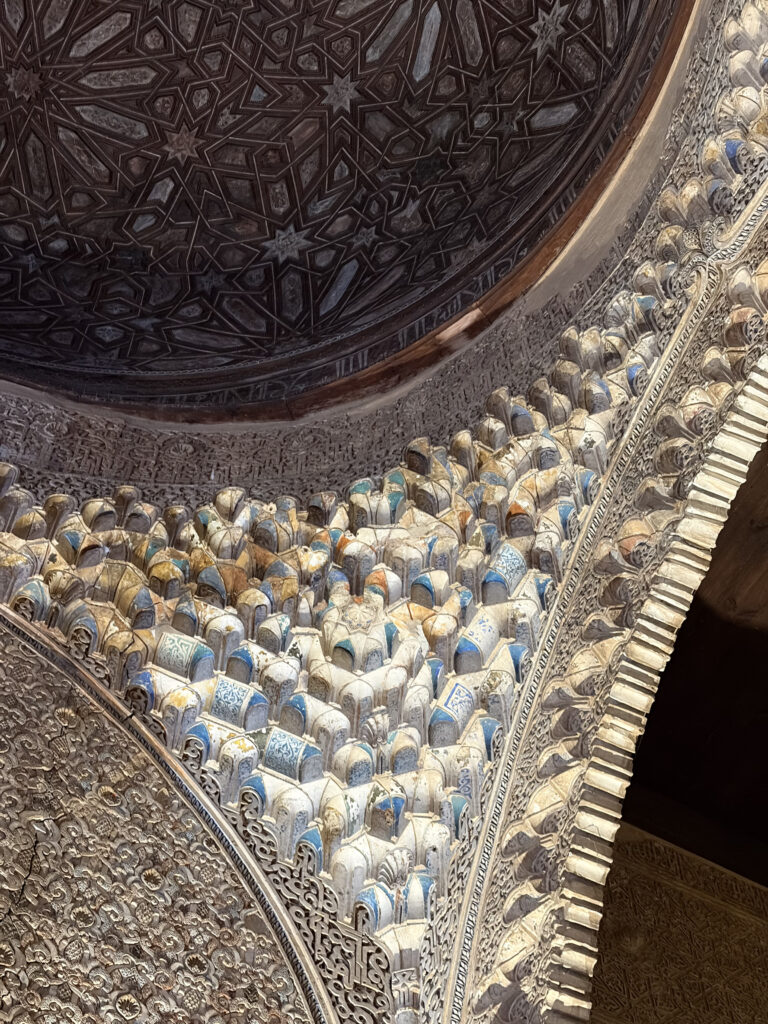
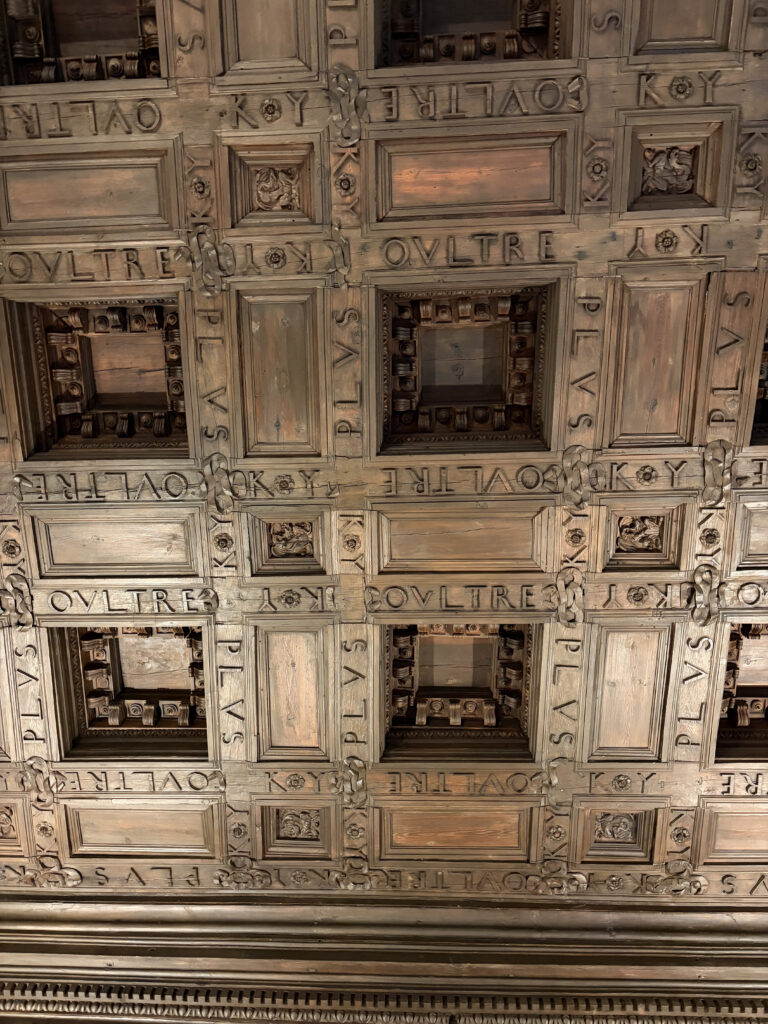
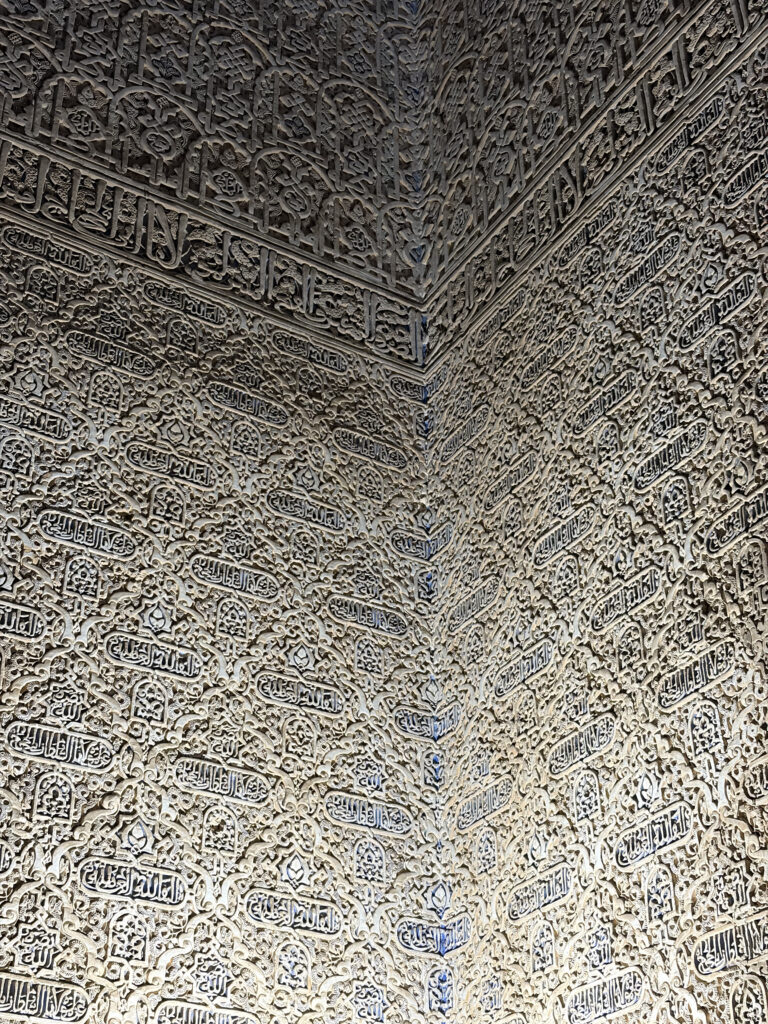
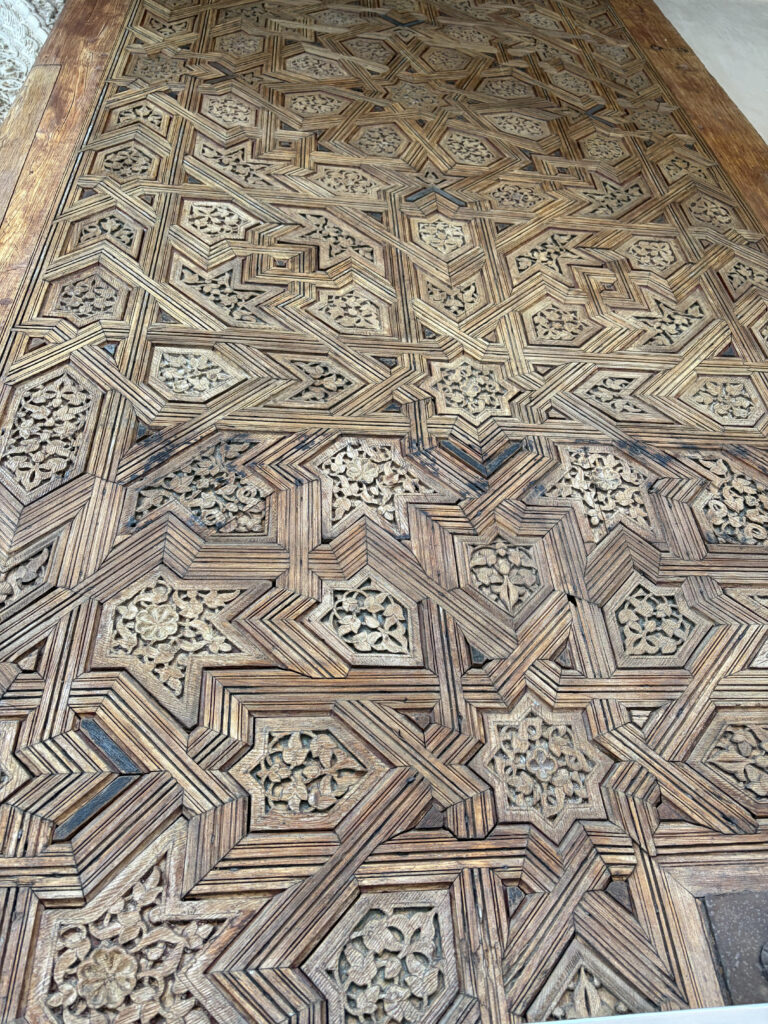
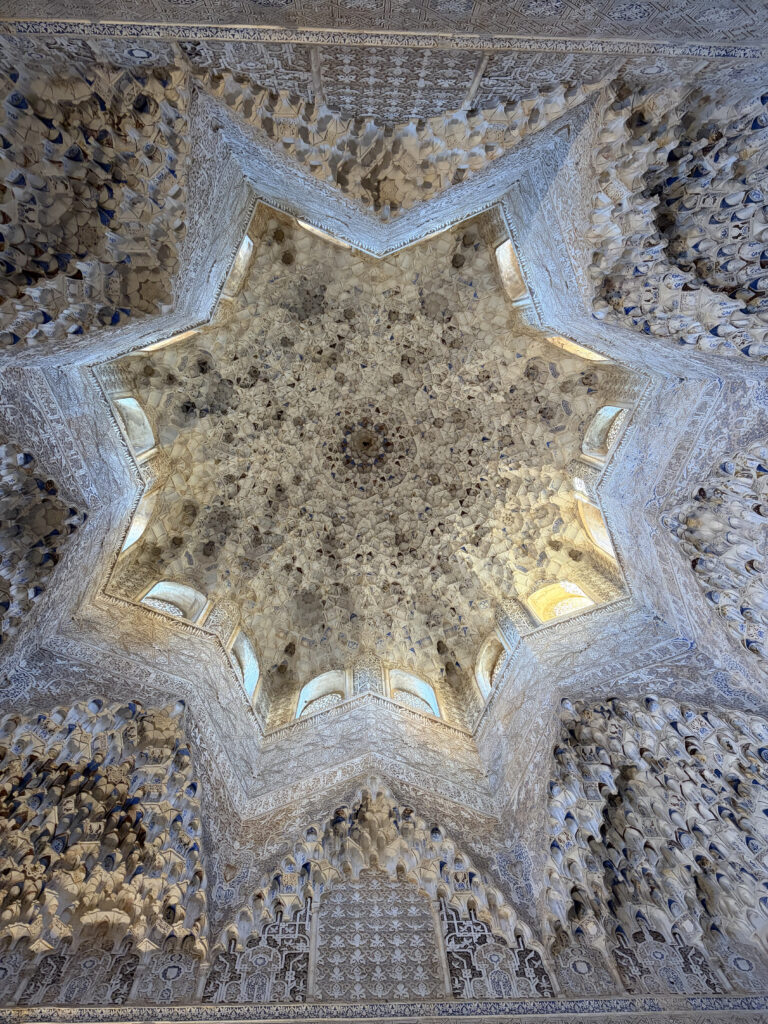
At one point we stepped out and caught the view back over Granada from the Palace of Charles V—which feels completely different, heavier, more European, like a later layer laid right on top of something older and softer. There’s also the old Medina area woven through it all—the everyday side of life that once existed here, not just the palaces and showpieces. It makes the whole place feel less like a monument and more like a city that just… paused.
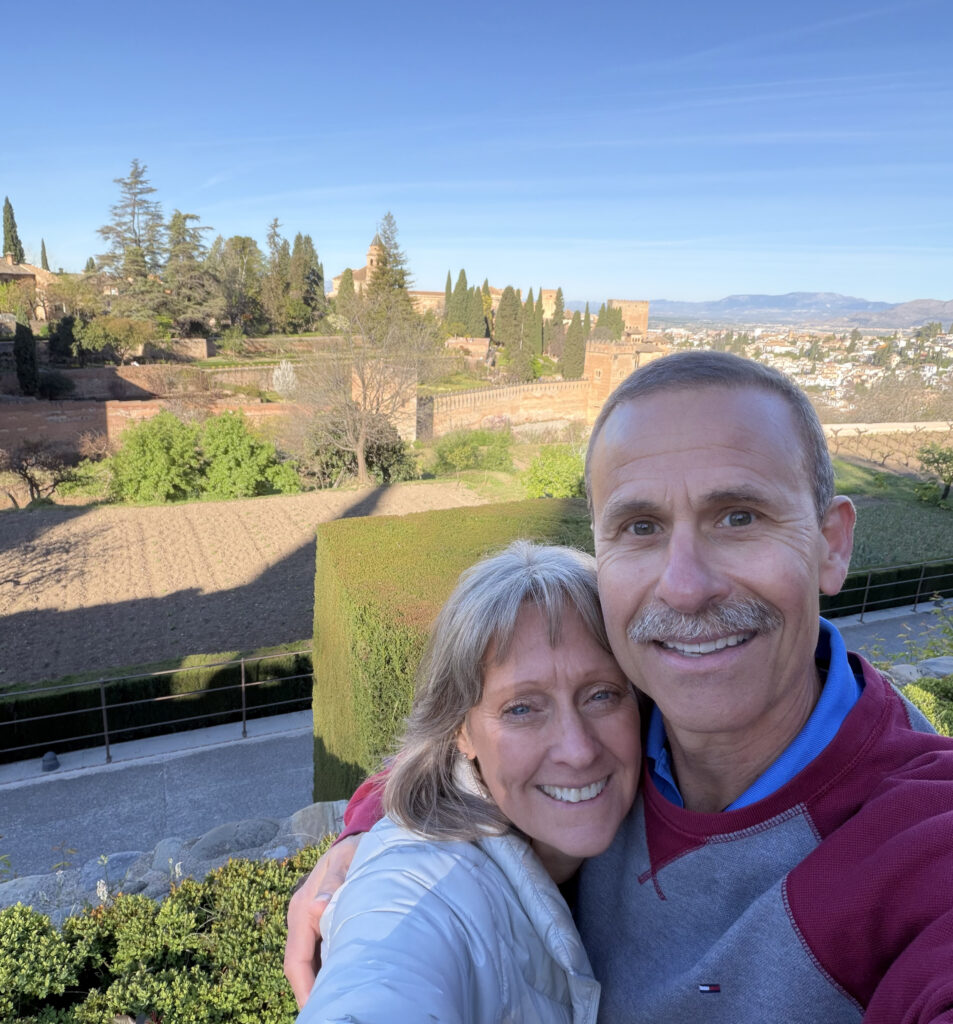
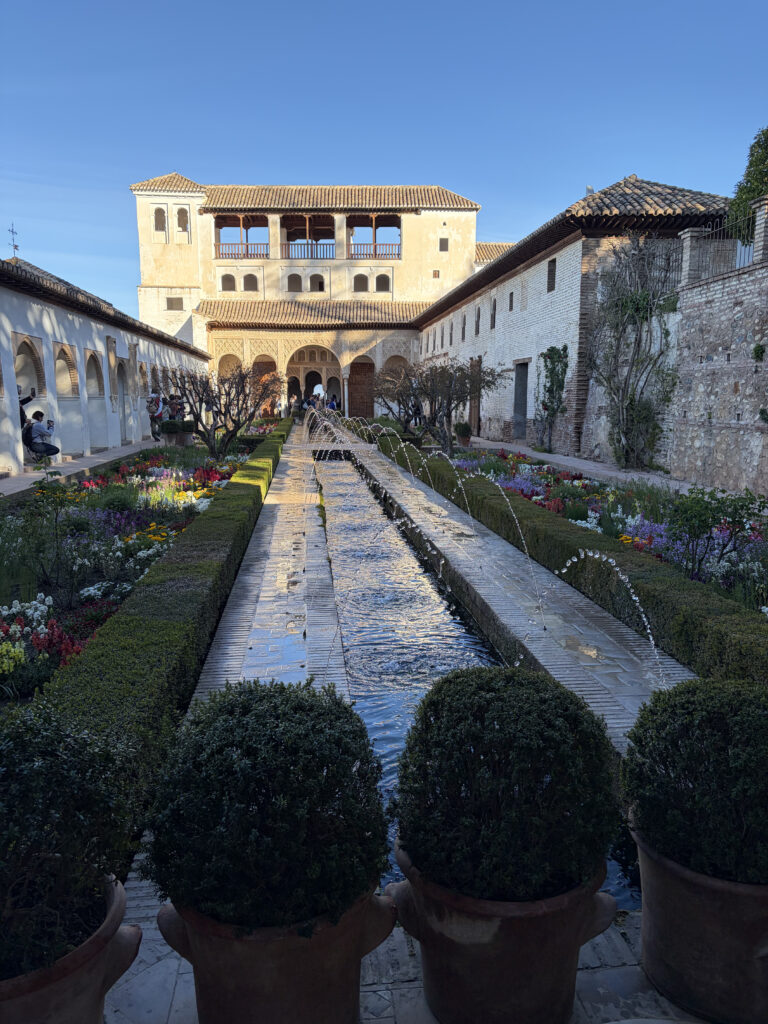
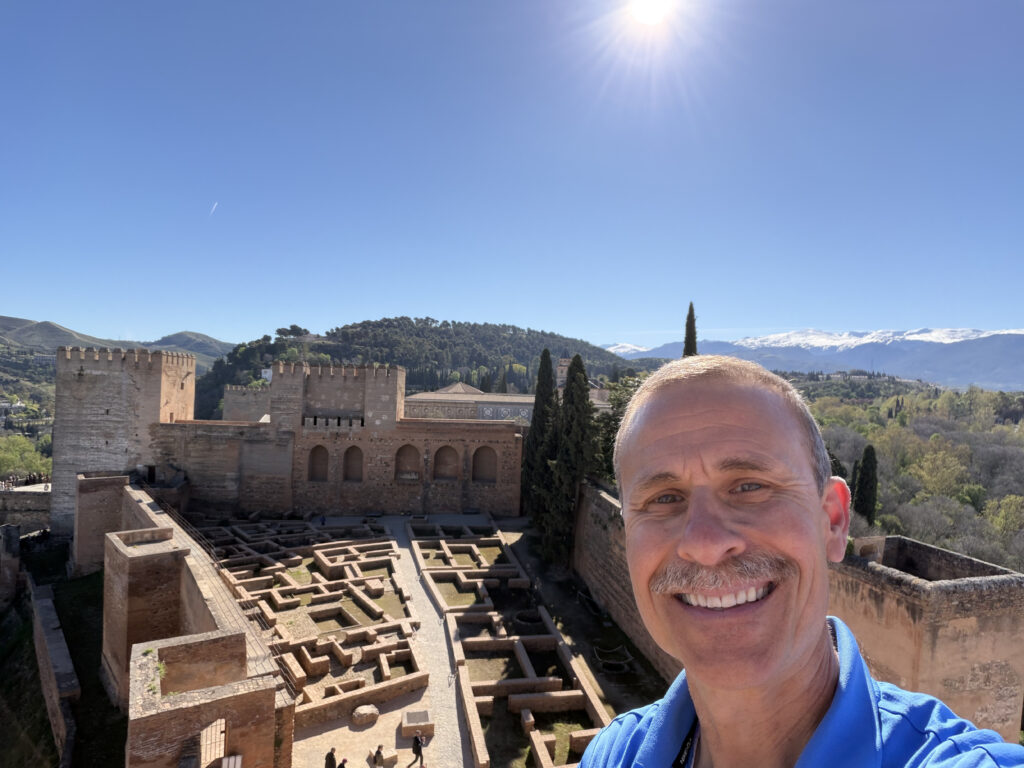
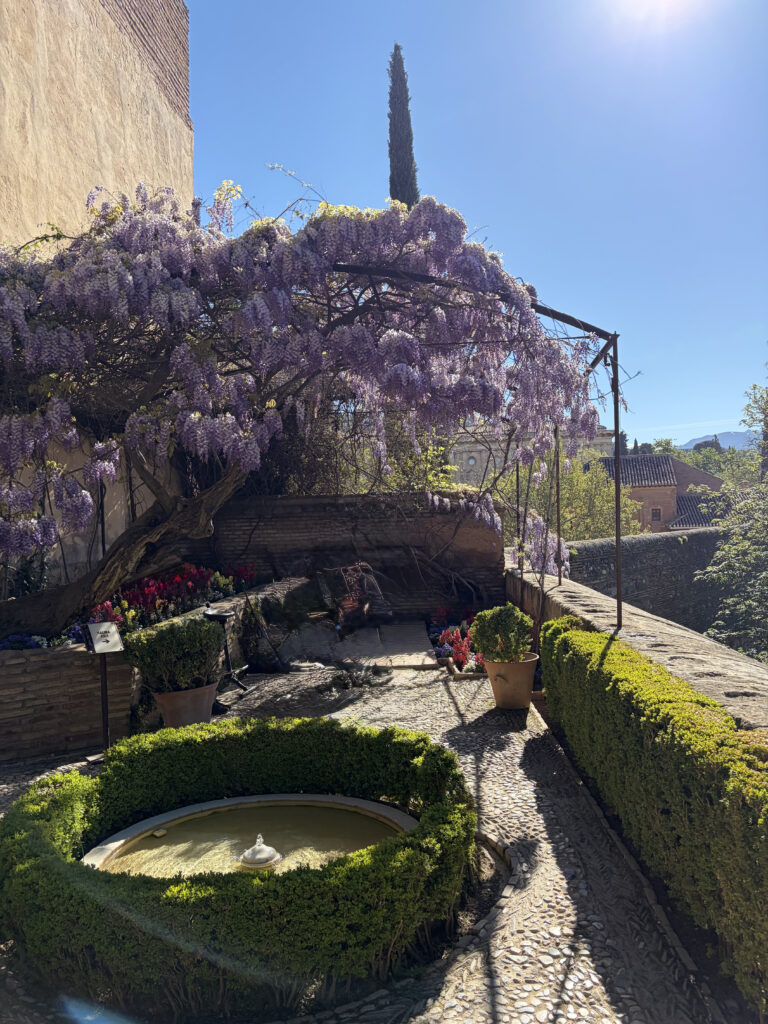
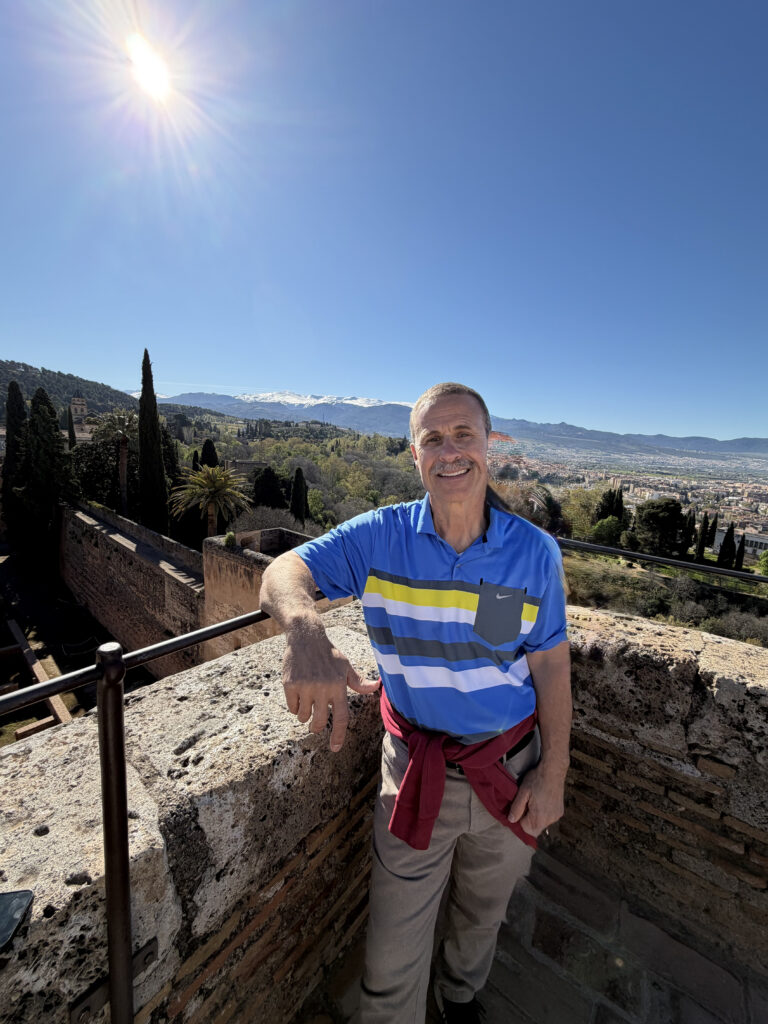
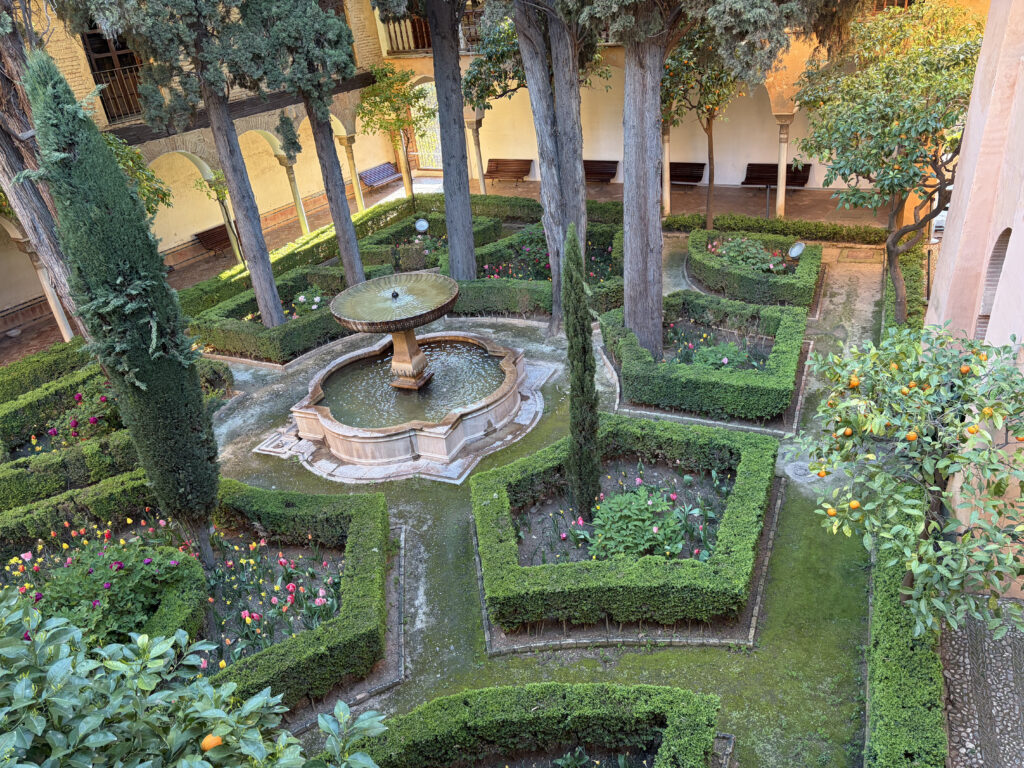
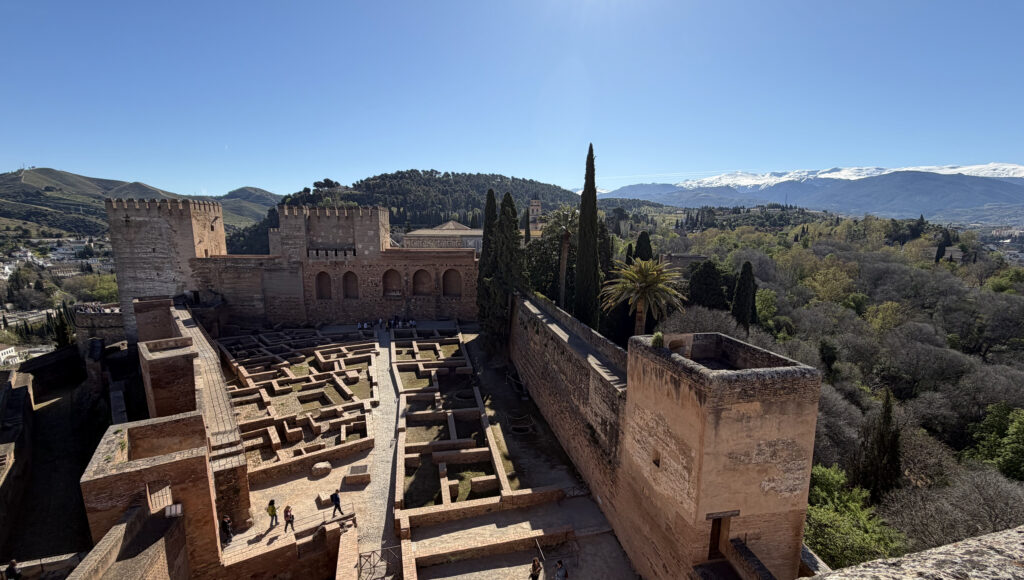
Kellie and I didn’t rush it. We couldn’t, really. It’s one of those places where the longer you stay, the more it settles in. By the time we walked out, it didn’t feel like we’d just “seen” something. It felt more like we’d stepped into a different time for a while—and then quietly stepped back out again.
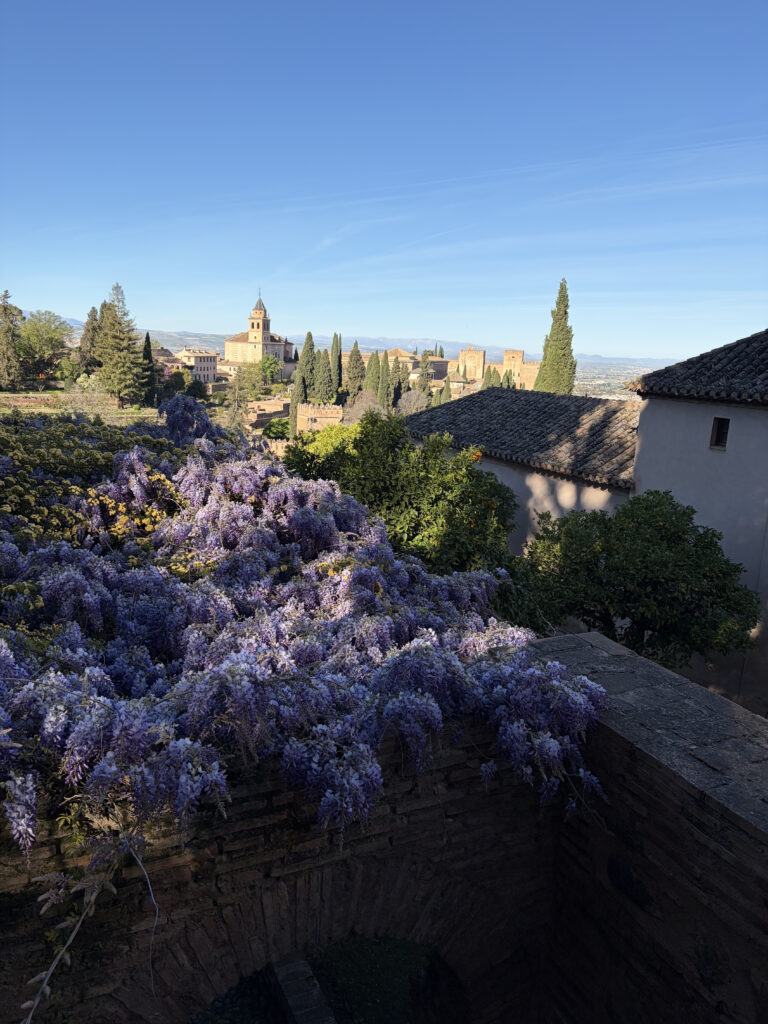
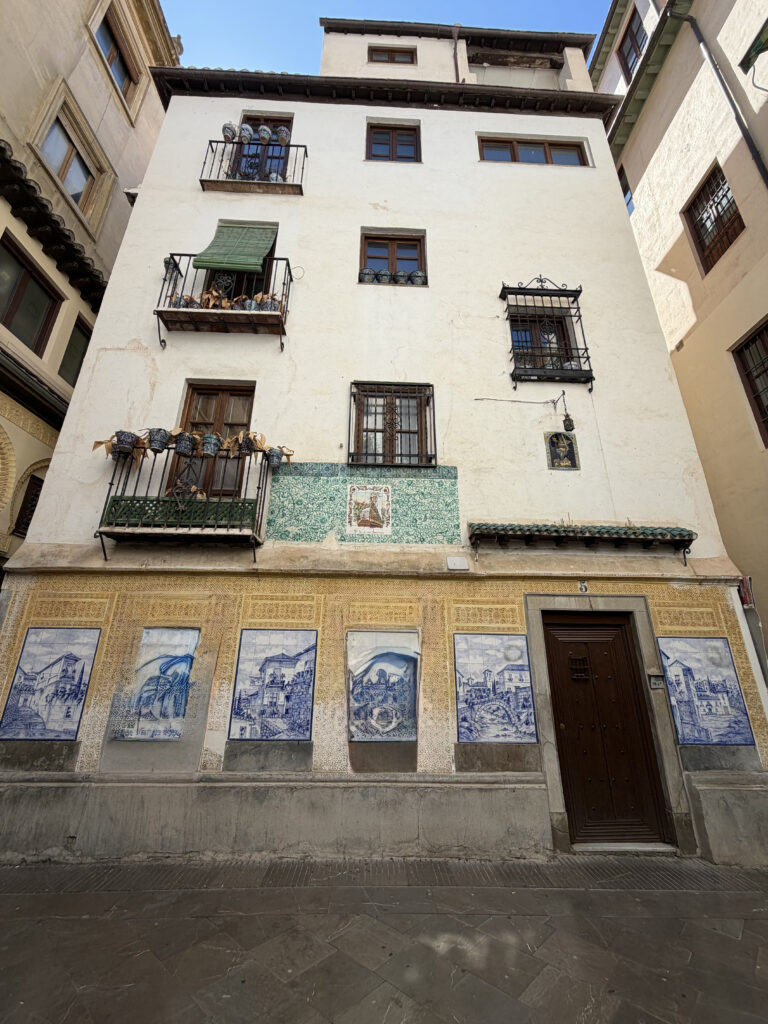
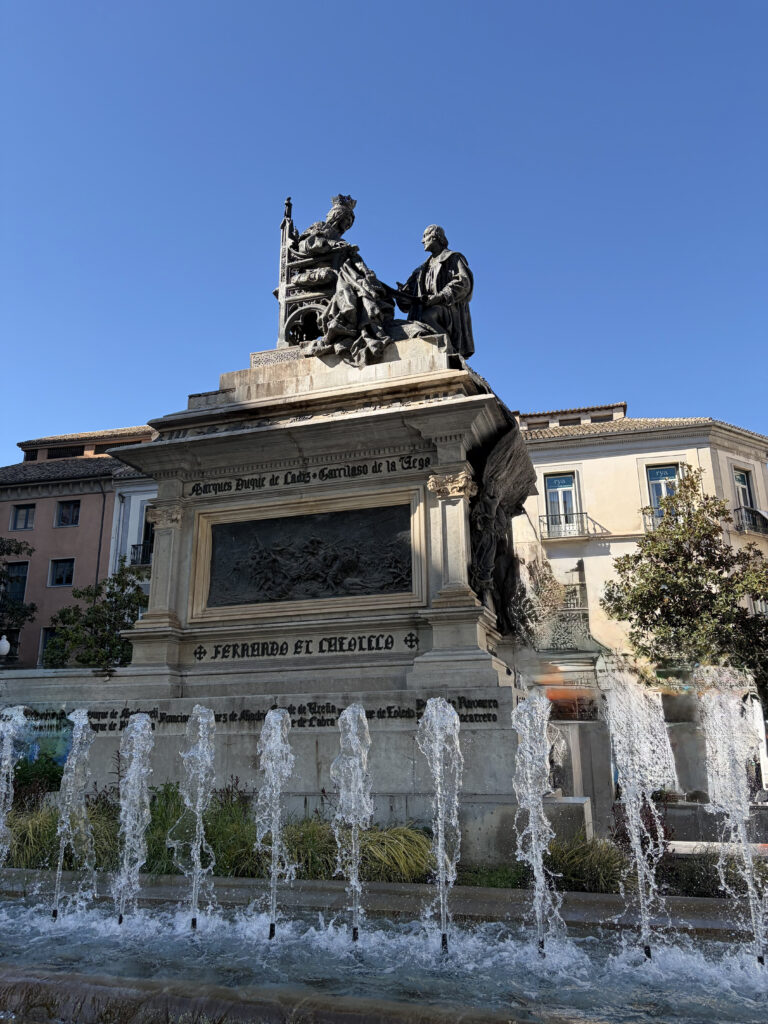
We had already spent the morning inside the Alhambra, and it lingered with us as we came back down into the city. You don’t really leave a place like that all at once—it kind of follows you for a while. Plaza Nueva, which despite the name (“new square”) is actually one of the oldest parts of Granada, dating back to the 16th century. It felt like a reset point—cafés filling up, people starting their day. A short walk brought us into Corral del Carbón, and that one caught me off guard a bit. From the outside it’s easy to miss, but step inside and you’re suddenly in a 14th-century Moorish courtyard that once housed traveling merchants and their goods. It’s the oldest preserved structure of its kind in Spain, and you can almost picture the caravans passing through.
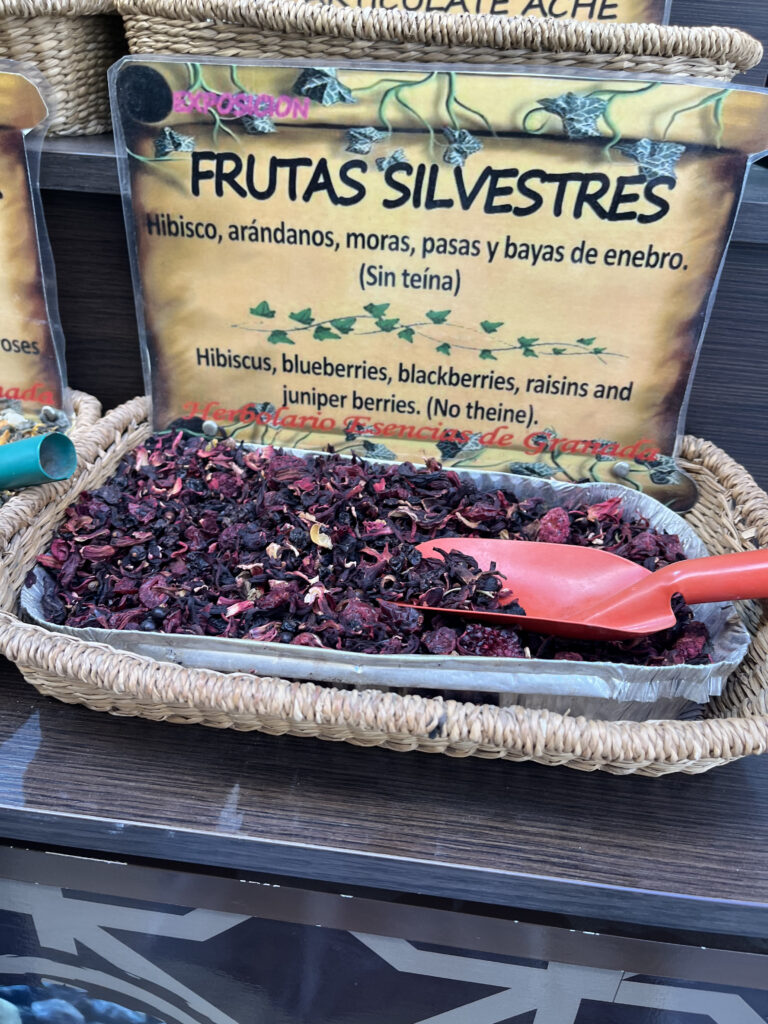
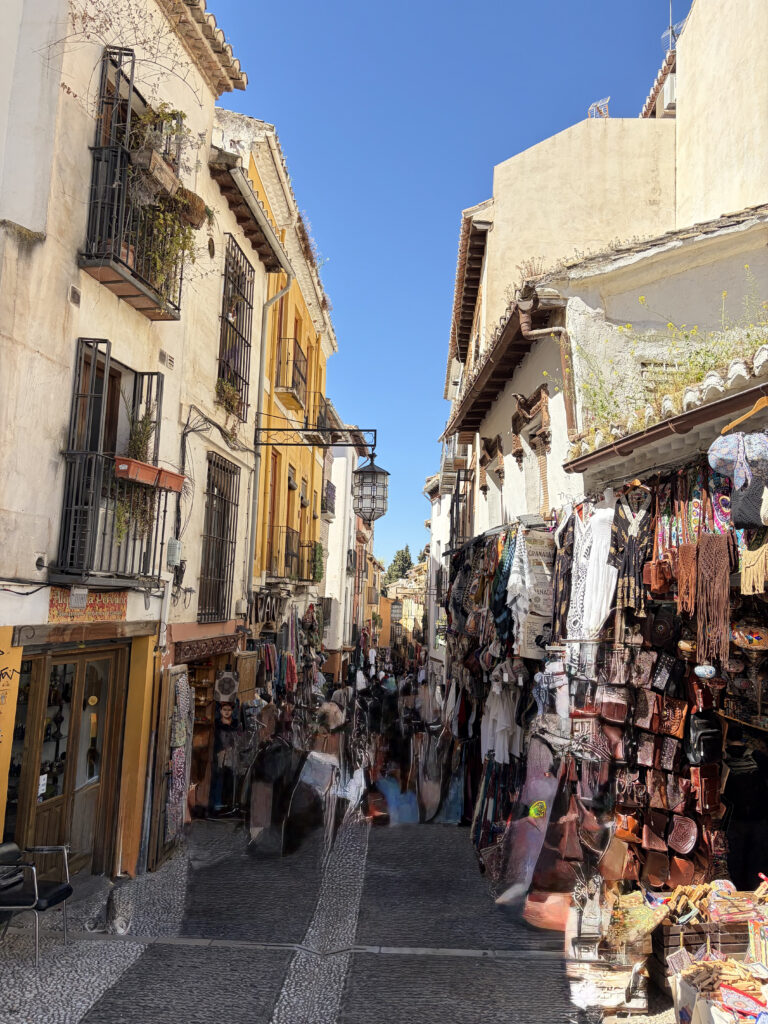
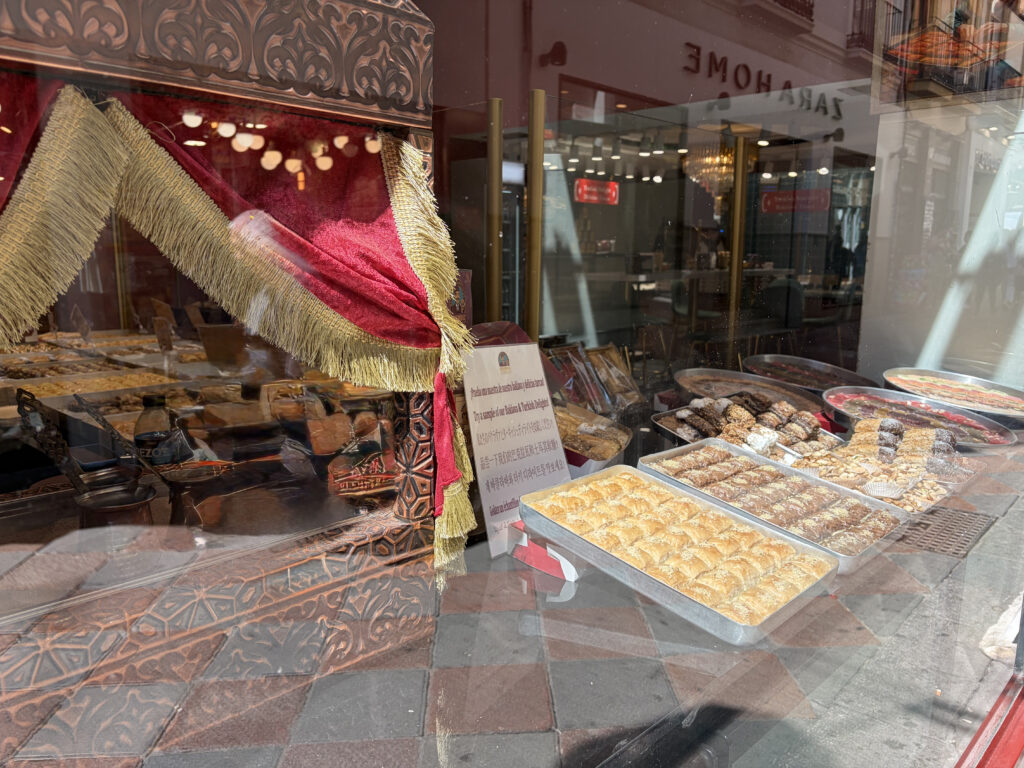
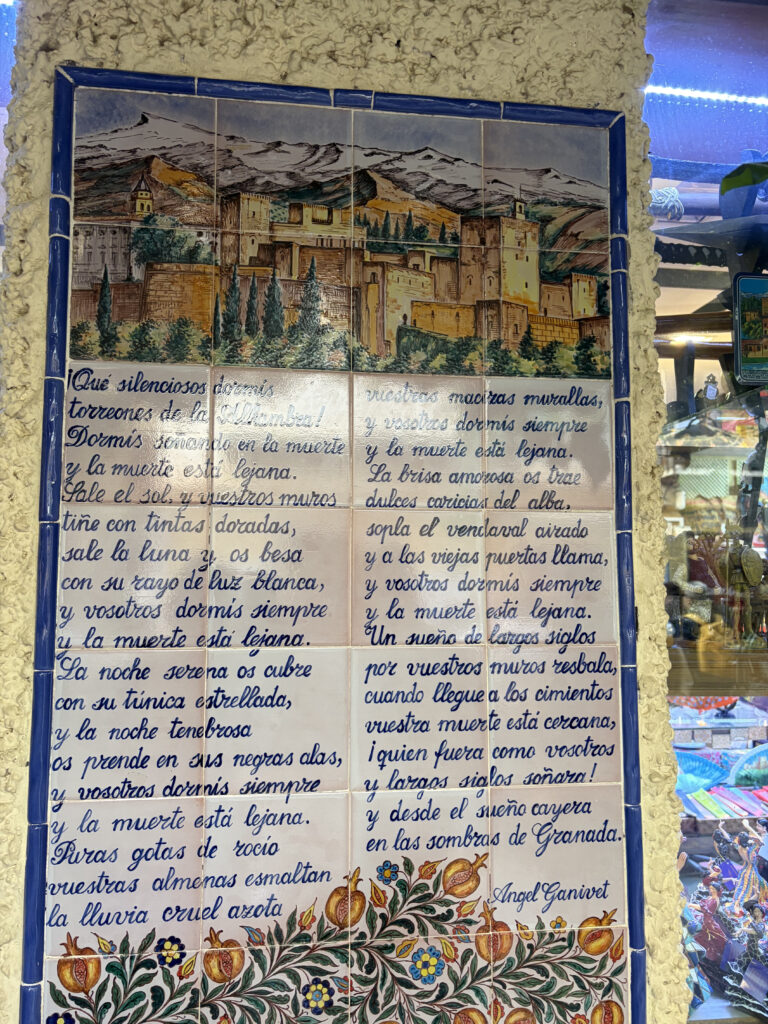
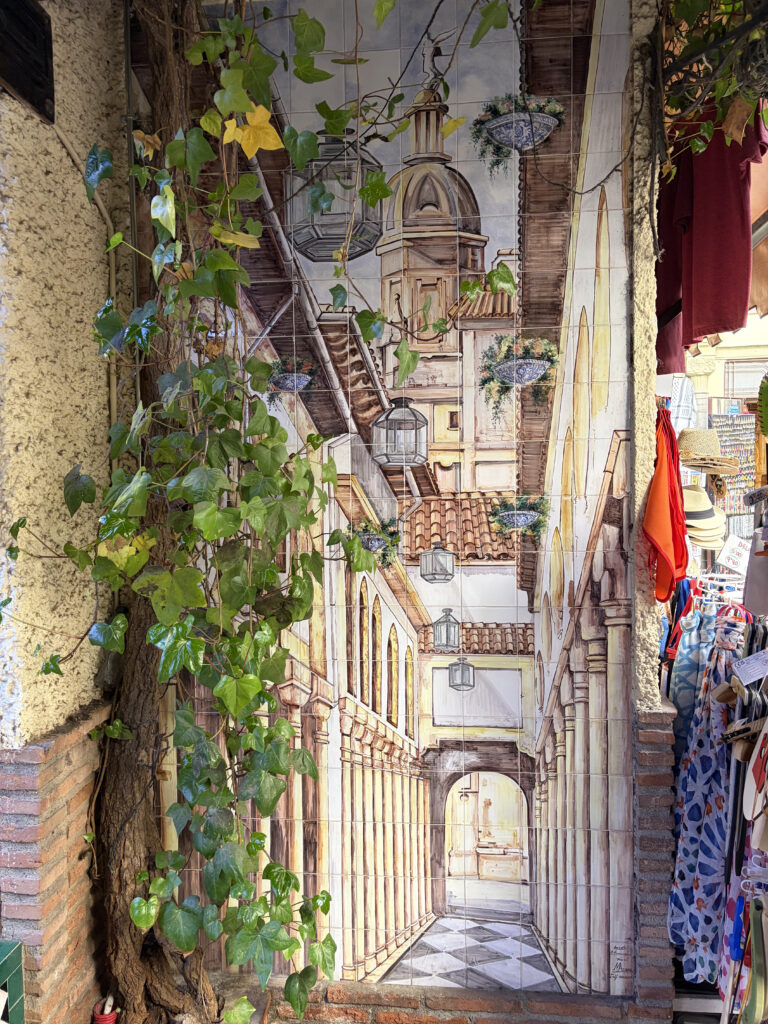
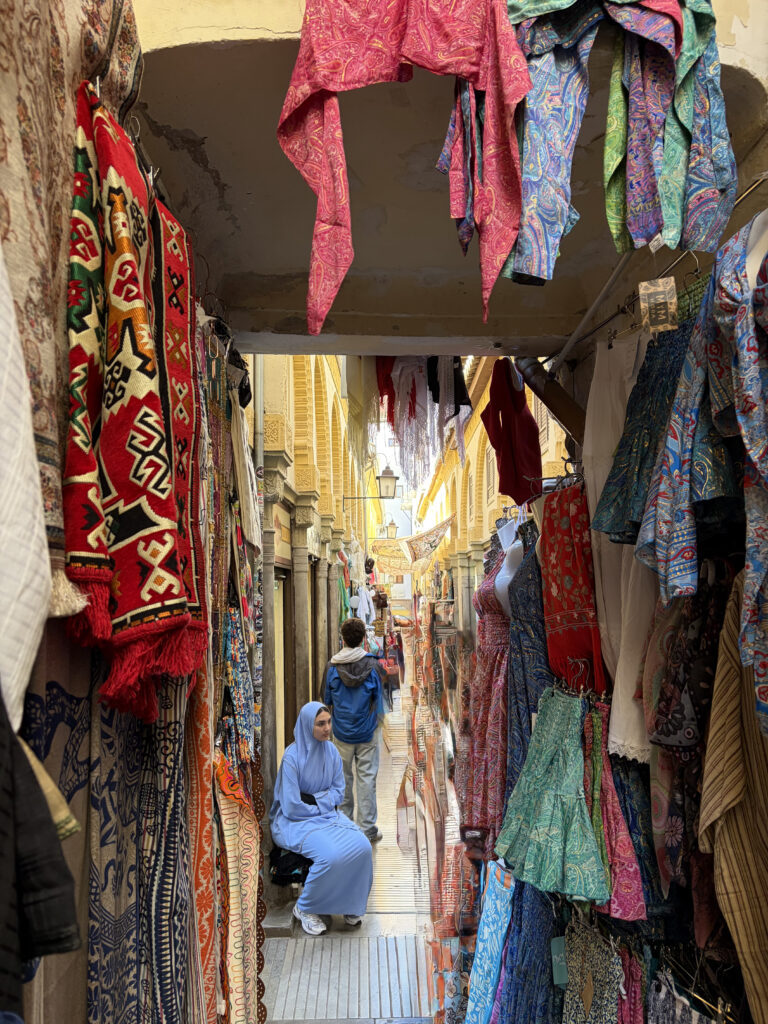
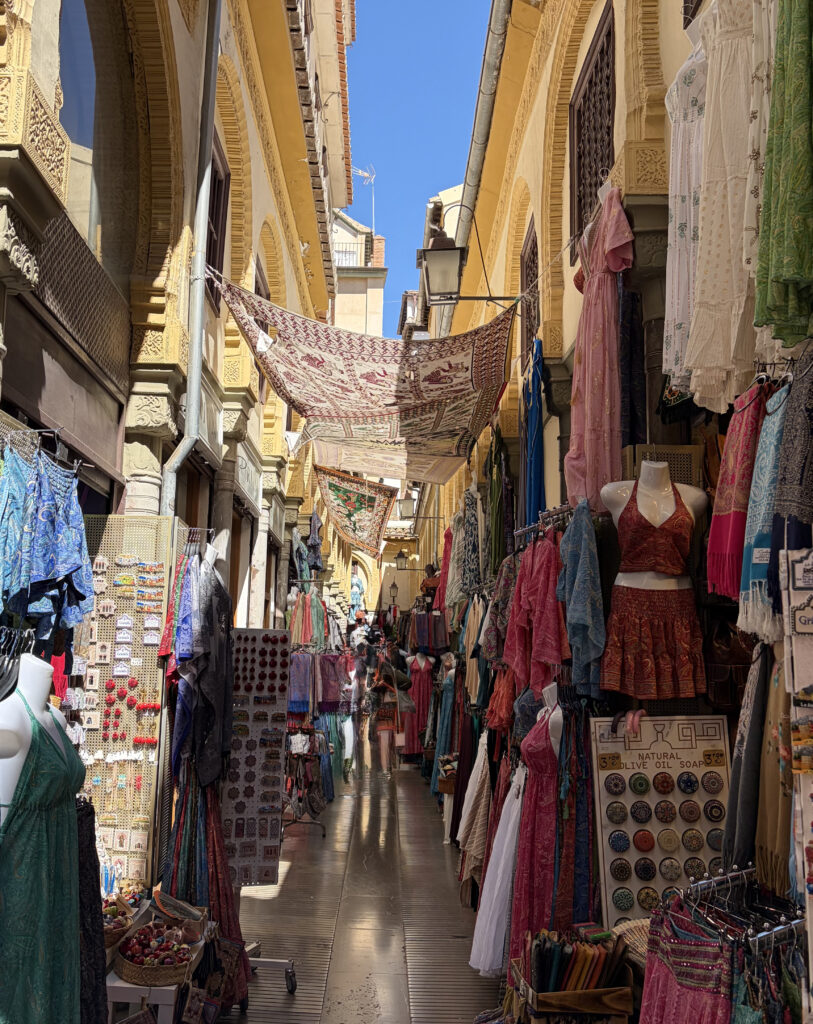
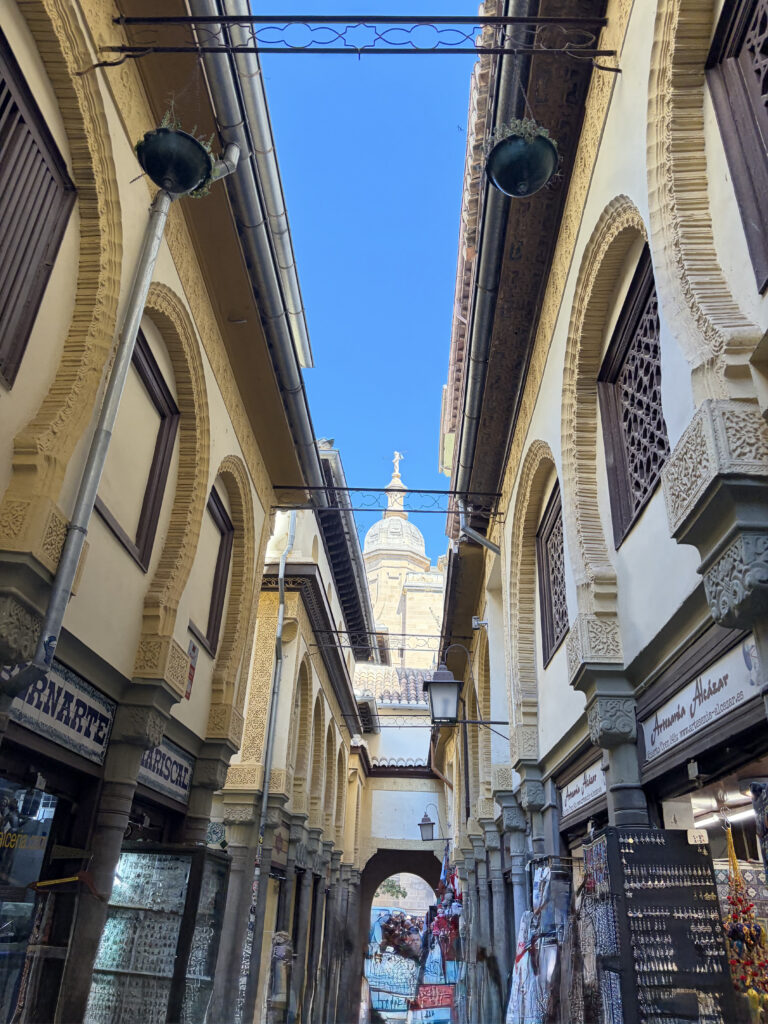
From there, we wandered into the narrow maze of the Alcaicería. This used to be Granada’s Moorish silk market—once tightly controlled and incredibly valuable. Today it’s more souvenirs than silk, but the tight alleys and layered दुकानों (shops) still carry that feeling of trade and movement. You don’t really walk straight through—it pulls you sideways.
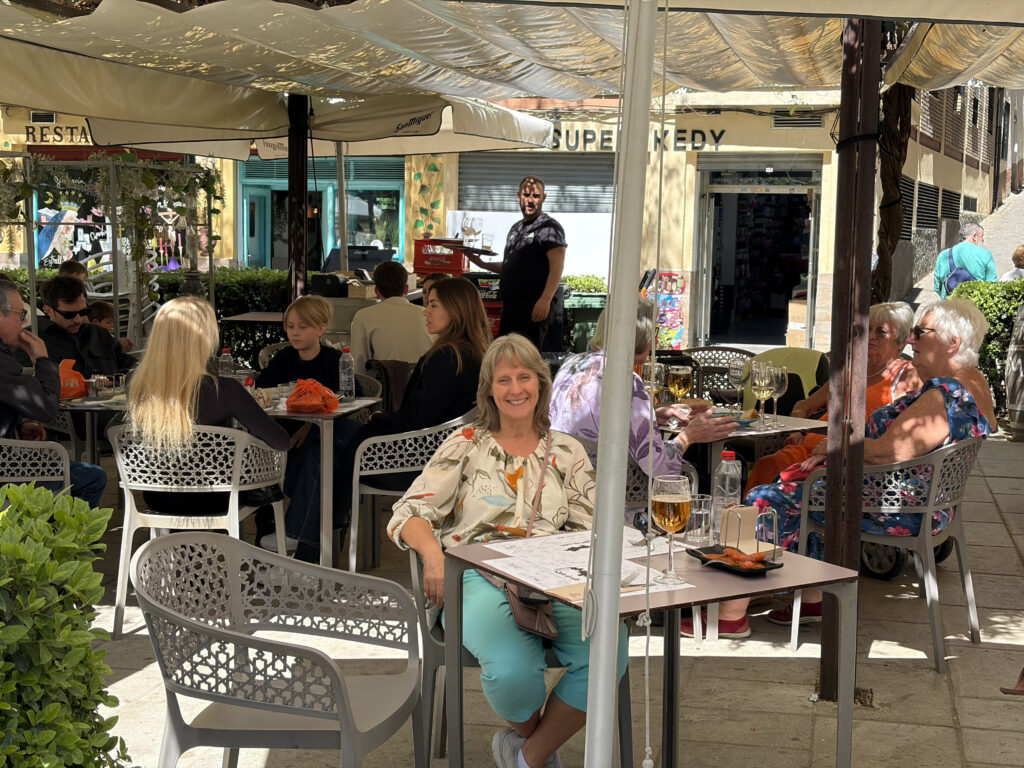
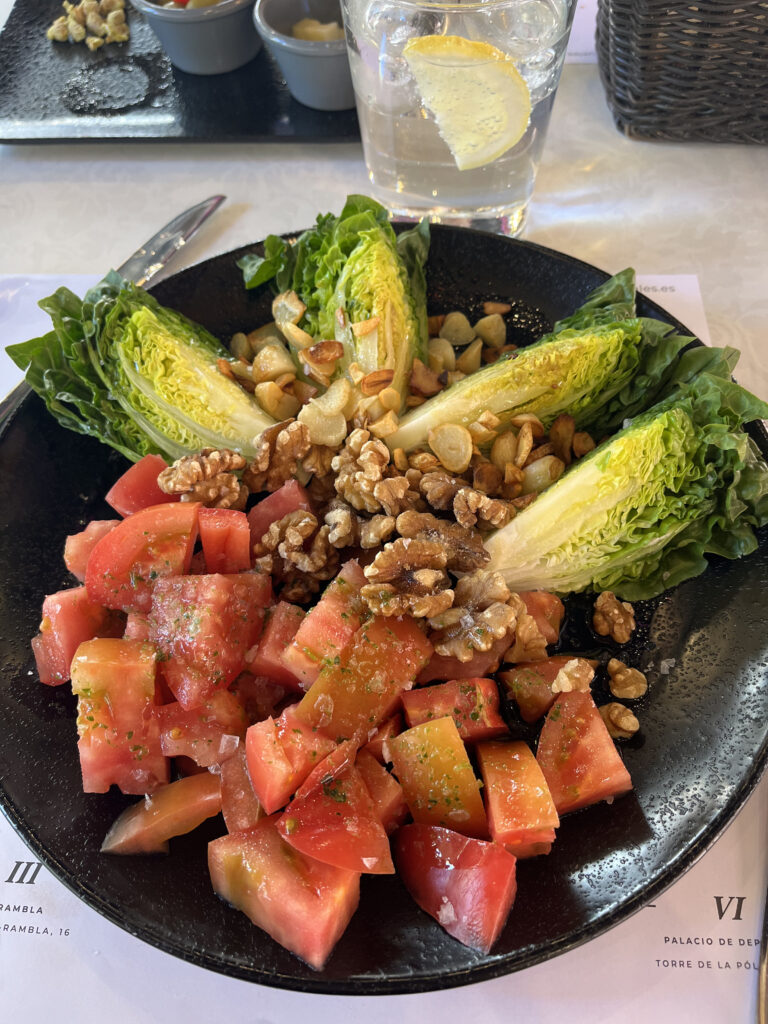
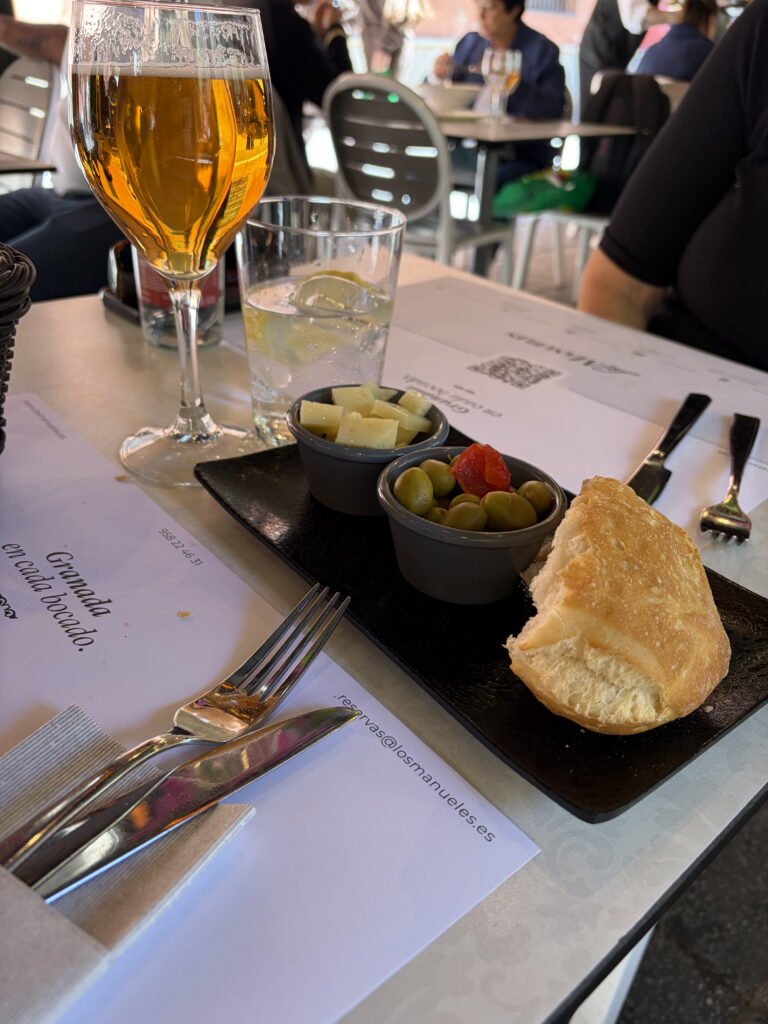
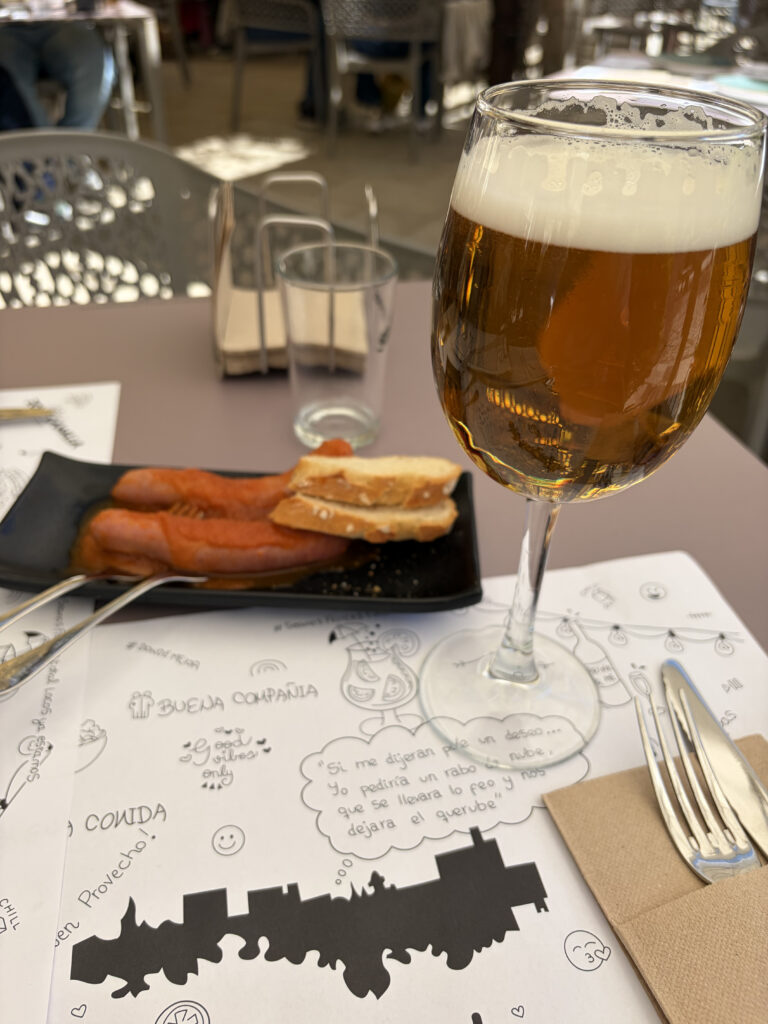
We opened back up into Plaza Bib-Rambla, and this is where we slowed down for lunch at Los Manueles. Sitting outside, watching everything move around us, it felt like one of those perfect mid-day pauses. This square once hosted markets, festivals—even public punishments centuries ago—but now it’s all flowers, conversation, and plates hitting tables.
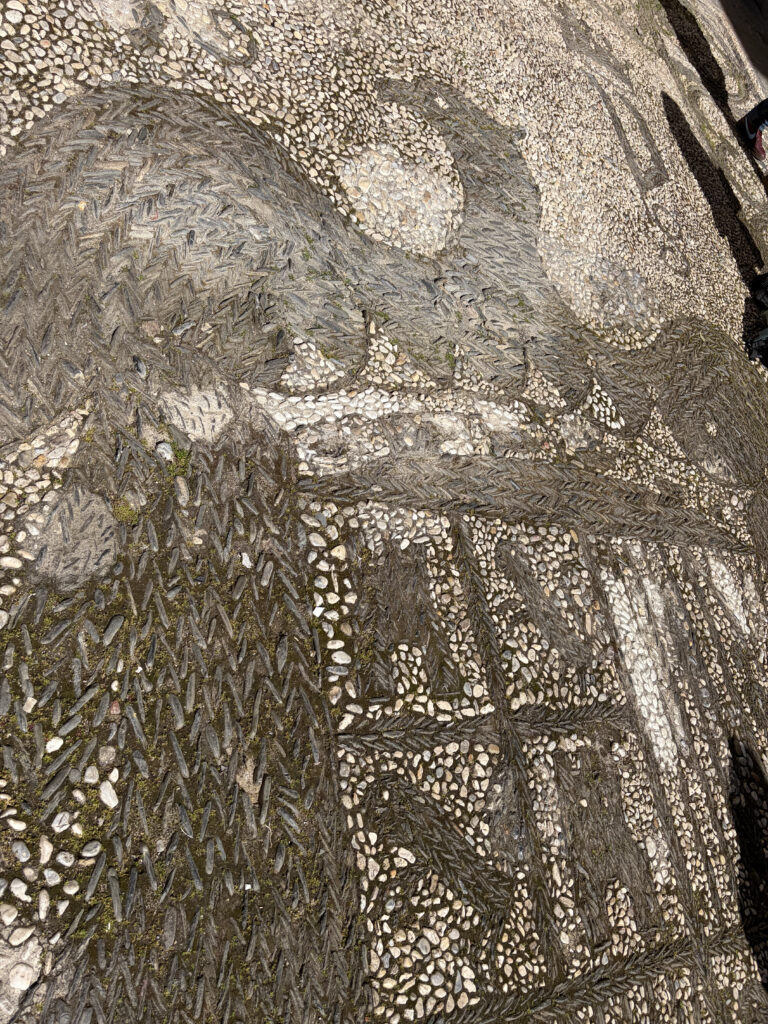
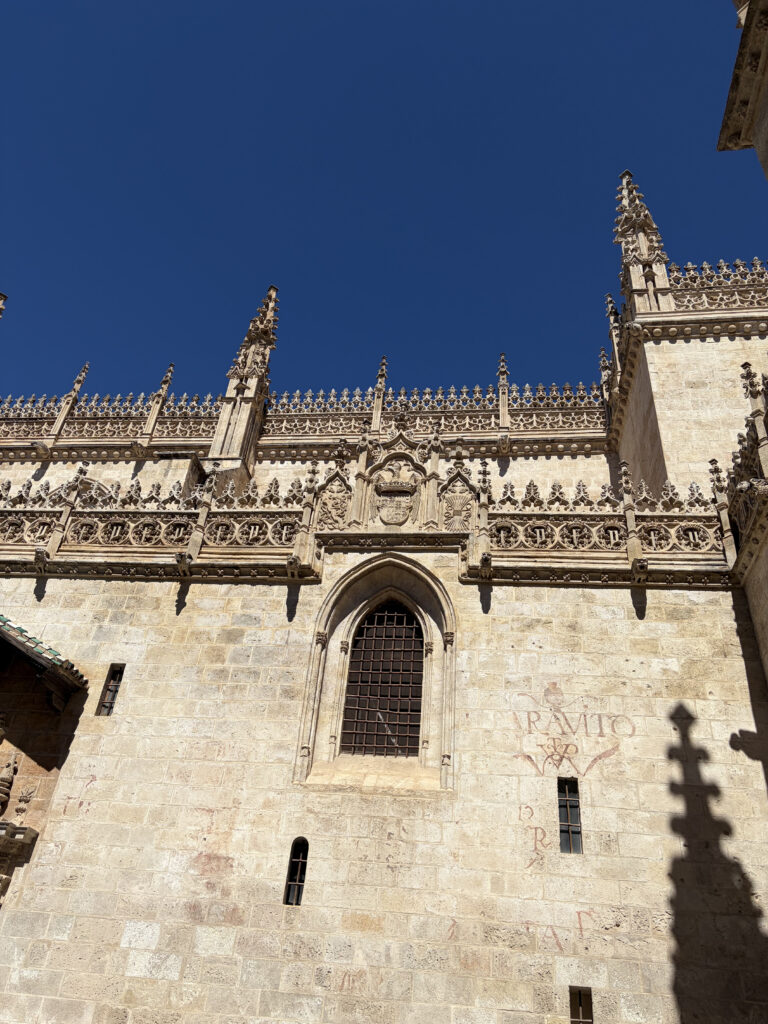
Not far from there, the Granada Cathedral rises up in a completely different style—Renaissance, bright, almost defiant compared to the Moorish architecture around it. Built after the Catholic Monarchs reclaimed Granada in 1492, it’s less about blending cultures and more about announcing a shift in power. You can feel that contrast just walking inside.
We carried that forward into the Basilica de San Juan de Dios, which leans even further into that ornate, almost overwhelming Baroque style—gold, detail, decoration everywhere. Built in honor of Saint John of God, who dedicated his life to caring for the sick, it somehow balances all that richness with a quieter purpose underneath.
By late afternoon, we found ourselves along Paseo de los Tristes. Despite the name—“Walk of the Sad Ones,” tied to old funeral processions—it’s anything but sad now. Cafés line the path, the river runs alongside, and the Alhambra rises above you like it’s always watching.

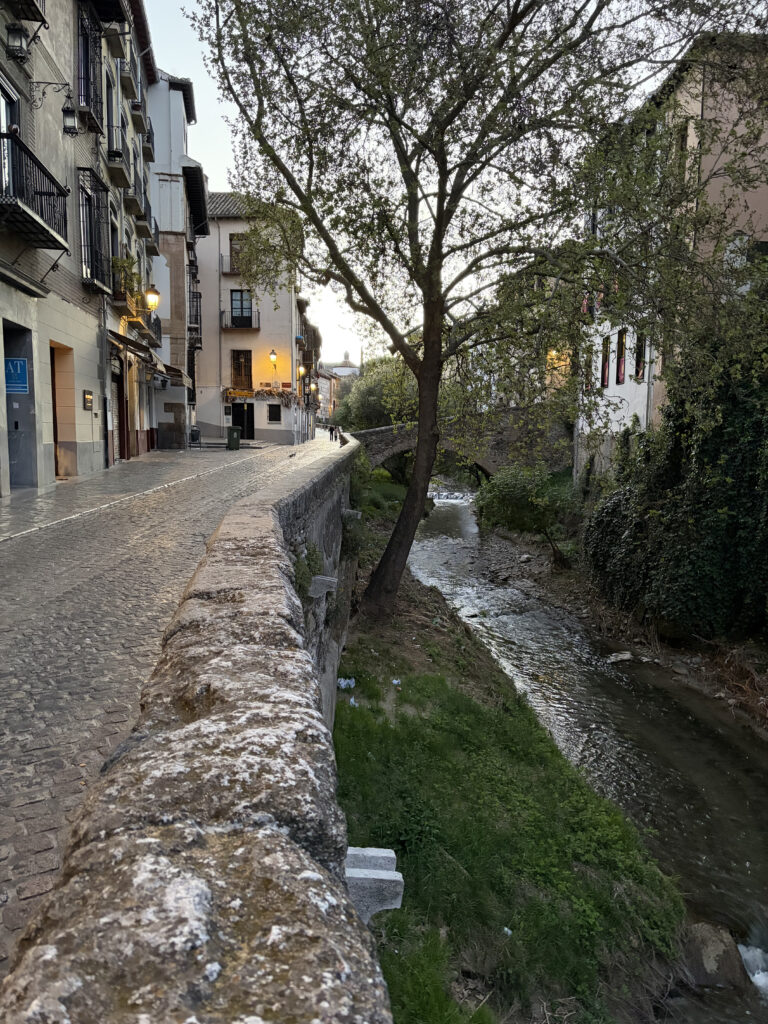
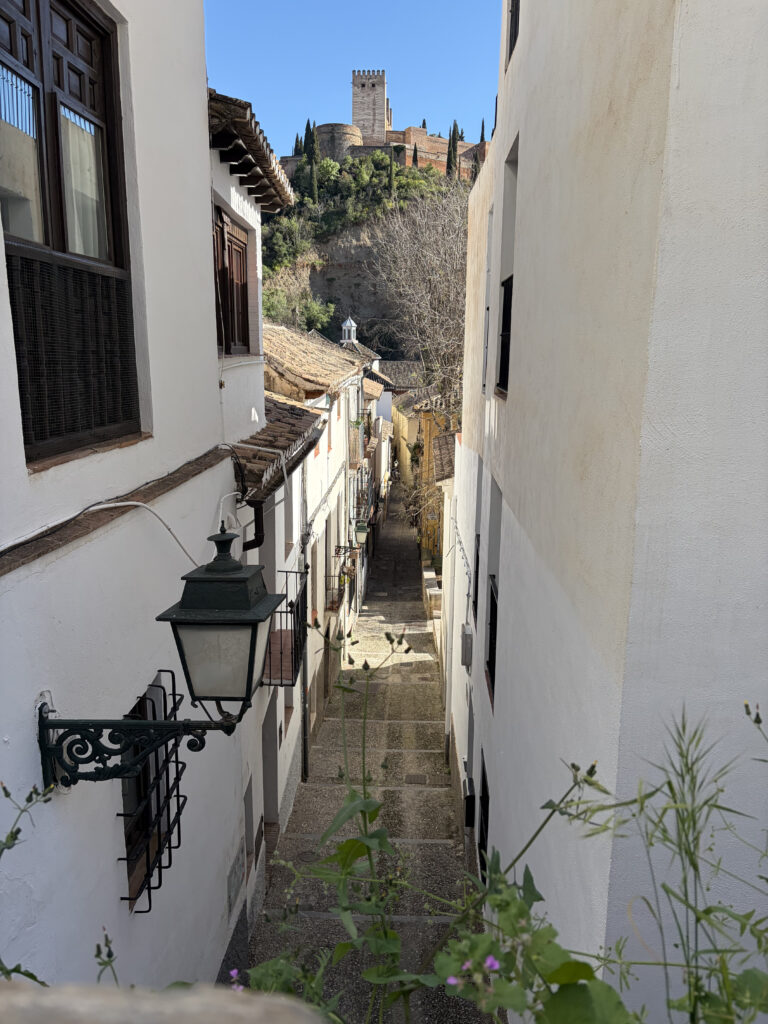
We followed that path onto Carrera del Darro, easily one of the most beautiful streets we’ve walked so far. Cobblestones, the river, old buildings leaning just slightly—it feels like something out of another time. You don’t rush here. You just sort of drift along with it.
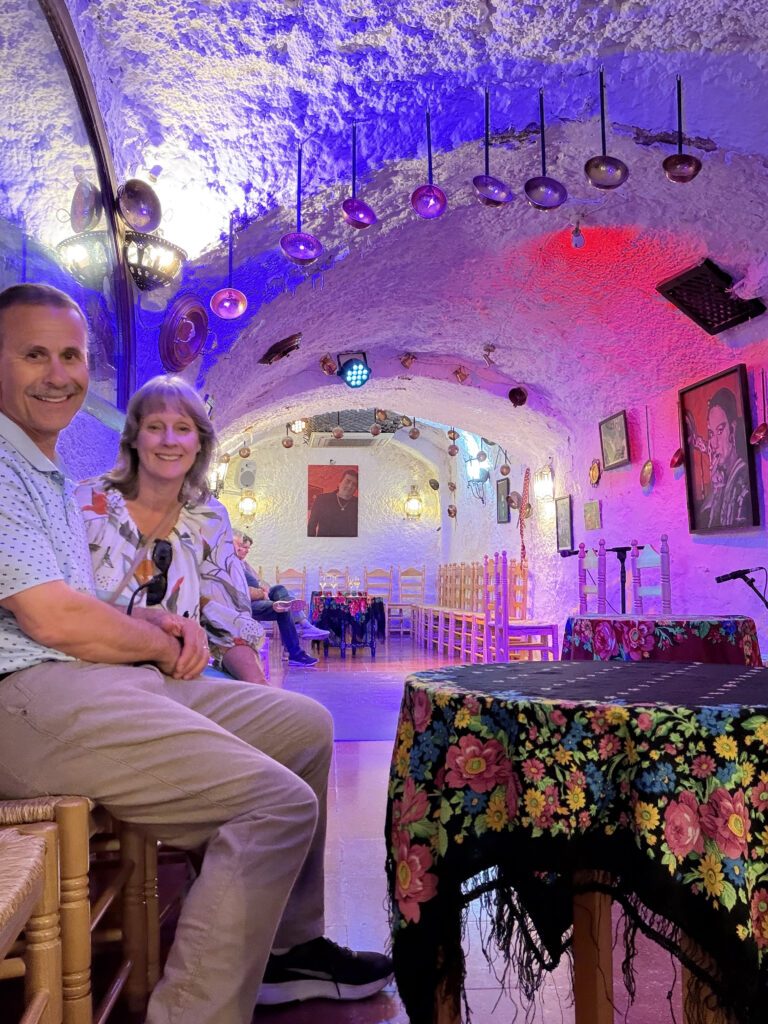
That drift eventually led us up into the hills and into something completely different—a flamenco show at Cuevas Los Tarantos. Inside those cave walls, everything gets close—sound, movement, emotion. Flamenco isn’t polished in the way you might expect. It’s raw. The rhythm, the footwork, the singing—it feels like it’s coming from somewhere deep, not performed so much as released.
And then, just when it felt like the day had already given us enough, we climbed a little higher to Mirador de San Nicolás. That’s where Granada delivers its final moment.
The Alhambra sat across from us, and as the sun dropped, it started to shift—stone turning red, almost glowing. There’s a reason the name comes from the Arabic for “red fortress,” but seeing it happen in real time is something else. People gathered quietly, musicians playing somewhere behind us, the whole place holding still just long enough to take it in.
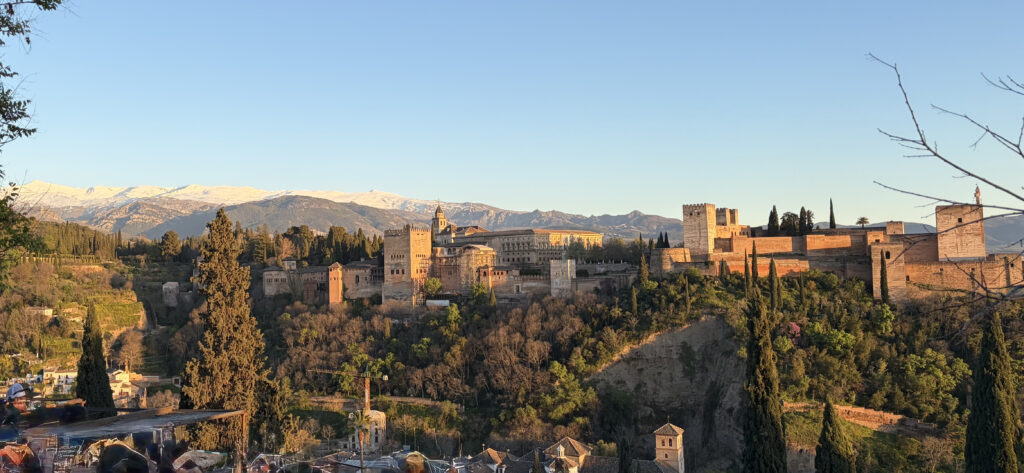
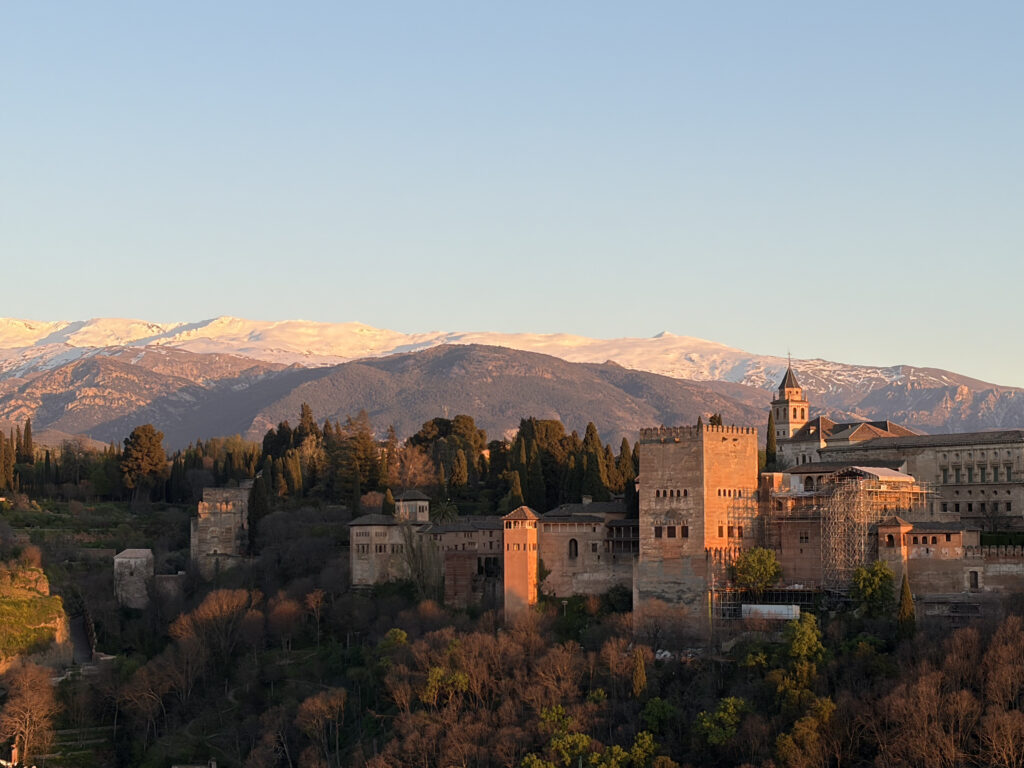
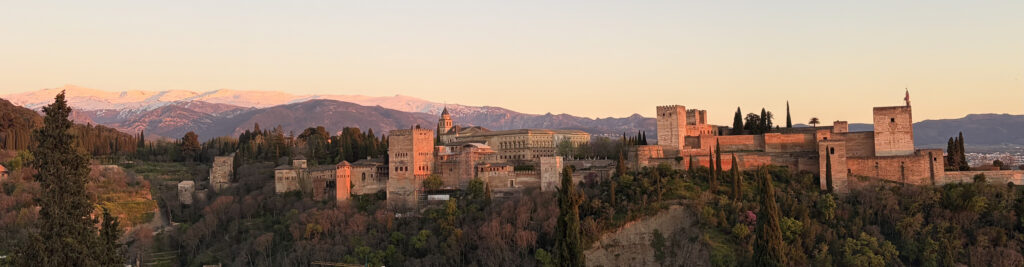
Kellie and I stayed until the light was almost gone, then made our way back down—winding streets, soft conversations, that feeling of being just a little removed from everything. We ended the night at Hotel Palacio de Santa Paula, which felt like the perfect landing spot. A former monastery turned hotel, blending centuries of history into something calm and quiet—just what we needed after a day like that.
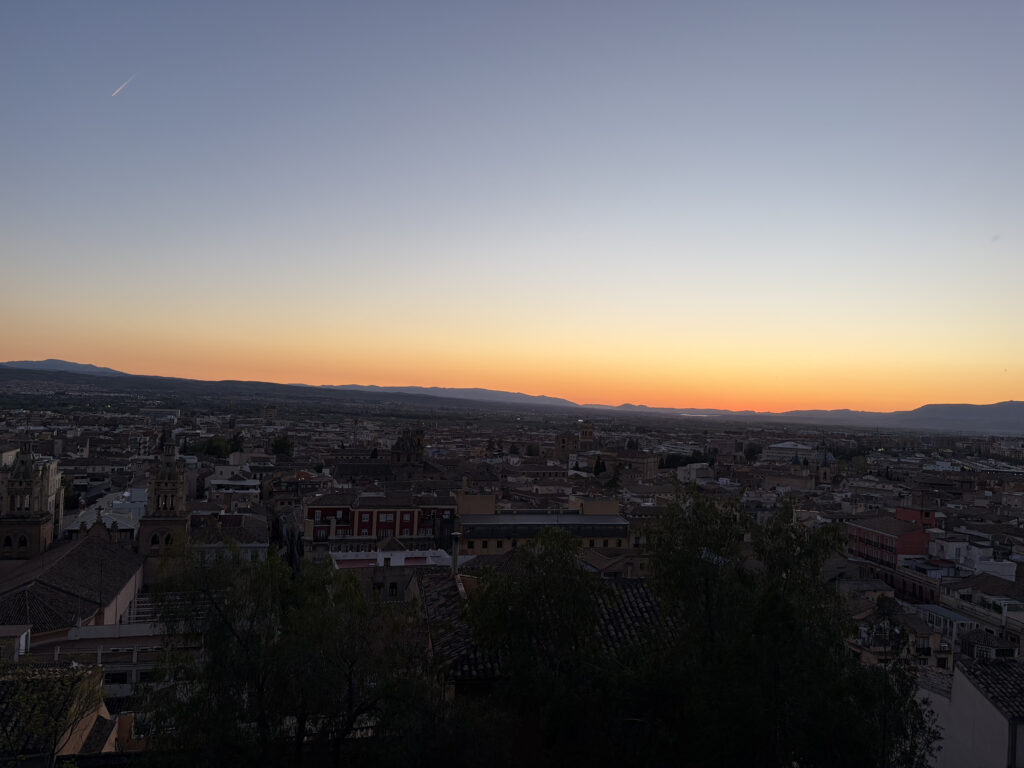
Granada doesn’t unfold all at once. It layers itself slowly—Moorish, Christian, old, new—and somewhere along the way, you realize you’ve been walking through all of it at the same time.
Comments (1)
Ah, remember playing Authors those many decades ago and wondering what it would be like to visit the Alhambra that Washington Irving wrote about – The Alhambra: A Series of Tales and Sketches of the Moors and Spaniards.
You’ve described it so splendidly, Tim, I feel its charm, its magic. Thank you. 🎶