
We left Madrid early—one of those quiet departures where the streets are still quiet—and by the time we rolled into Toledo it was barely 9:00AM. That turned out to be the move. The city felt almost suspended in that first hour—stone streets still cool, shopkeepers just opening doors, the sound of footsteps echoing more than usual. By late morning, it would be something else entirely.
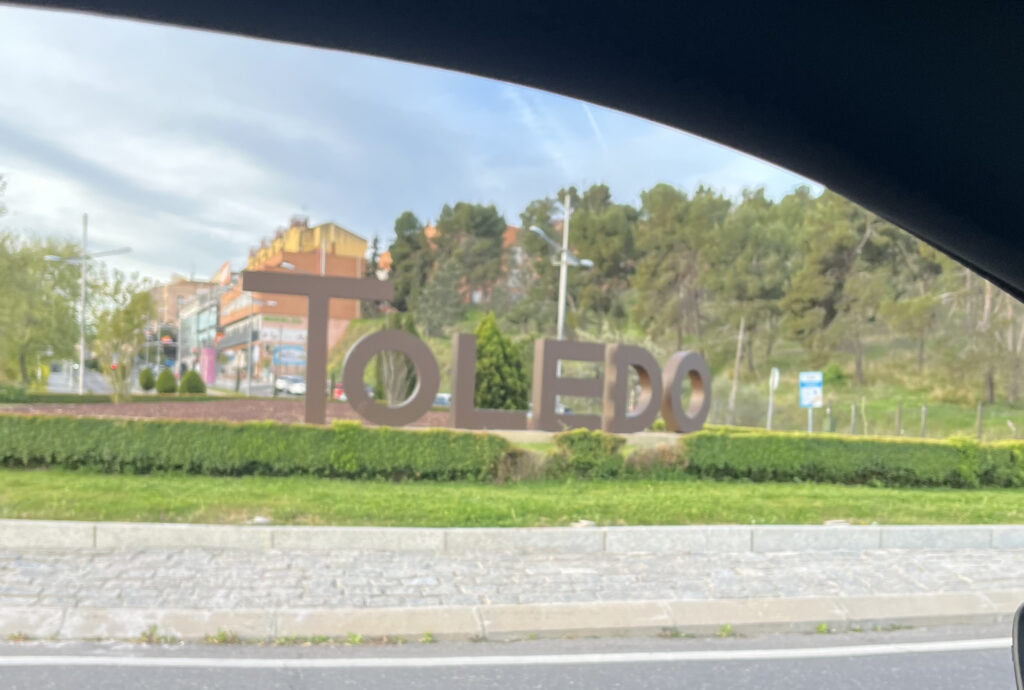
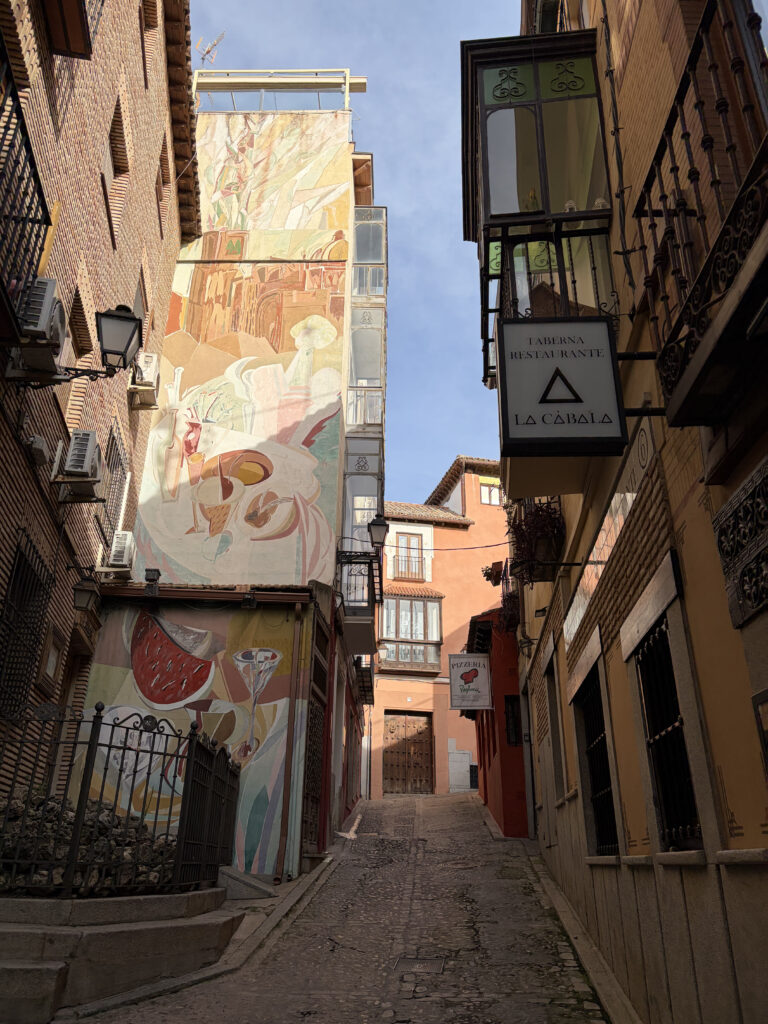
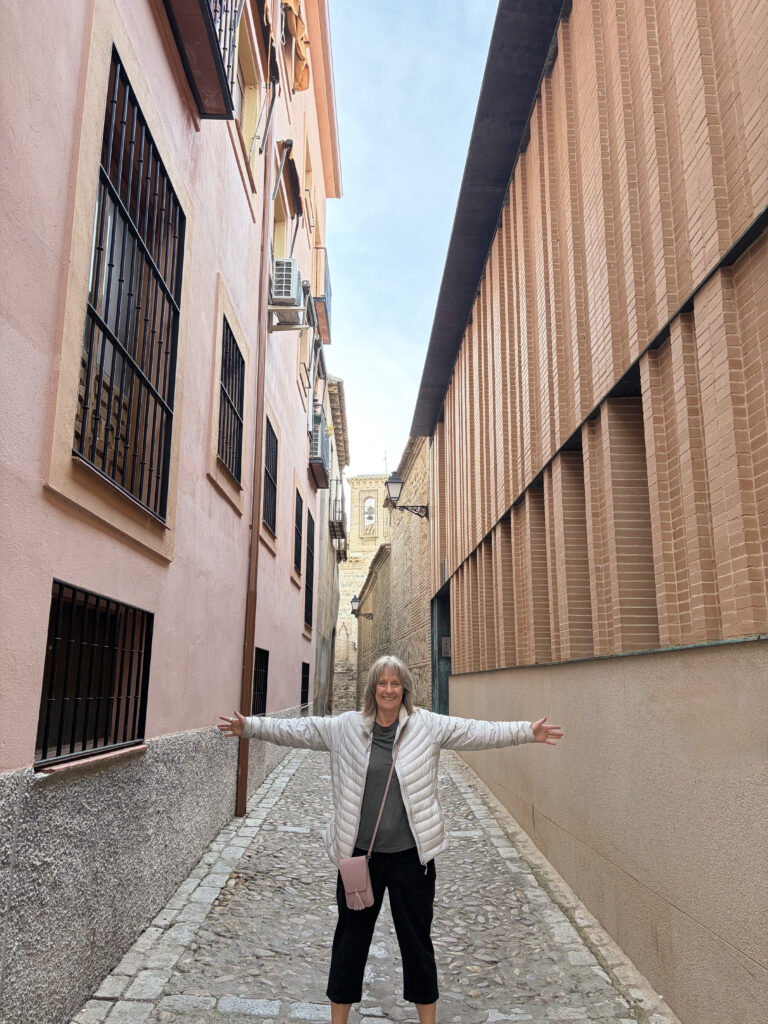
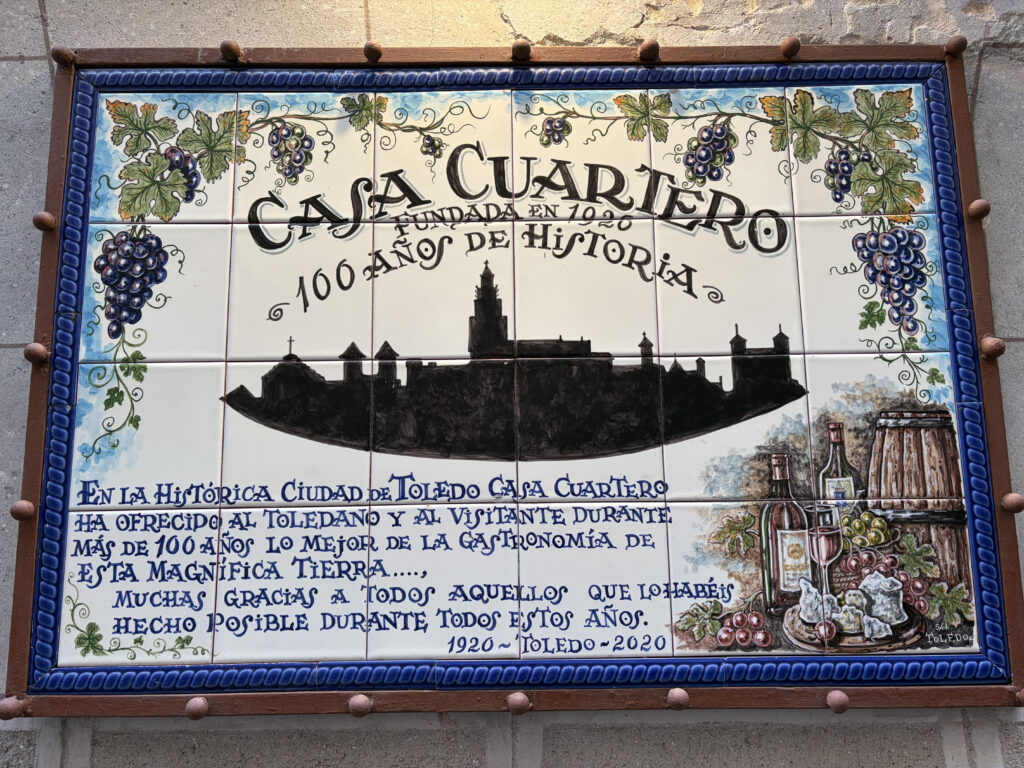
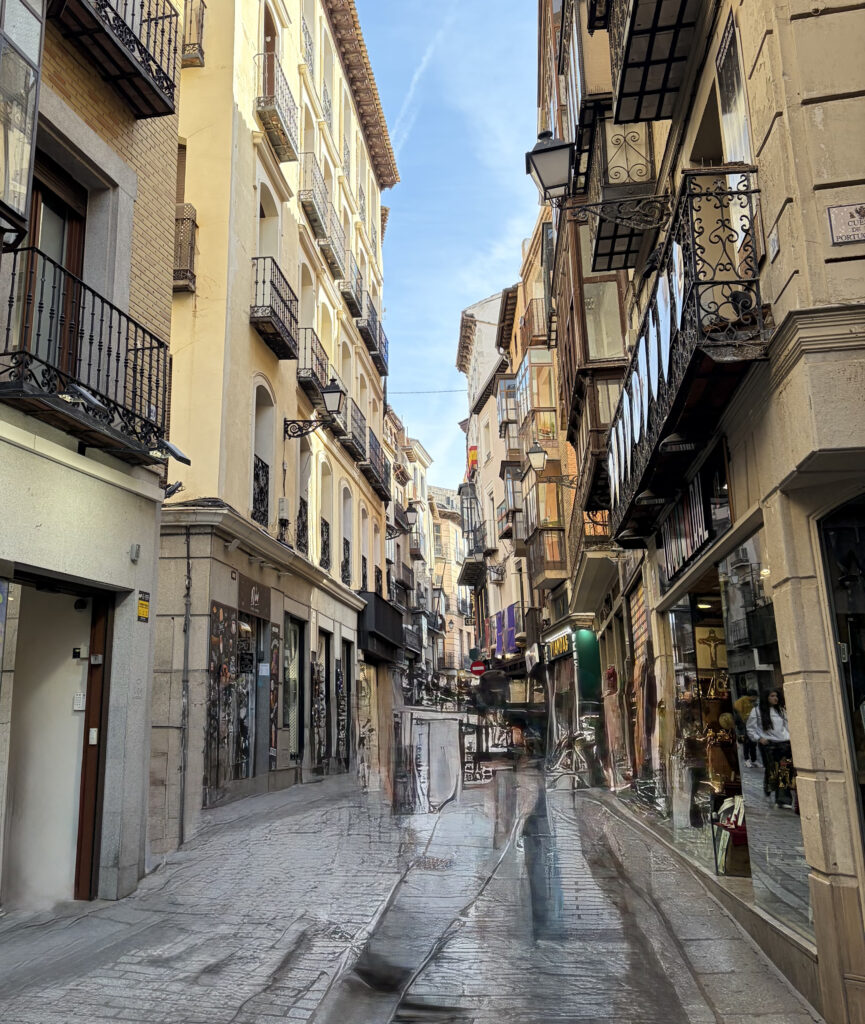
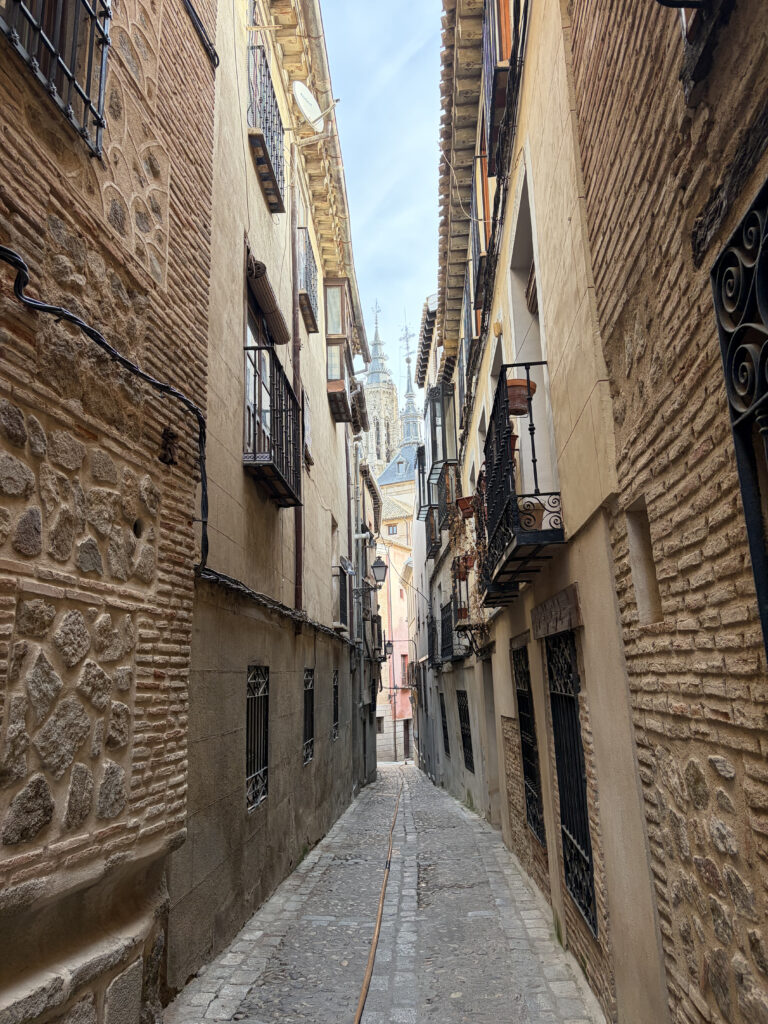
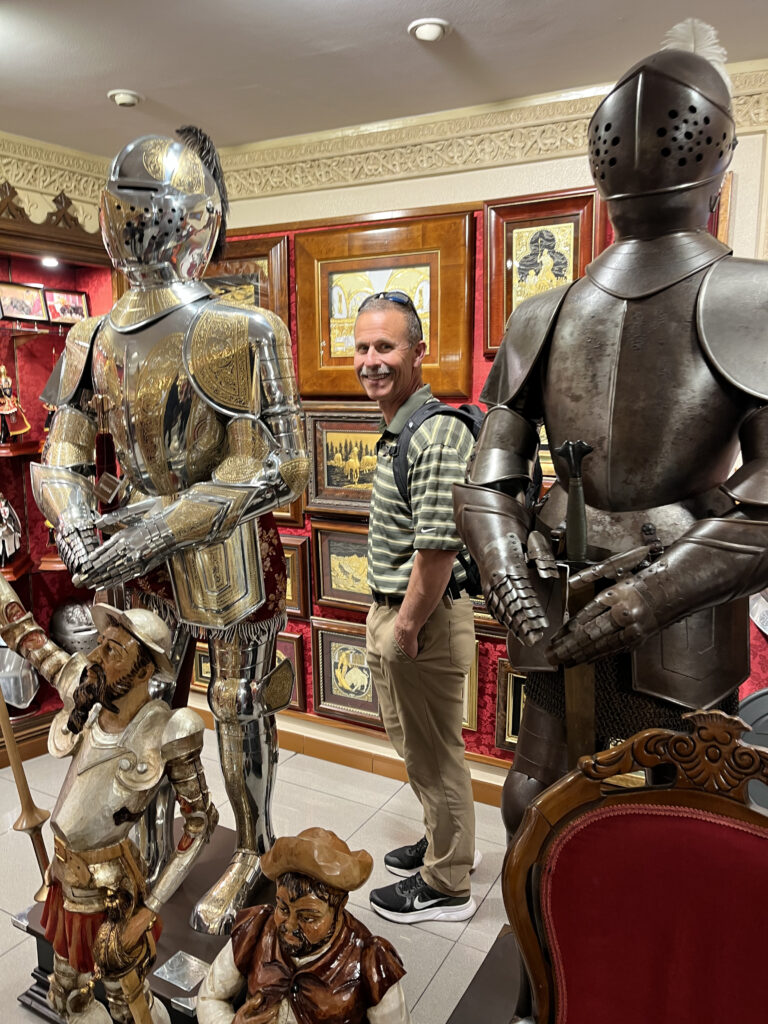
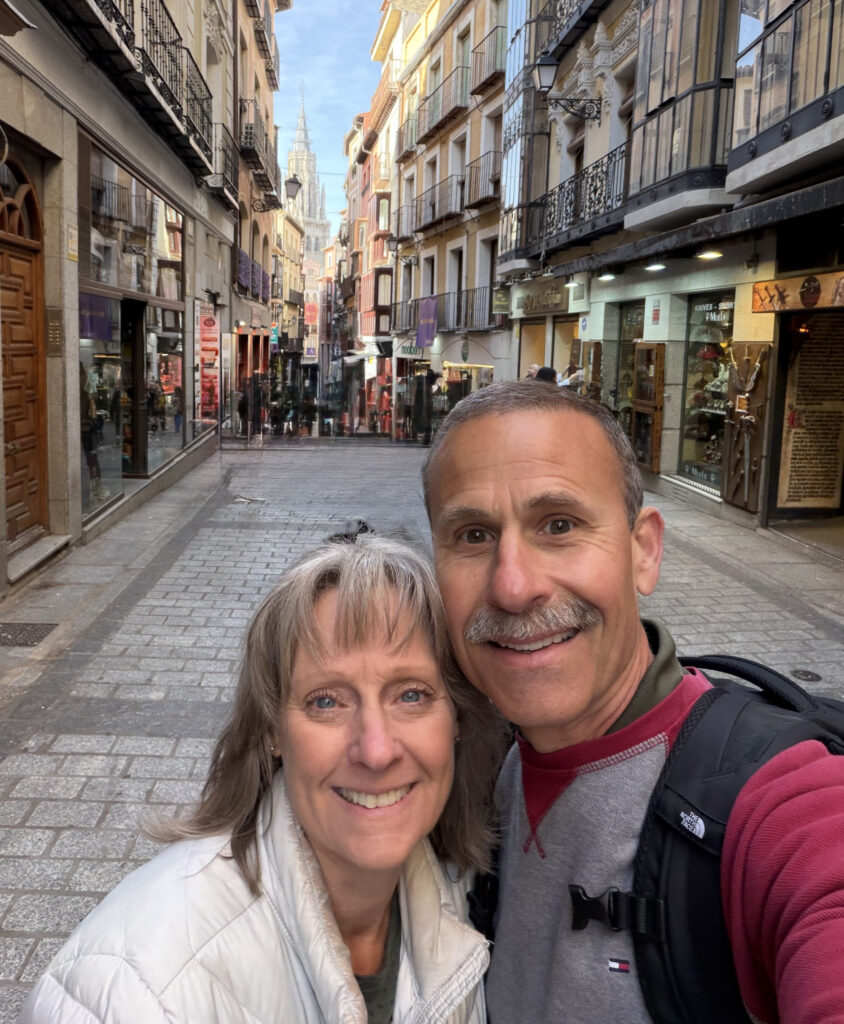
Toledo doesn’t ease you in. It rises up all at once—layers of stone, history stacked on top of itself. For a while, Kellie and I just wandered up and down the cobblestones, ducking into small shops, looking for things to bring back for Blair, Mira, Penny or Justin and Rebecca, Cameron and Jena. Little swords, marzipan, hand-painted ceramics. Toledo’s been famous for steel since Roman times—armies once trusted blades made here—and somehow that legacy still lingers in the shop windows. I’m thinking I need another kitchen knife to rival the one we purchased in Tokyo.
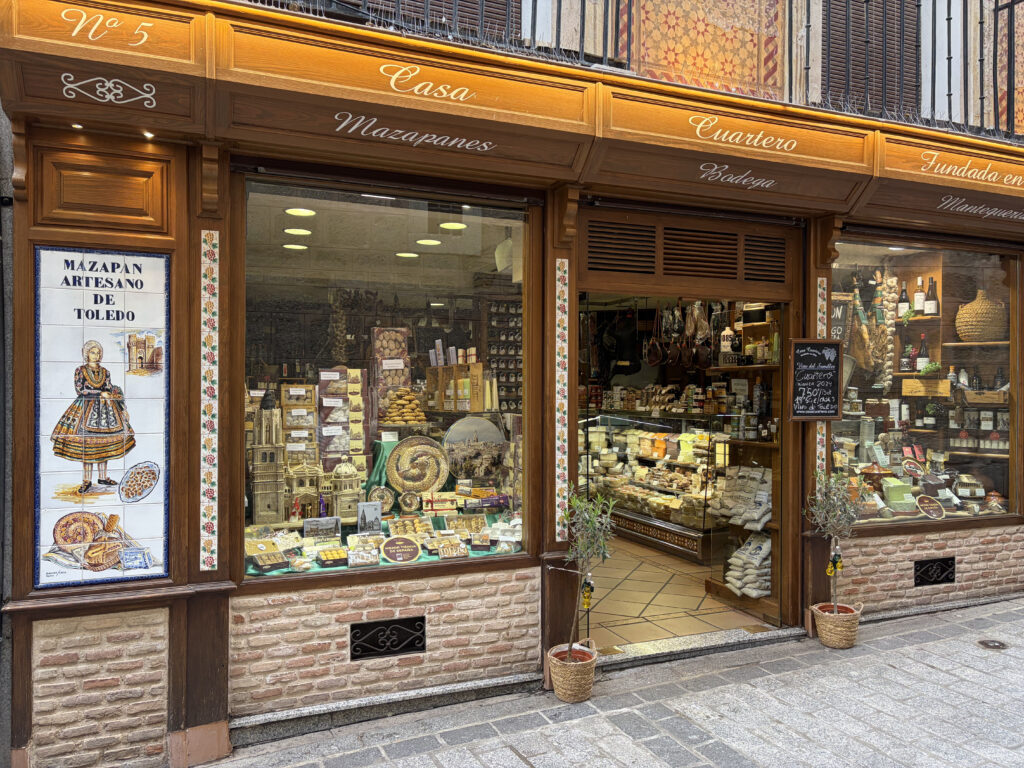
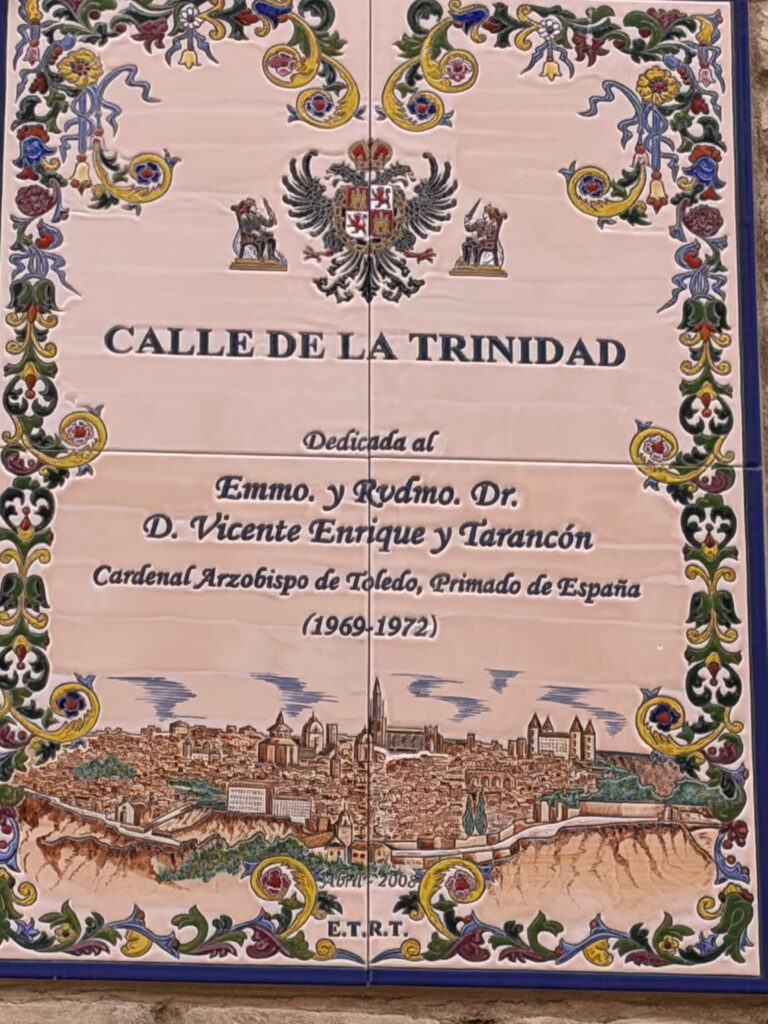
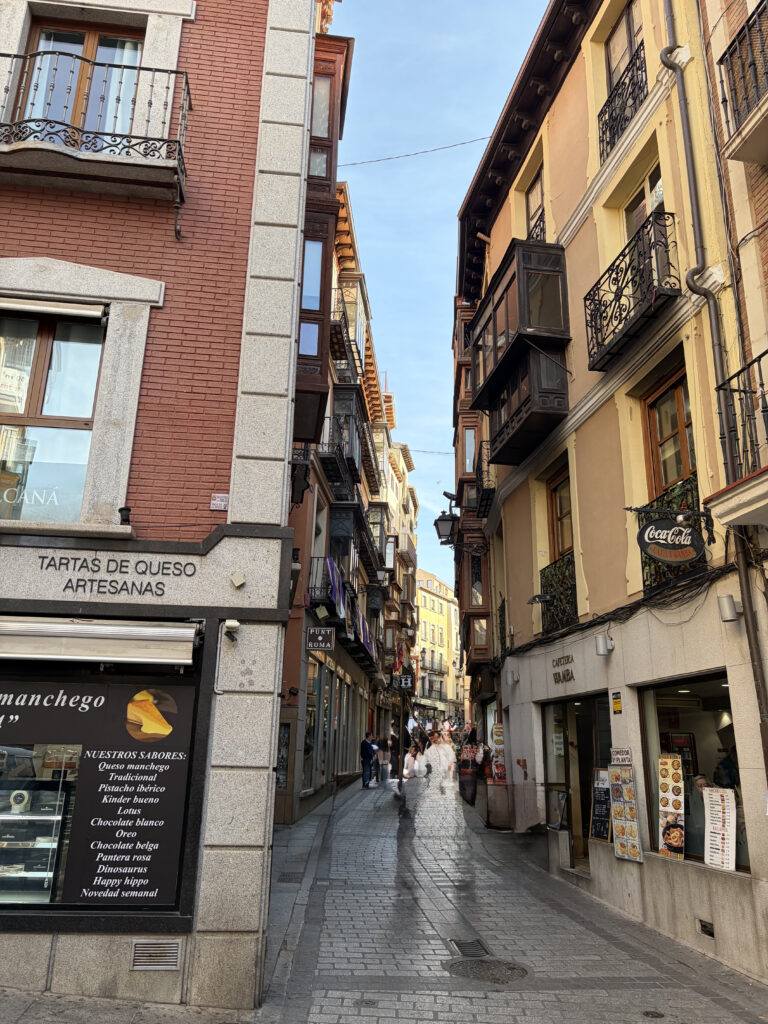
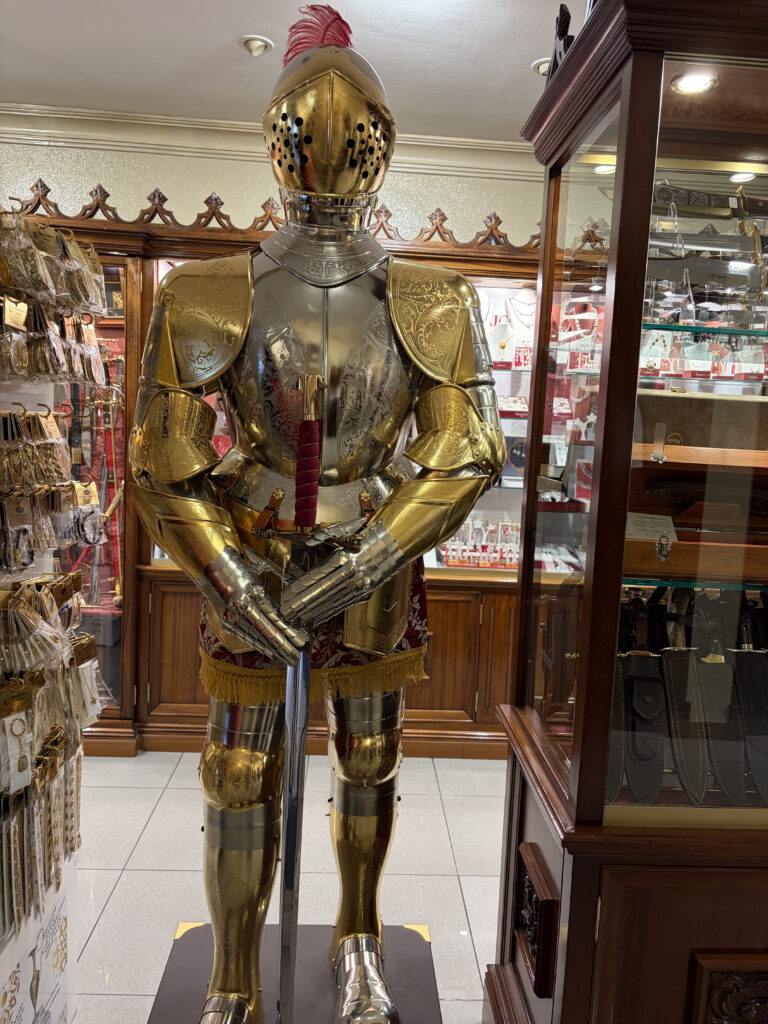
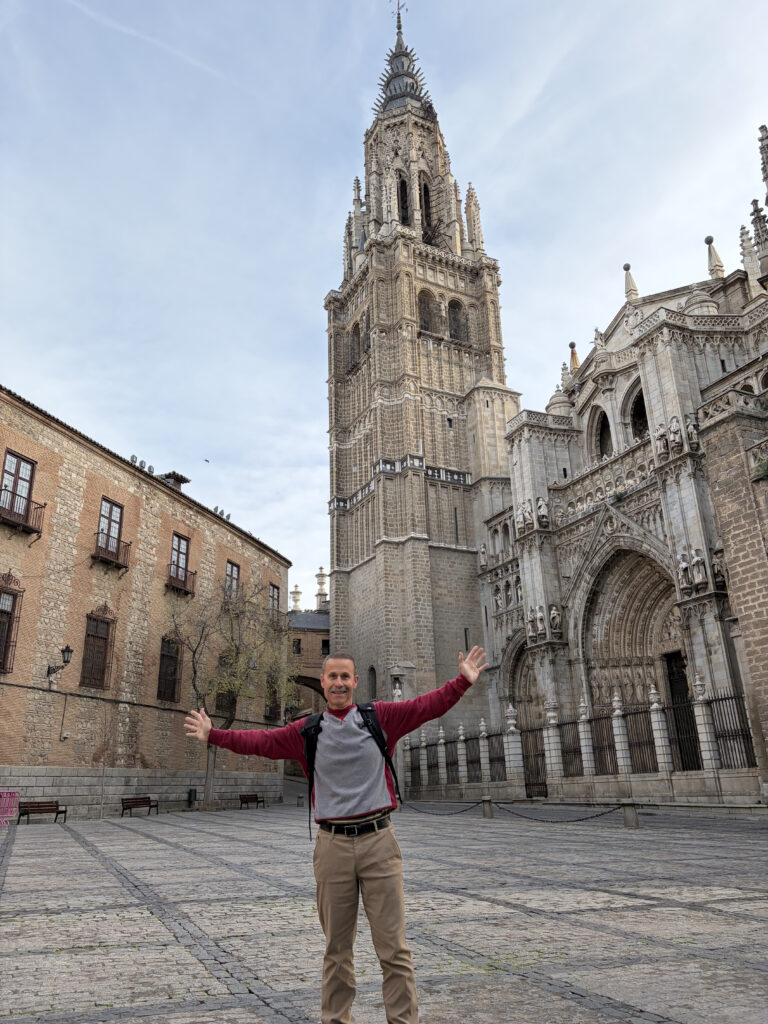
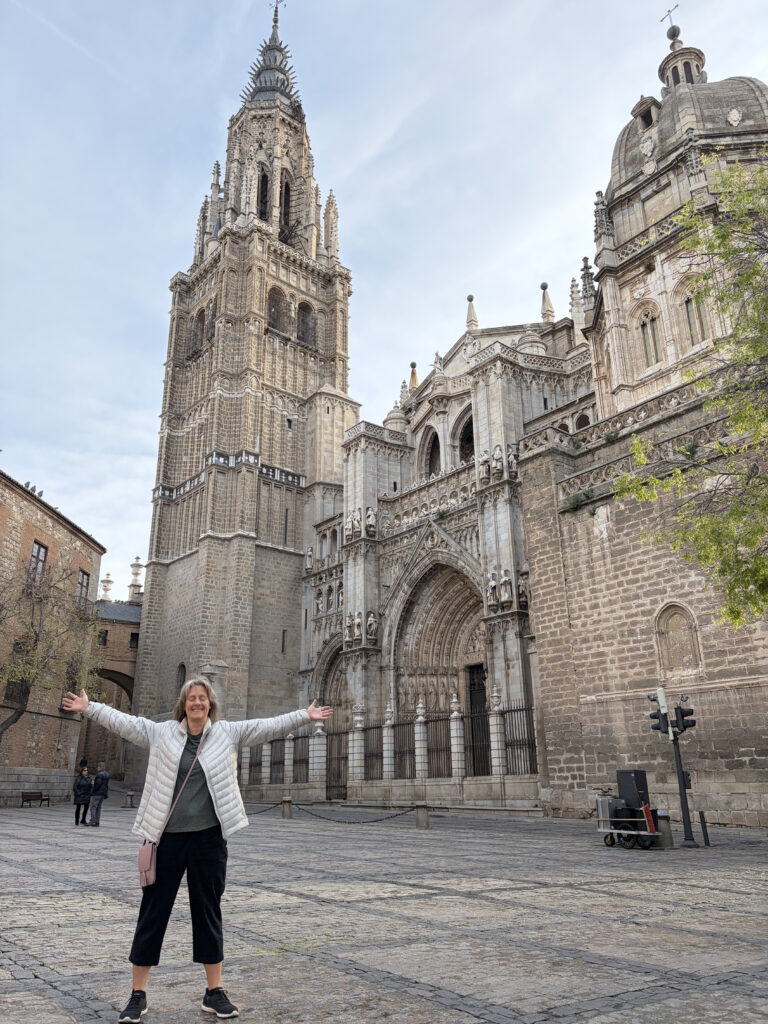
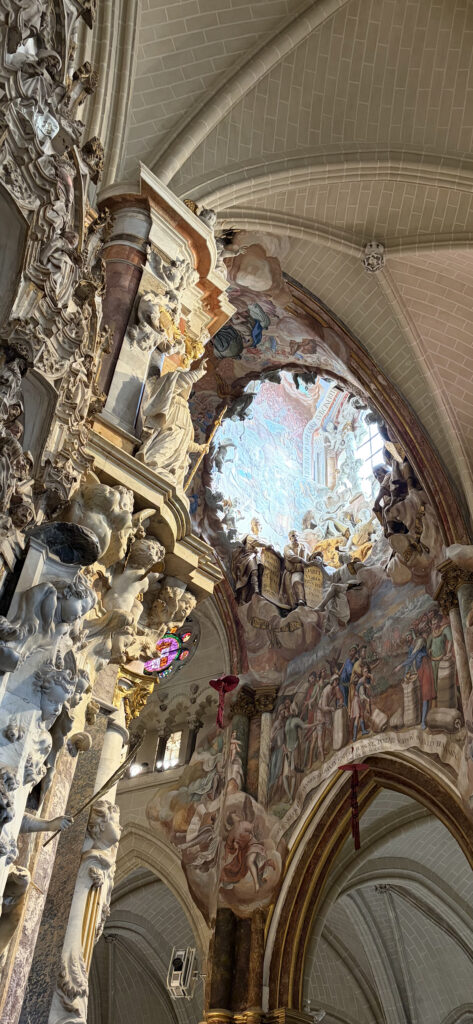
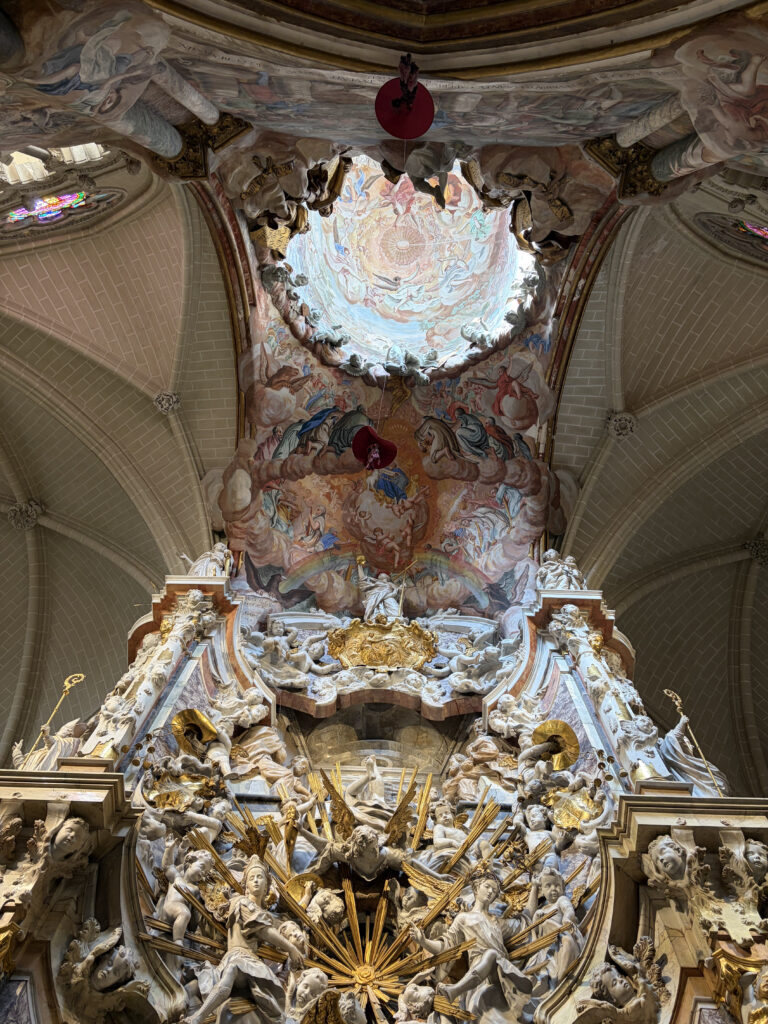
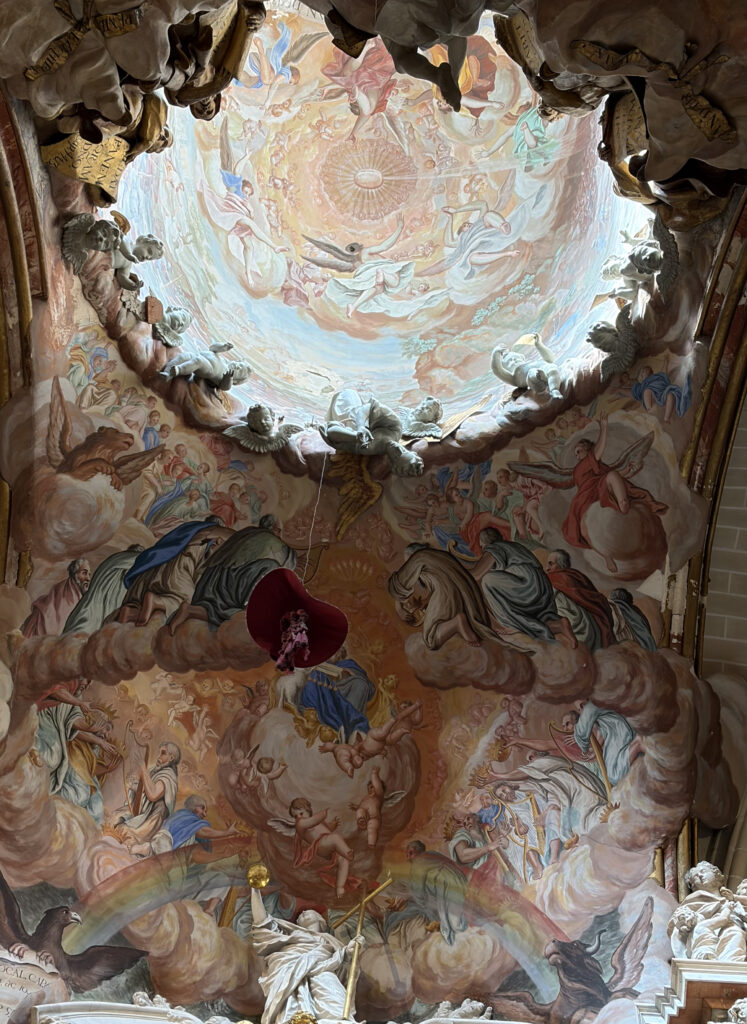
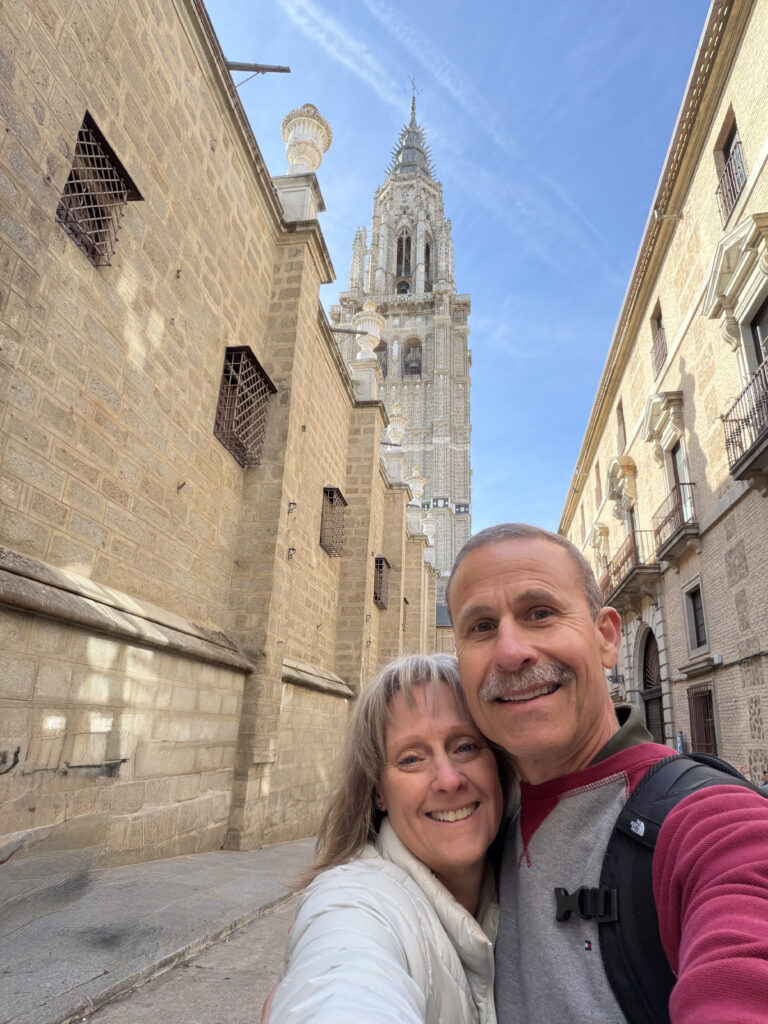
By 11:00 we made our way into the Toledo Cathedral, and that’s where the day slowed down again. You walk in and it just opens upward in a way that makes you stop mid-step. Built between the 13th and 15th centuries, it was meant to impress—and it still does. The audio guide filled in the details, but what stuck was the feeling of it: the height, the light, the weight of history. In the sacristy alone, works by El Greco and Francisco Goya quietly line the walls like it’s no big deal.
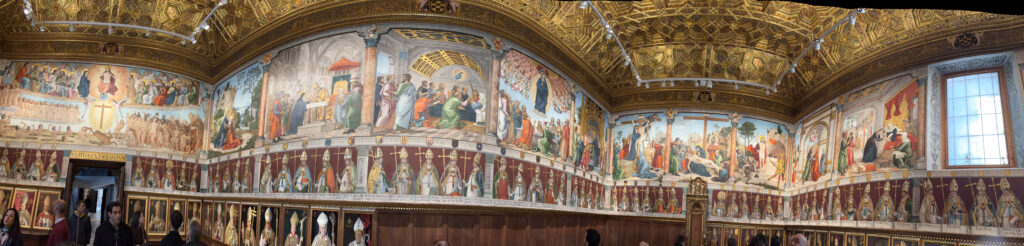
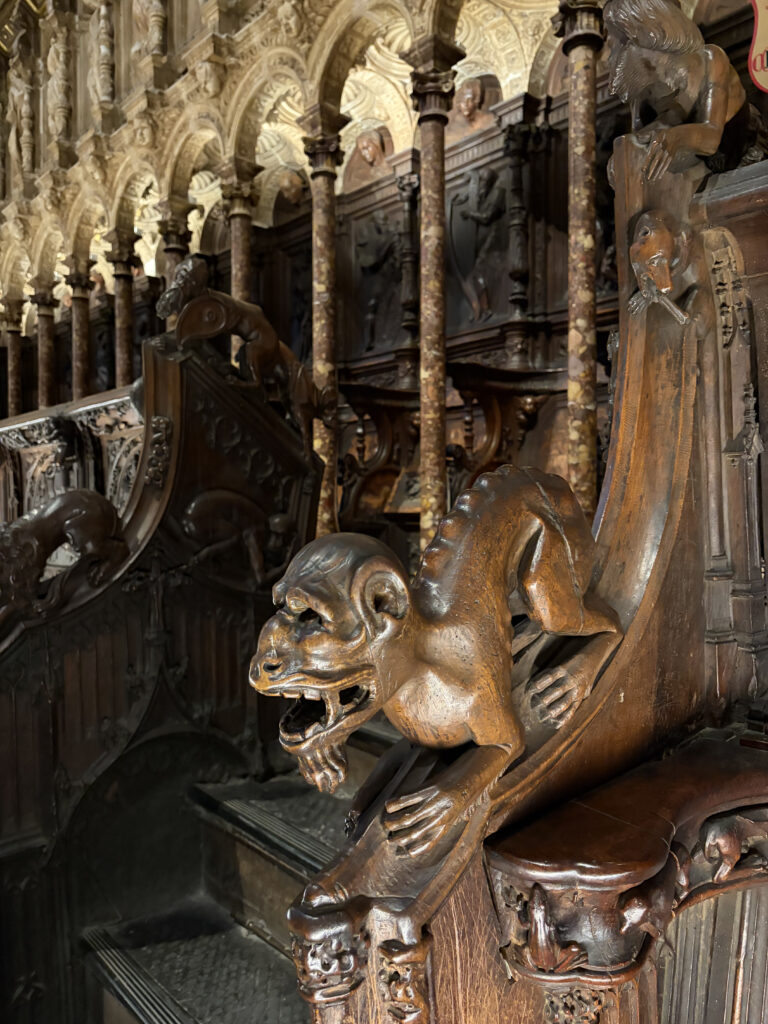
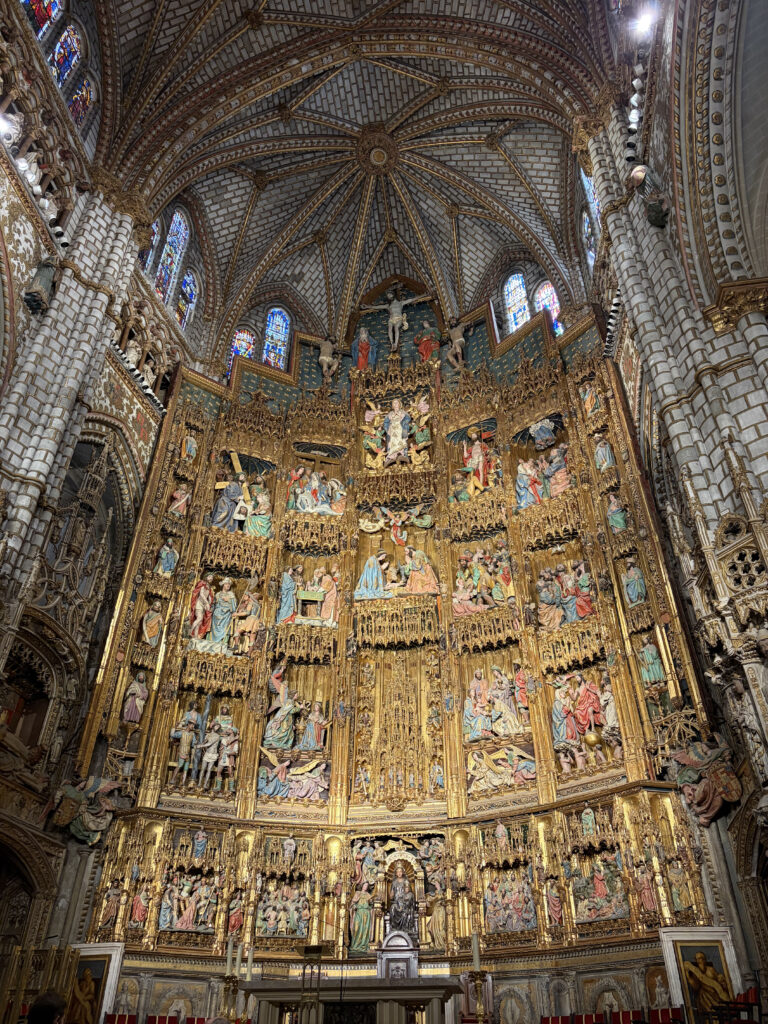
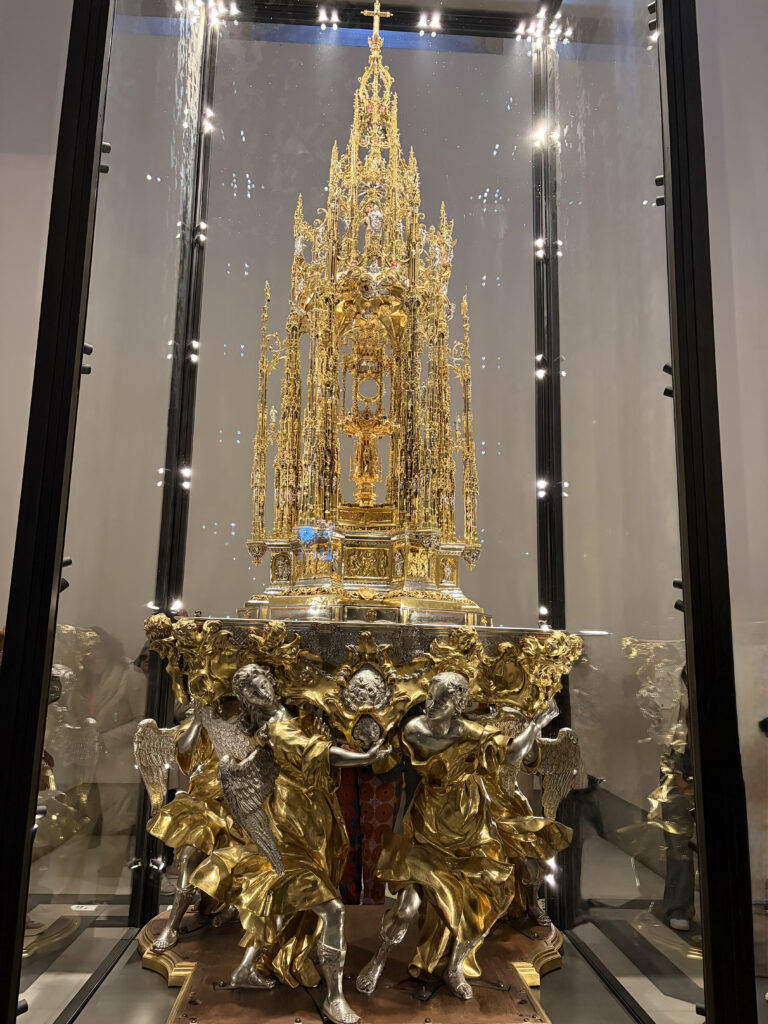
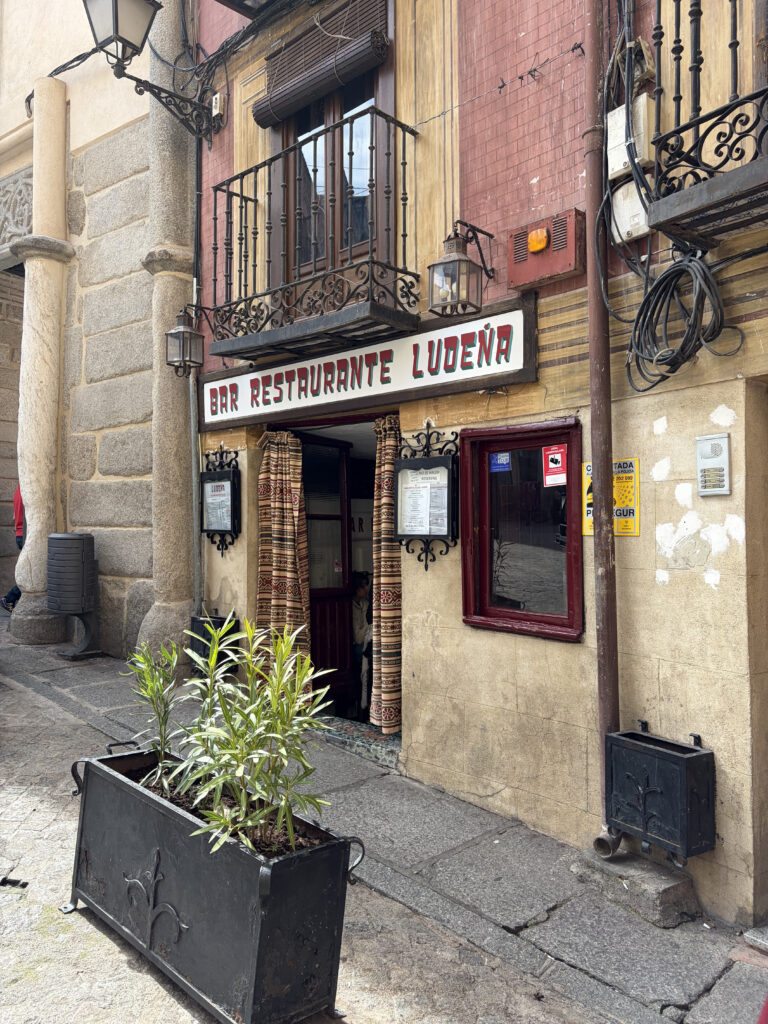
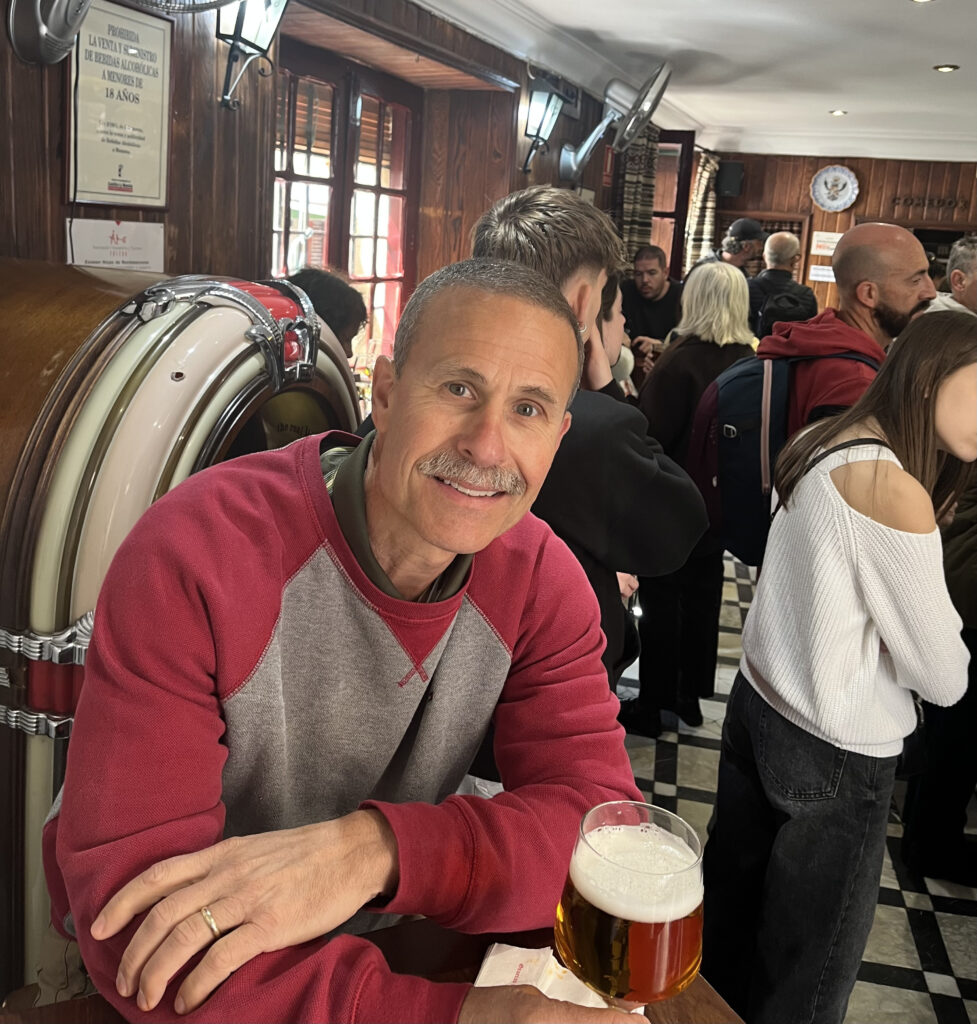
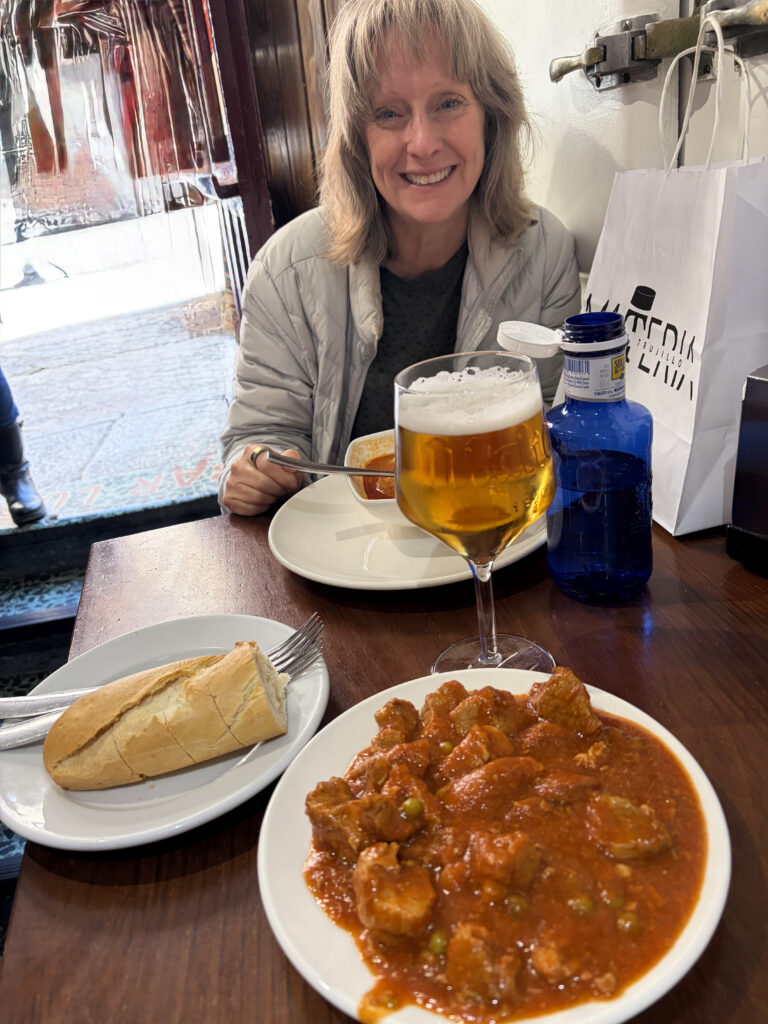
By the time we stepped back outside, Toledo had filled in. The narrow streets were alive now, voices bouncing off stone, corners tightening with people. We squeezed into Bar Restaurante Lude for lunch—crowded, loud, a little chaotic in the best way for me, not so much for Kellie as she wasn’t into the crowd. I felt it was the kind of place where you don’t linger over menus—you just order, eat, and enjoy being part of it with a cold drink.
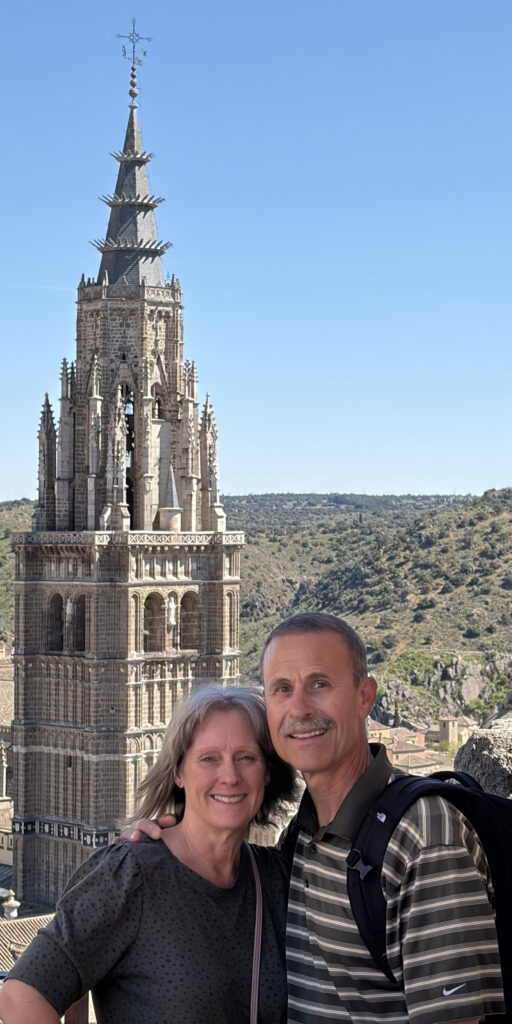
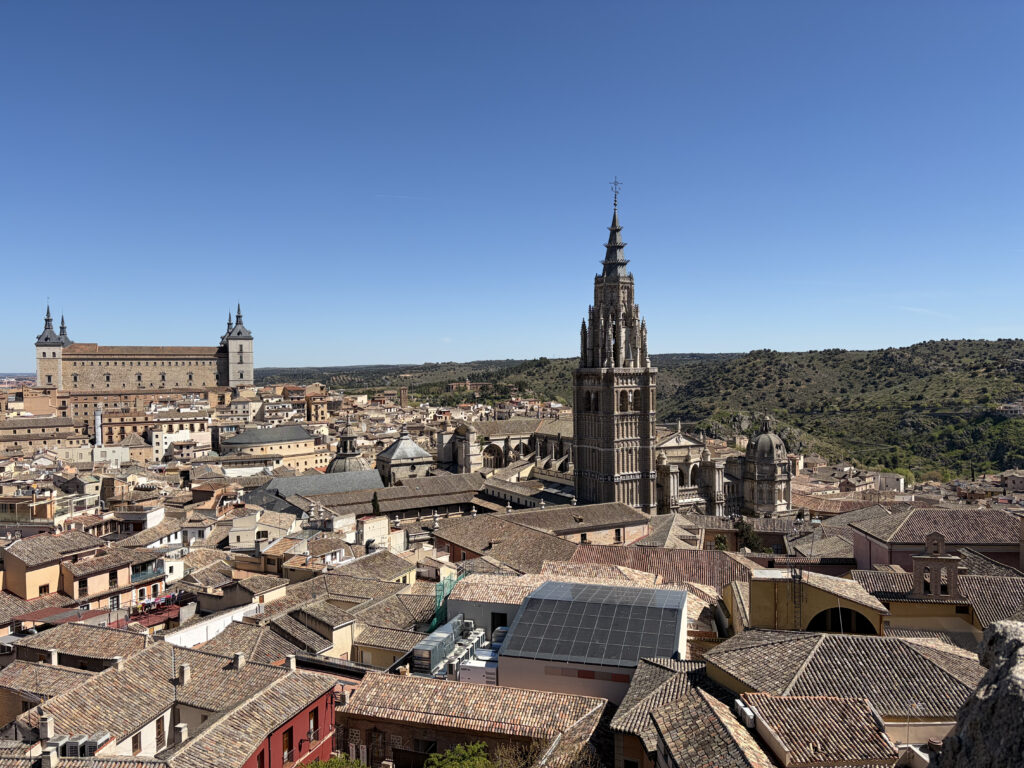
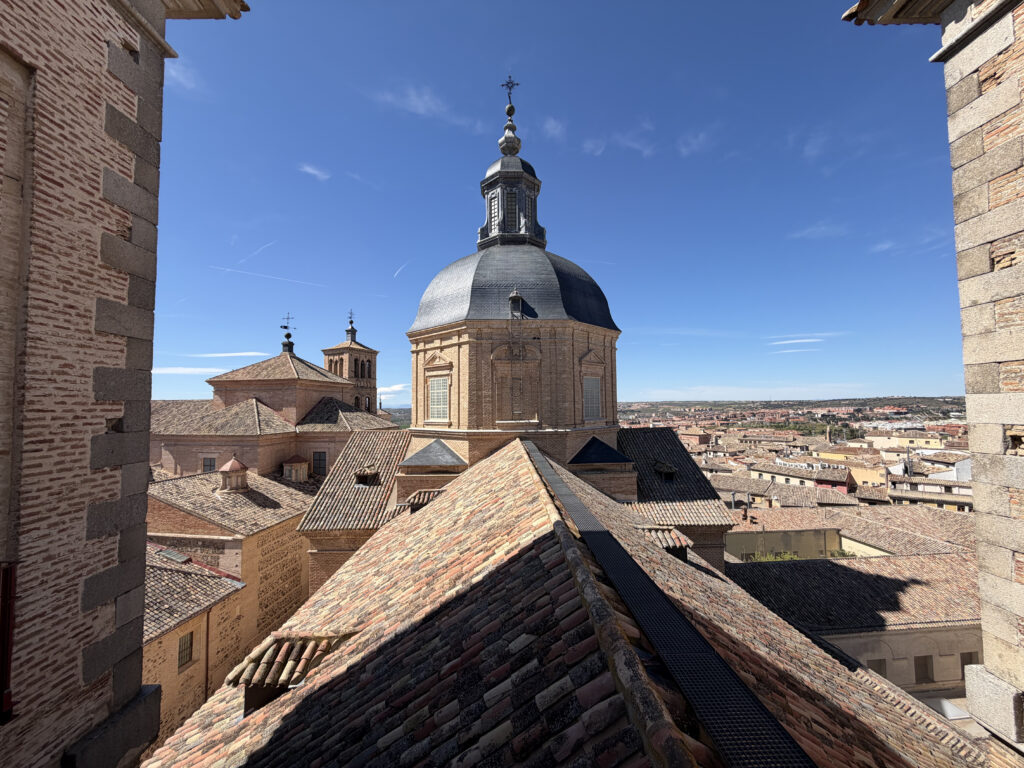
The afternoon became a steady unfolding of Toledo’s layers. At the Iglesia de los Jesuitas, we climbed the towers—step after step, 134, until the city opened beneath us. The rooftops, the cathedral, the river curling around it all. Built in the 17th century, it reflects the reach of the Jesuits during Spain’s global expansion, but from the top, it just feels like perspective.
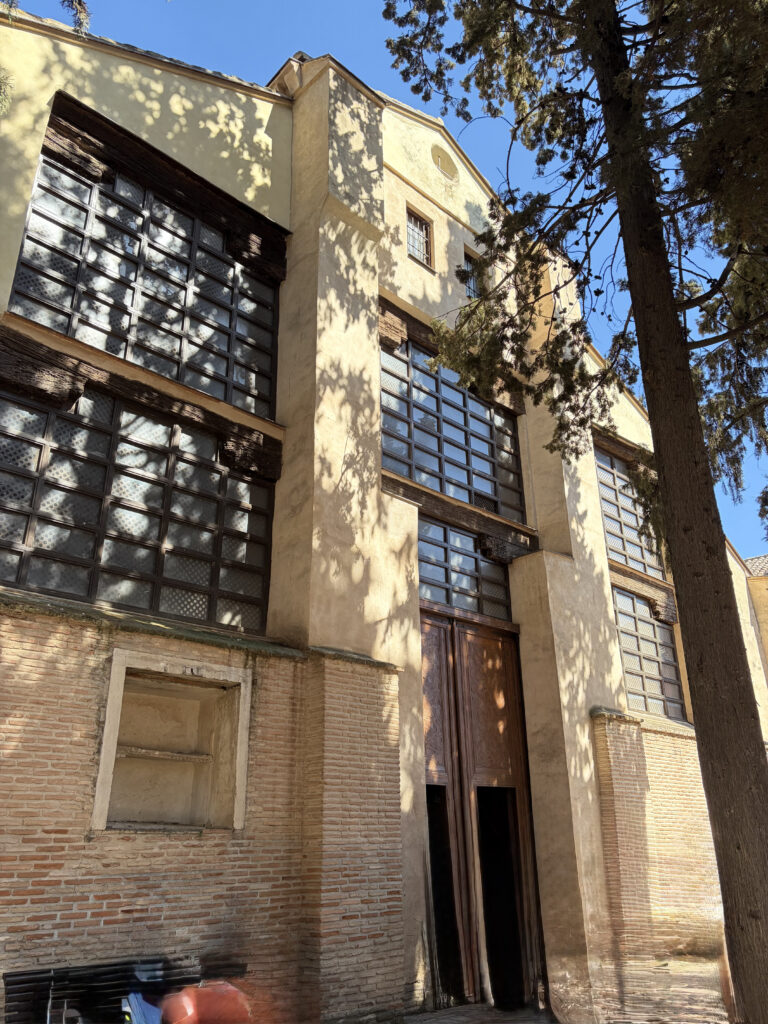
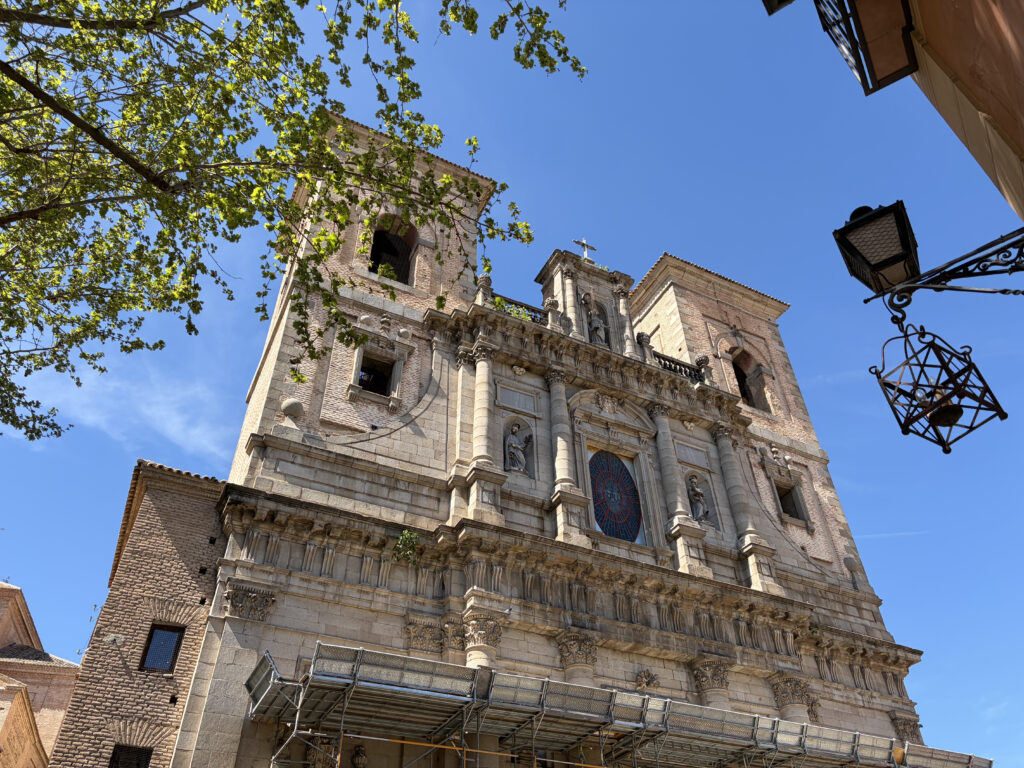
At Iglesia del Salvador, history overlaps in a quieter way—Visigoth, then mosque, then church. You can see it in the columns, the layout, the bones of the building. Toledo doesn’t hide its past—it layers it. Inside the Church of Santo Tomé, is The Burial of the Count of Orgaz. El Greco painted it here, and it still lives here, exactly where it belongs. It’s one of those works where the longer you look, the more it gives back.
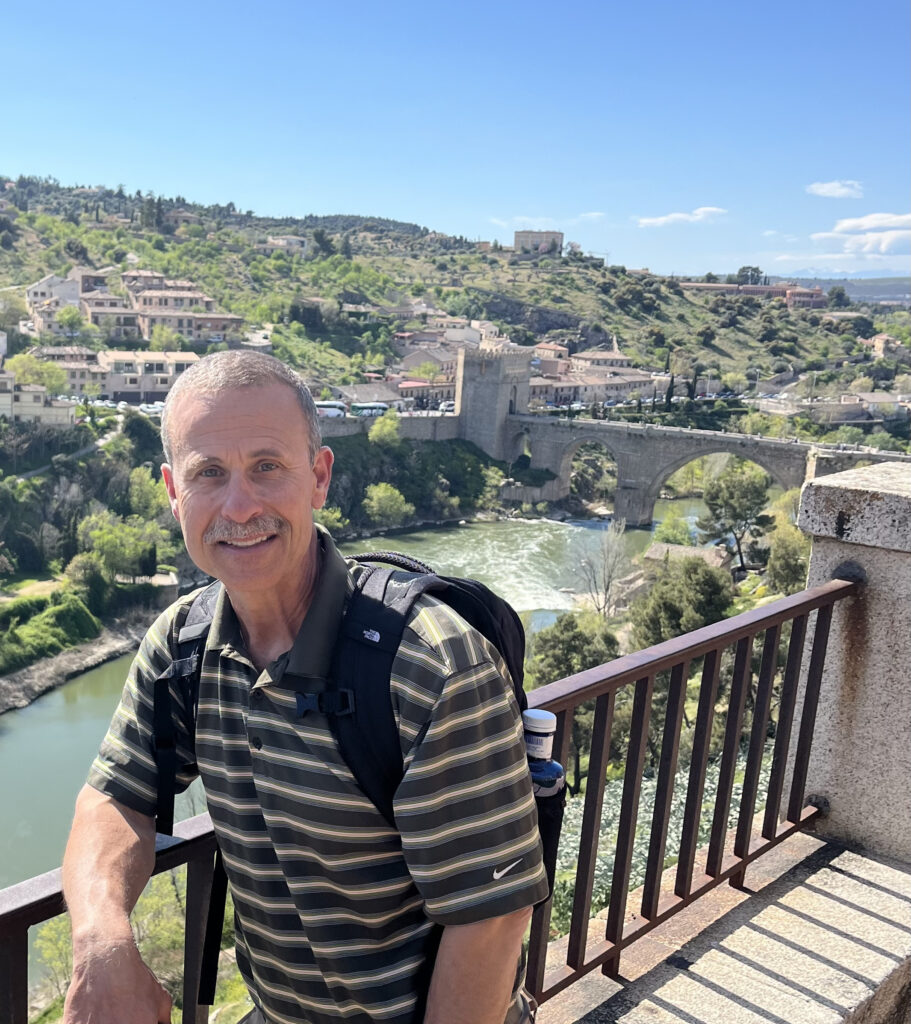
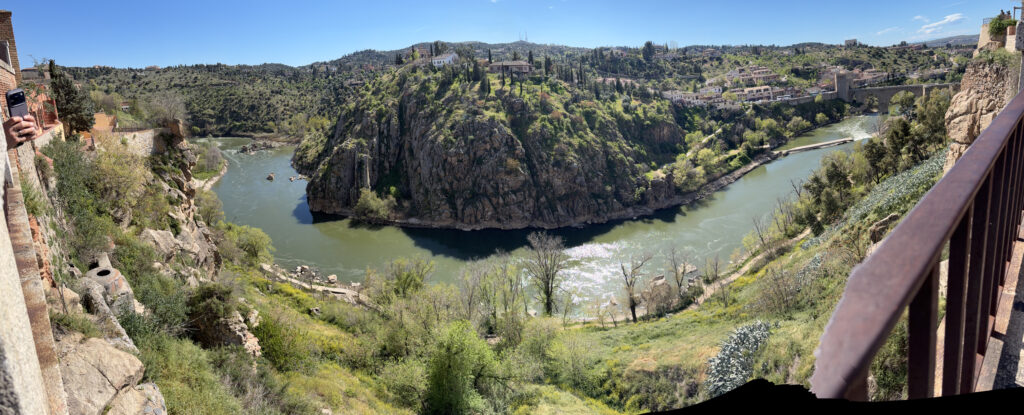
Then into the stillness of Synagogue of Santa María la Blanca. Built in 1190, later turned into a church, but unmistakably Moorish in design. White arches, soft light—it feels calm or plain in a way that doesn’t need explanation. We ended that stretch at San Martín Bridge, spanning the Tagus River like it has for centuries. Standing there, looking back at the city, you start to see Toledo as a whole—not just stops, but something continuous. The views of the lost and still standing bridges traversing the Tagus River is beautiful and worth just sitting and taking it all in.
After dinner, instead of winding down, we kept going, walking back up the hills of Toledo, to our hotel and car, Calle. Unfortunately after trying desperately to get down the hill and to the other side, Mirador del Valle for amazing views, just before sunset we retired for the evening in our hotel room. We were thwarted by Holy Week and Good Friday parades clogging the narrow streets of Toledo. No bother, we are off to Granada in the morning:)
It felt like the kind of ending you don’t plan—but understand and remember we are retired and on holiday.
Comments (1)
You do such a wonderful job of making your trip interesting and exciting for everyone who goes there with you!